How

I was at a social event the other night. I encountered some casual friends. They knew I wrote fiction and asked questions. 

Now, I’d vowed not to talk about writing, particularly my writing, because once that faucet is opened, it seems to break, and nobody can turn it off. I’d planned succinct, polite answers for the questions that are usually asked.

But these folks persisted in inviting torture. One answer led to another question and requests for expansion and clarification. 

Basically, they first asked, “How do you start?”

I understand that question. I get it often. I know that people read a book and think, this was written from beginning to end. That’s what I thought when I first began writing. 

That works for some writers, but not for me. I explained to the others, I just begin writing. I see a scene, I hear a voice, I met a character, and I begin. I usually have little idea about what’s going to happen or who the characters are. I’m learning this, along with the story. I’m usually beginning in the middle, or toward the end. It’s only after I learn the characters and situation more that I start to see how the novel starts, because then, when I see what happens, I ask, “Why do that happen?” Questions like that take me backwards, toward the beginning.

They also wanted to know if I outline.

Generally, I don’t. I’m an organic writing. But sometimes, a scene all comes in at once, or scenes and the story becomes complicated, requiring some process of clarification. I’ll sometimes outline that aspect, just to help me handle the information, find gaps, and fix them. I also use snapshots to do thinking outside of the novel’s context. These are documents that aren’t included in the novel, but help me grasp what’s going on. That helps me make sense of what I’m trying to convey, but it also helps me track information that I don’t share with the reader, usually because I don’t want it revealed too soon.

Generally, I don’t. I’m an organic writing. But sometimes, a scene all comes in at once, or scenes and the story becomes complicated, requiring some process of clarification. I’ll sometimes outline that aspect, just to help me handle the information, find gaps, and fix them. I also use snapshots to do thinking outside of the novel’s context. These are documents that aren’t included in the novel, but help me grasp what’s going on. That helps me make sense of what I’m trying to convey, but it also helps me track information that I don’t share with the reader, usually because I don’t want it revealed too soon.

“Do you ever get writer’s block?”

Yes, and no. I don’t embrace the expression. It’s too glib and provides a false impression about my process.

I sometimes struggle with a scene or direction and don’t know how to take it. I’ve learned that I can overthink things, so I tell myself, don’t overthink it. I’ve learned to trust my subconscious mind and instincts, and that I just need to get out of my own way. I’ve learned that I don’t need to write everything in sequence, so write something else and come back to the problem later. I’ve learned to take a walk or read a book or do something to let my mental resources work without my attention. 

“How do you know when it’s done?”

When I, as a reader, think that I, as a writer, have explored and answered the questions and problems put up throughout the novel, within the context of what I set out to do, then I think it’s done. That’s part one. Part two, I write for myself, and my pleasure. If I take pleasure from what I’ve written, including the ending, I’m satisfied that it’s done. 

I admit, sometimes the ending that comes surprises me. “Is that it? Really?” Upon further review, sometimes it isn’t, but sometimes it is. It’s a process.

I also give the finished manuscript to people I trust to tell me their thoughts about the novel, including the ending, and there are editors. Novel writing is generally an individual endeavor, but finishing a novel often requires several minds, especially if you’re driven to get it right.

Scheduled events then began, saving them from more explanations. 

I took a break from my editing to write and post this. The process actually went, I’ve been editing and writing for hours. My butt’s asleep and my neck is stiff. I need to stretch and take a walk. While taking that break and walking, I remembered and thought about this conversation and decided to create this post.

Time to get back to it.

Character Questions

My friends surprised me last night by asking questions about the writing process. They were interested in how I come up with characters (and whether I ever used people that I know as the basis), and how I know when a book was finished.

Coming up with characters isn’t difficult. Some people do huge sketches of the characters before they start, detailing everything possible about the character. I don’t, although I’ve tried doing that, because that’s what I read a writer should do. I don’t do it before I start, but I will do a physical appearance at some point to keep matters aligned. I usually also develop their backstory so that I’m aware of who they are, and document that, again, to keep matters aligned, but I don’t usually do these things until after the character has been introduced.

The thing is, when I introduce the characters, I know their general personality and behavior patterns, whether they’ll be optimistic, sullen, joyful, belligerent, dismissive, etc. All of them are composites. I do lean heavily on people I know in to establish a guide about how the character will think and behave, but the characters don’t share a physical appearance or name with the real people. Usually, too, I use more than one acquaintance as the character’s foundation. One acquaintance will be the guidance for political views while another provides the guidance for religious views, and another will be the foundation for attitudes about eating and exercising, etc.

Like people, each character exists on multiple spectra regarding how they think and act. The spectra are about the facets of life. Everything we think about and do exists on their own spectra, in my mind. I’ve noticed how people behave while driving vice their behavior in personal relationships and work relationships, their politics, and so on. I’ll often notice differences about their behavior. Naturally, I notice the same about myself. I know what I think and then do, sometimes surprising myself by my whims and impulses. Sometimes I rationalize that action, and sometimes I’m clueless about why I thought one way and did another.

I’ll decide, in a fashion, how much they slide along their spectra. Again, this is a reflection of what I think I see in people. I think of these spectra as one hundred point sliding scales. Zero means people won’t deviate on their spectrum. As you can imagine, that’s somewhat rare. Most people known to be true will still have a slight variation, recognizing that adhering to absolutes are difficult. And although someone might be low on the scale in their personal relationships, meaning they can be trusted in confidence, they can be high on the scale in other relationships, such as work, and thus, be considered less trustworthy.

I didn’t share all this with them, of course. That would be TMI and cruel, in a sense. They don’t need to know it. But their questions prompted the thinking, so I felt the urge to write about it to help me understand it.

As far as when the novel is finished, I begin with a sense of an ending when I first start on the concept. As with the concept, the ending changes and shifts as it develops, becoming sharper and clearer as the concept becomes clarified and the story lines and character arcs develop substance. The ending I want will often strike hot and hard in the middle of the writing process. I have no problem writing that sketch-up, knowing that the words will be changed, and some of the substance will be modified. But it gives me a firmer goal.

Sometimes, I find that that ending is wrong, that I missed, because the story took unexpected swings. That’s not a worry, but another challenge to put on my writing hat and find a new ending. In any case, from the writing process, I find an understanding of an ending that satisfies me, the reader.

Of course, that’s just the beginning. After finishing writing the novel, I read, edit, and revise it, and while doing that, I’ll adjust the ending as I think needs to be done.

Will I change it based on others’ input? I can’t say yes or no. First, it depends on the input. Readers find different things in books, especially if it’s a complex work. That’s great. I have a hope about what they’ll take away from my novels when I write them, but it’s based on what I wanted to find as a reader. So, I bear in mind that I’m writing for myself first. If their input finds appeal in me, then I’ll work with it.

Enough. I understand what I think. Time to write like crazy, at least one more time.

Crystallizing

I can certainly tell that Entangled LEREs was the first book written in the Incomplete States series. (Back then, the working title was The Long Summer.) I’m a third of the way through it in the initial editing and revising process, and I’ve deleted four chapters. Those chapters, written while I was exploring and developing the novel’s concept, no longer fit the overall story arc. To keep them in would be indulging myself.

So, off they went. The muse(s) didn’t argue at all, so I must have made the right decisions. Still, I saved each chapter intact as a file, with a note about where they came from, and updated the Editing Checklist to show what I did, and why.

The chapters were fascinating remnants of the genesis of the initial concept and the finalized concept. I remembered struggling daily as I wrote, trying to decide, what is this novel about? As the finalized concept crystallized, one novel became two novels, and then burgeoned into a series. Characters and their tales, plot twists and settings all arose. I didn’t include everything; sometimes I knew that what I was writing was writing to think, exercises to help me understand what I was learning and where I was going. They were saved, too, just in case I later veered.

In point of fact, the largest document of the twenty-five documents (including the four books) I created while developing this series is the document called “Circle (working doc)”. At five hundred pages, it’s one hundred ten thousand words and seventy-nine chapters. Some of the chapters made their way into the beta version of the four books. Many have notes about my intentions when they were written about where they should be in the narrative. Several of the chapters were written as snapshots of action, outcomes, or discussions between characters to help me understand the story arc but included information that I felt shouldn’t be ‘given’ to the reader.

They might still end up in the final first draft of the four books. I don’t know, and won’t know until I’ve completed this phase of editing and revision.

That’s what it’s all about.

“Four On Kyrios”

I’m feeling breathless, worried, and giddy today. You probably suspect that it’s the smoky air because I’ve been complaining about the wildfire smoke so often in July and August. Well, you’d be wrong, suckah. We have good air today.

I’m breathless and giddy because I completed the first draft of Four On Kyrios today. The novel has officially made the transition from beta to first draft. At the same time, I received feedback from two friends who volunteered to read the beta version as a second pair of eyes. They’d finished reading the manuscript and offered their comments. Both were enthusiastic and are ready to read the next book in the series. That pleases me, but I’m worried because, as a writer, I’m unique among writers, and worry whether others who read what I wrote will describe it as gilded garbage.

That was decent sarcasm, wasn’t it?

Four On Kyrios is the first book of the Incomplete States series. It didn’t take me long to read, edit, and revise it. I attribute that speed to several points.

One, it was the third book in the series to be written. That advantage means that a great deal of thinking about the concept, plot, background, and setting was already completed.

Two, I edit and revise as I write. My organic writing process drives this pattern. Writing what’s already written helps me connect with the muses and continue discovering and telling the story. It shouldn’t surprise anyone that I fix grammar, punctuation, pacing, and continuity issues when they’re discovered. (Are you surprised?)

Three, Four On Kyrios is the smallest of the four novels in the Incomplete States series. MS Word clocks it at ninety thousand words and three hundred seventy-five pages.

Four, of the four novels, it has the simplest plot and the fewest characters. Those factors keep it easy to read and edit.

As this is the first novel in a series of four, it’ll stay in first draft status while I read, edit, and revise the others.  The four books were written to tell one larger tale, so they’re interconnected. I came out of the editing and revising process with one page of notes. Some are reminders, a few are continuity questions, and the rest were issues. All of the issues except two were resolved. They’ll remain open until I complete the other three books.

Most of the changes in the novel were more about expanding some scenes to slow down and let the characters breathe. I’ve been reading a lot since I finished the beta draft of the four books. Reading others’ published novels impact my ‘sense’ of the book. To me, this is the instinct we develop as writers because we read. It’s a feel for what seems right and correct about something we’re reading. It’s about flow and story-telling.

Just for the record, I’ve read Lincoln in the Bardo, A Visit from the Goon Squad, Godless, The Midnight Line, Time’s Eye, and Diary in the past few weeks after finishing the first three books of the Dire Earth Cycle. I’m now reading The Pagan Lord and The Order of Time and searching for The Triggerman’s Dance. I think La Rose might be up next on my reading, though. The Order of Time is a fascinating book about time, physics, and quantum mechanics by Carlos Rovelli. I don’t agree with all of his points, but it’s fun thinking about them.

Now, on to the next novel in the Incomplete States series, Entangled LEREs. I’ll begin editing and revising it tomorrow. Right now, though, my stomach is posting orders for something to eat.

I think I shall comply.

As Always

Done writing like crazy for today. 

Done writing like crazy on Incomplete States. I finished the beta version of the series today when I wrote the last words of the chapter that bothered me.

I went through it today, and it didn’t bother me as much as I remembered. It worked better than I realized. So, okay, it’s acceptable for now. We’ll see once the first draft of the series is finished.

I began this series with a half-assed concept on July 16, 2016. It was just supposed to be one novel with a working title, The Long Summer. I didn’t expect to be working on it for over two years, but as I explored the concept and it grew, so did the novel. As I learned the story, I learned that there were a few more novels to it. I realized it was a series. And, as I wrote, I realized, as many writers do (as Thomas Weaver reminded me), I didn’t start at the beginning. That forced me to go find the beginning.

Now the four books and the series are completed, in a beta version. The fun part, the most exciting part, the creative part that lets me gulp down coffee and write like crazy, is completed. Now work is required. Revision and editing.

Revision and editing is fun in its own way. I know from editing and revising other novels, what I wrote will surprise me. Hopefully, that’ll be so this time, and the story will engross me.

Starting that will need to wait until tomorrow. I feel comfortable going back and reading the first book tomorrow because I began writing it last October and finished its beta version in January of this year. It’s been a few months, time enough for it to slip out of mind so that I can look at it with fresh eyes.

As always, as expected, I experience a spectrum of emotions with being done with this phase. I’m elated. Writing a novel or a series is challenging. It takes some fortitude, discipline, hope, and persistence. Finishing one is satisfying because I established a goal and achieved it. I also feel a little free, because a burden has been lifted. I’m anxious, too, because now I need to edit and revise it and put my baby out there.

As always, too, I feel sad. The fun part is over. That was amazing. The writing process often presented unexpected twists and turns in what I was writing. I feel privileged to enjoy such a creative process.

Now, too, as always, not having the series to write means changes to my daily routine. Change is always a challenge, so I need to work through that.

As always when writing that first effort, it’s been a ride.

Now, as always, my ass is in a little pain from sitting for so long. I’m hungry, too. The day has moved on without me, and I need to go out there and catch up. To use a favorite final line from a favorite author, novel, and series, “Good-bye and hello, as always.”

Later.

Another Complaint to Make

My characters are irritating me. I’m itching to get to the action, but here they go, talking it all out, establishing what they know. It’s maddening.

“Come on,” I shout at them. “Let’s go.”

But, no. They continue to challenge each other’s memories, grasp of what’s going on, and what they’re supposed to do. It rankles me.

Yet, I understand it. They’re people who have been forced together, selected for what they don’t know and what they haven’t done. They’re not the same people they were earlier in the series. Of course they’re confused. Some are also resentful, angry, and suspicious. In this situation, some don’t speak, but watch and listen. Others must verbalize it all.

I thought, hey, let’s initiate an attack on them.

No. That was rejected.

Not even a sniper killing one of them?

No.

A fight among them?

No.

An interruption, something that disrupts them and forces them to action, a realization, perhaps, or a sense of urgency? Only Richard has a sense of urgency. (Richard has assumed the mantle of mastermind at this point. The other character that’s restless and worried is Seven. But she’s an imaginary character, existing in imaginary time, biding the moment when she acts, waiting to see what happens, because she thinks she might have screwed it up.)

No; they’re talking.

They’re doing pages and pages of talking.

It’s too much dialogue, in my opinion. It kills the pace.

Sorry, the characters and muse answer. Pace isn’t our concern.

I guess I’ll let them talk for now, and then see if I can edit or revise it later. Honestly, working through their dialogue seems like the only way to move forward.

It was a frustrating day of writing like crazy. Thank god for coffee.

Then Again

I didn’t know what I was going to write today. I knew I had a scene in progress. In theory, there was another scene ahead. With it in mind, I was puzzling around what do I write today to get there, and considered just jumping ahead to write that scene.

That didn’t feel right to my instincts, though, so I sat down, and started typing from where the last sentence left off. Once again, I went off in an unanticipated, unexpected direction. When, twenty pages later, I finished the scene and stopped, I was pleased and touched by what had happened. It was so in character with the series and novel in progress. I hadn’t planned it; the characters and muse seemed in control. Intellectually, I know, it must be me, right? I’m the one with the brain behind the skull and fingers on the keyboard, but the writing had that dreamlike flow, as if I was a pipe and it was just being pumped through me.

It’s unnerving, honestly, because I wonder if I’m not a little crazy. (Okay, I concede that I’m a little crazy; I suppose what’s in question is how crazy I might be.) I like what I wrote, and I worry that others won’t like it. Then again, I don’t care. Some readers won’t; some readers will. The words are out there as part of the record, subject to the editing and revising processes just like everything else.

Now — amazing, I’ve been here for over two and half hours. My rear end is in pain from sitting. I still have coffee in that twelve ounce mug. An oily film covers the coffee’s cold surface.

Time to drink up, mask up, and call it done for another day of writing like crazy.

The Writing River

I’ve often compared fiction writing to boating on a river. Sections can be treacherous, tumultuous, and troubling, while other stretches are smooth but fast moving pieces. Then there are those that are slower and languid.

I’m on a fast, smooth stretch this week (knock on wood). A character in concert with a muse knows where we’re going and has assumed command. All I need to do is keep up with her and type, and then revise and edit for continuity, pacing, and grammar.

It’s not always like this – I’ve had lots of other experiences – so I’m accepting this, and carrying on. I don’t see or hear any rapids ahead on this writing river, but I never know what I find after the next bend.

Got my coffee. Time to write like crazy, at least one more time.

Computational Hardness

I was reading about John Nash and ending up on a quest to read more about computational hardness. Computational hardness struck a chord with me about the series I’m writing, Incomplete States.

In computational complexity theory, a computational hardness assumption is the hypothesis that a particular problem cannot be solved efficiently (where efficiently typically means “in polynomial time”). It is not known how to prove (unconditional) hardness for essentially any useful problem. Instead, computer scientists rely on reductions to formally relate the hardness of a new or complicated problem to a computational hardness assumption about a problem that is better-understood.

h/t to Wikipedia.org

The basic foundation about the Incomplete States series involves the arrows of time and character interaction through the framework known and accepted as reality. As I played with the concept behind the series, experienced epiphanies, and evolved my understanding of the concept I wrote about on a fictional stage, I struggled with the ending. I didn’t want me (or readers) to finish the series and say, “Well, that was a waste of time.” I eventually conceived of an ending that matched the story-telling, an ending that I could accept as a writer, and would probably be accepted by most readers. By that, I mean there’s a satisfactory completeness, if not a conclusion and closure in the traditional sense.

Sounds like science fiction. You could call it that. You can also call it speculative fiction.

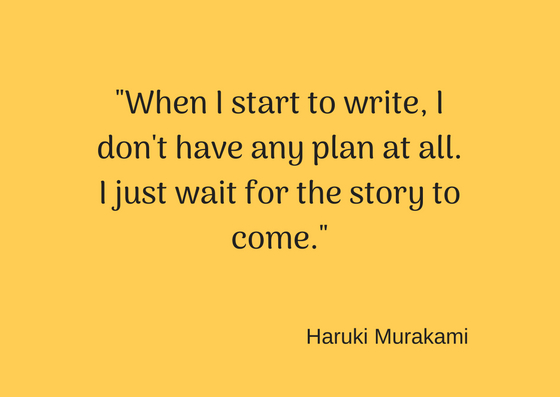
Haruki Murakami

See, at my core, even though I’m an organic writer, I seek order and structure to what I’m writing and doing, something that defines the path(s) that I’m following and establishes goals. That helped me put my ass in a seat in front of a computer, type, revise, and edit day after day for the past two years. Computational hardness assumptions and falsifiability helped me understand that what I was doing as I was writing the interacting, nested, and overarching stories of the six main characters in the four novels in Incomplete States was processing reductions, creating and transferring problems to other problems.

In essence, the problems presented couldn’t be solved, but creating and transferring the problems to other problems helped elaborate on the problem for the me (the writer), the characters, and the reader. Doing this enabled me to eliminate solutions for the three of us, and drive and narrow focus. Through the characters and stories, I would go through best, worst, and average case resolutions for them for a given path being followed.

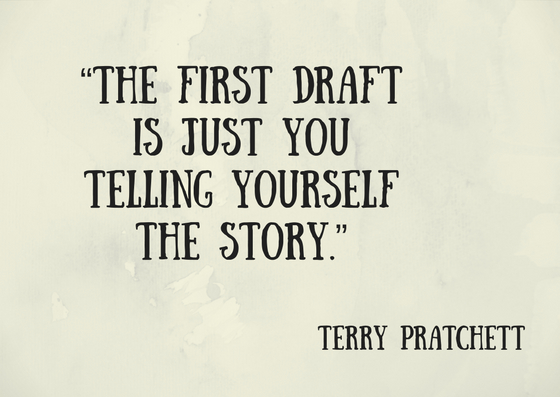
“The first draft is just you telling yourself the story.”

The beta draft is almost finished. With it done, I’ll have a much fuller understanding of what I set out to do. When I read the million words of output, I’ll see where I deviated or failed. Then I’ll be able to further shape, refine, and reduce the story that the series tells.

It’s been a challenging series to write. It feels like the series has absorbed much of my life energy. As I draw close to completing the beta draft, I’m eager to be done, and sad that this part is almost finished.

This part is the imagining. This part is where I plunged into the deepest oceans of creativity, diving down until I ideas and stories crushed me. Then I surfaced, sucked in a deep breath, and plunged in again.

This part was so much fun.

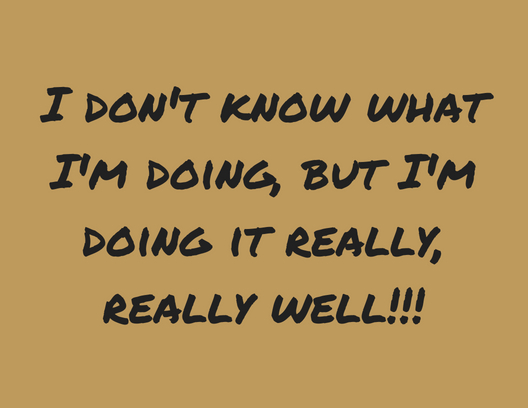
I don't know what I'm doing, but I'm doing it really, really well!!!

As I wrote, I created a document called “Epiphany”. It’s a compass to help me sort thoughts and establish consistently on a macro level. I developed thirteen epiphanies as I wrote the series.

The epiphany that grew as the greatest one to keep in mind was, “The key to consistency is consistent inconsistency.” Frankly, it scares me. I get anxious thinking about those words. It seems like an oxymoron, yet, once established, I was surprised how well it works. I imagine readers writing it and clearly understanding what and why is going on. It doesn’t just spring up; I like my readers to think for themselves.

Douglas Adams

My coffee is at hand and my ass is in the chair. Time to write like crazy, at least one more time.


Cold Coffee, Hot Writing

It was an exhausting, satisfying, and intense writing session today. All those muses who reside in the apartments of my being were silenced, except one. They knew exactly what I was to write, and one was the designated director.

Barely able to keep up, I hit that flow. The story’s complexities and this path that I’m following demanded that I first edit the two chapters I’d finished yesterday. Then, the muse dictated, start this chapter, and then another, and so on, until five chapters were being written in parallel. Had to be, because of the nature of the unfolding events. I typed, editing and revising, jumping between pages, paragraphs, characters, and chapters as ordered and needed, trying hard to keep up.

Finally stopping, I look up and engage in the coming-out period. Looking out the window, a line from “Uncle Salty” by Aerosmith comes to me: “Ooo, it’s a sunny day outside my window.”

Coming out after writing is always odd. These are the long seconds endured after intense writing when I re-enter life, my existence, reality, whatever you want to call it. I hear music and see other people. An air-conditioner’s chilly breeze teases my bare legs and neck. I feel detached from being there. What feels most real is that my butt cheeks feel sore and numb, and muscle strain stretches across my shoulders.

Still, I feel detached. I continue thinking about what’s been written, and what’s meant to be written yet, and how much work remains. Once the beta version of all four novels in this series are completed, I then need to edit and revise them until I have a first draft of all, something that I feel complete enough to regard as books. That will be a huge chunk of work. I think I’m looking at the rest of the year and beyond.

With those thoughts still strong, I drink my coffee, cold as an iceberg. Three-fourths of that cup remains. It’s time to stop writing like crazy; I can feel that, like the muse has said, “Okay, that’s enough for today. We’ll pick up here tomorrow.”

Still, I feel detached. My fictional world was so much sharper. I was engaged so much more deeply. It took a lot of energy to go that deeply into the flow, I realize. I’ve noticed this before without comprehending it. Going into the flow takes strength, energy, and commitment to induce myself to release enough to accept it.

I’m hungry, too, and realize that I’ve been hungry for a while, and I need to hit the restroom. Yes, time to stop writing like crazy today.

Blog at WordPress.com.

Up ↑