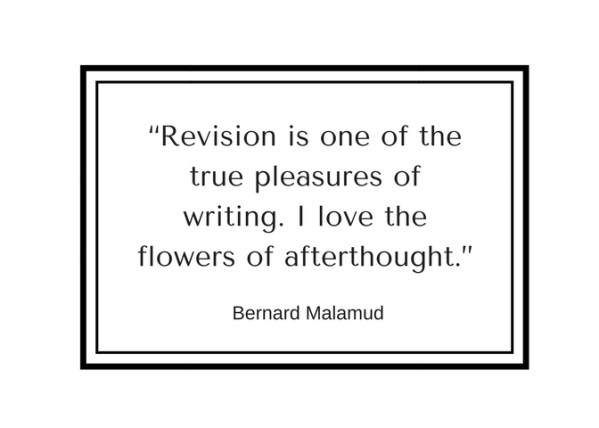
I’ve discovered this, too. Writing the early drafts is like chugging beer while revising is like sipping a glass of wine. Each provides a unique pleasure.
Bernard Said
Science fiction, fantasy, mystery and what-not
I’ve discovered this, too. Writing the early drafts is like chugging beer while revising is like sipping a glass of wine. Each provides a unique pleasure.
You ever read another’s book, and begin editing it to improve grammar, pacing or story-telling, or think that the character should have been changed, or think about how you’d change the words because a sentence is awkward or sloppy?
I encounter this all the time. But I can’t edit or change it; that book is done. That’s why I’m reading it.
One of the best aspects of reading and editing my own work is that I can enjoy the story and make those changes. Massaging and polishing the elements mentioned in the first paragraph, and more beyond that short list, becomes satisfying, exciting, and rewarding.
Conversely, though, I don’t know how much of my entertainment comes from reading these written words versus enjoying the expansion of my interior worlds being made real. Deep in this forest of words, I’m having a damn fine time, but could anyone else read this and have the same experience?
Well, no, probably not. Writers know what we write, and what others find and take from our words rarely match. Readers develop their own set of expectations as they read our work. As we write from our experiences, so they read from their experiences.
That completes the lap of thought, and I’m back at the start, and the rhetoric about wanting to change another’s book.
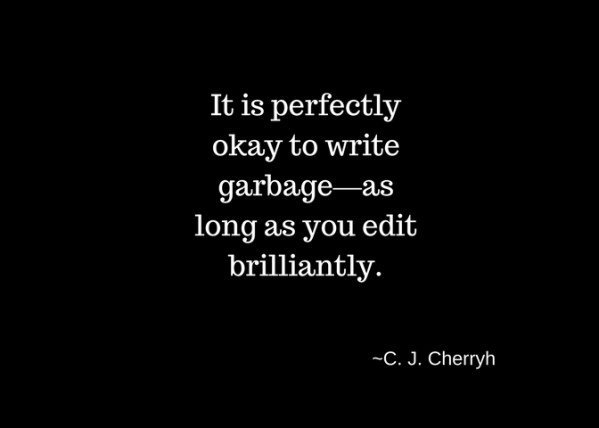
Surely, of all that’s possible, that’s not what that writer expected. And that’s why we edit and revise, and have editors, so that we don’t put out that book that someone reads and wants to change.
I became a little distracted while ordering my coffee. That trite statement is an understatement. I didn’t know Sam was speaking to me. Looking inward, listening to other voices, I was experiencing the bloom of another writing concept in my head.
After ordering my coffee and paying, I drifted off with an internal sigh. This concept, too, needed to be kneed aside. I’m on the third book of a trilogy. Need to get it done, and then on to the etcetera of publishing. Once the trilogy is done, it’s back to the third of a novel in a series that’s already published. There are many more novels loaded in my mind in that series to pursue. There are finished drafts that require editing and publishing, and there are marketing needs.
Seems like no matter how much coffee I drink, there’s not enough time to write. Bummer, as I think “Mrs. Elf” could be a fun write.
Ah. Time to write like crazy, at least one more time.

I’m at that point with the first novel in the “Incomplete States” trilogy that I’m almost finished.
Finished is as relative a term as happy. I’m finishing with the fun part of the novel, the writing process. Once the entire trilogy is completed, I’ll need to endure the work processes of having it edited, cover design, and the other accoutrements to publishing it as a finished work. It all reminds me a quote.
 “I love being a writer, what I can’t stand is the paperwork.” ~ Peter De Vries
That about sums it up. I love discovering the labyrinths of logic and plot as I stalk characters from the story’s beginning to its end, although it sometimes feel like the characters are stalking me. Yes, there is satisfaction in capturing it all on paper on on a computer; capturing the words help me more fully develop what the characters are seeing and experiencing, and allows a fuller enjoyment.
But the paperwork also includes editing and re-wording, polishing and refining. I’ve learned to enjoy those aspects more, but I’d rather be writing. So ponying up to the computer to finish writing this tome is not that exciting. I know that I’m just finishing a phase of creating a novel and trilogy. More work is required.
Realization that finishing the first draft is nigh reminds me that I don’t have a celebration ritual. I don’t smoke a cigarette or sip a glass of champagne, or throw a party. Other than, “Yea, me!” posts like this, I don’t say anything to anyone in particular. If someone happens to ask, “What have you been doing?”, I might say, “Finished the first draft of a novel this week.” They usually respond, “That’s terrific. What’s it about?” “Well, shit, why don’t you write it and find out?”, I don’t say. I sort of mentally shrug, smile, and present a label. “It’s science fiction.”
I have studied touchdown dances to see if any of those will work. I’m not a demonstrative person, though. I prefer lurking under the surface like a crocodile, only coming out when forced by necessity. Lurking creates less social and emotional entanglements.
Playing with these thoughts more deeply, I conclude writers and other artists, like musicians and actors, might understand my state of mind. I think this because I think they more fully comprehend the process and the unsaid trappings beneath the process. Many people I meet either oversimplify what it takes to write and publish a novel and shrug it off as “No big deal,” unless you’re a name, or they gush too much about what an accomplishment it is. That renders me uneasy. Yes, I recognize the incongruity and paradox inherent in my state. Writers are more likely to just say, “Congratulations! Well done!” And that pleases me most.
What about all of you other writers out there? How do you celebrate — or react, or behave — when you finish the novel’s first draft?
Okay, time to get going and finish this beast. Time to write like crazy, at least one more time.
I was raking and hoeing yesterday, preparing the back yard to seed it for the winter. My wife had already put one garden to bed. As freezes are striking, she’ll probably put the other to bed this week. Meanwhile, we have before us the question, should she plant garlic and, or, onions for winter? Probably so, but we veered away from the subject into collateral discussions before a decision was found.
Back in the yard, thinking about trimming back trees and bushes, I wrote in my head, as I often do when doing something that doesn’t require focus and will let me think about other things. Often, I think, writing is a lot like yard work. You’re always pruning and weeding, considering what’s been done and what else must be done.
But in yesterday’s internal dialogue, I realized how flawed that was. Yard work is continuous; it changes with the season, but you’re always out there, forever doing things. Plants grow, not only in the yard, but in the yards around you. Volunteers arrive, and trees grow taller and fuller, changing the exposure to the sun. Weather changes, like the super-hot summer of twenty thirteen, and the super-frigid winter of the same year, damages and kills plants. These need addressed, as much for fire safety as aesthetics.
Which is why novel writing’s comparisons with yard work should end. Eventually, I finish a novel. It becomes published and goes out into others’ hands and minds. The yard is always being attended; it’s only completed for a brief cycle. Although a novel may feel like it’s taking forever – this one of mine is now in its fifteen month of writing – I know it’ll be done someday. Then I’ll begin another, and it’ll feel like yard work again.
But it’s not.
Our outdoor air sucks. Need more?
Smoke from wildfires is filling our air. The Air Quality Index leaped to one hundred fifteen last night. DANGEROUS. It hasn’t been hot, only into the nineties. We open the house at night to cool it off, and then close the blinds and windows during the day. Opening the windows last night sent us into coughing fits as wet smoke smells wafted in. Eventually, we donned masks.
Today isn’t as bad. The A.Q.I. is in the fifties, and officially, moderate. Visibility remains down. It’s like a white-out beyond a a few hundred feet.
All this wildfire smoke has reduced my Fitbit activities. Walking is way down, to five miles a day average. It’s not as critical as many other issues resulting from wildfires. None of the fires are directly affecting our community. We feel for all those being evacuated in those areas, and appreciate the firefighters’ efforts. If this stuff is terrible for me, a guy in his early sixties who considers himself in good health, those with emphysema and other respiratory issues must be deeply suffering.
I took to the Orson Scott Card method for visualizing and organizing the novel in progress. O.S.C. talked about just drawing places, like a city, and then adding details. With each detail and area added or defined, entertain questions about why those areas and details exist. I’ve done this exercise before, with excellent results. I wasn’t disappointed this time.
I had been editing the novel’s first draft. Halfway through that process, I perceived a problem. A new ‘greater arc’ was required as the solution. I could be wrong, but this is how I decided to address the issue. It’s essentially an epic. I like epics. Bigger is better.
This was decided over a four day period. Then, after deciding it was necessary, I went on a reading sprint. I finished reading two novels, and read two others, in five days. I also read fiction stories and news articles online. This reading stimulated my writing juices and invigorated my writing dreams. I found myself re-committed to who I was, and what I was doing. It’s a matter of taking a deep breath, turning on the computer, and putting the ass in chair, and the fingers on a keyboard.
This new arc takes place on a planet where technology fails. An outpost is established using outdated technology. Suddenly, it’s like living in a frontier castle. I loved that difference in direction from my usual challenges of visualizing the far future and other intelligent races.
I drew the outpost on my computer, and brainstormed about how the lack of technology affects them, and solutions and work-arounds. The team living in the outpost are hunting for people, but can’t use their suits or vehicles. They fall back to horses. Having horses adds more problems and dimensions.
So do the powerful windstorms endured on the planet. That’s why the outpost becomes a castle; something stout enough to survive the windstorms are necessary. That’s the iceberg view of all the scenes, problems, and challenges realized. I don’t want to give away more. Drawing and brainstorming in this manner was a catalyst to my imagination. I scrambled to capture ideas an create an event timeline. It resulted in *shudder* an outline.
As an organic writer, the outline overwhelmed me. Suddenly, there it all was, this part of the novel mapped out in all its complications and key events. I could imagine, see, and hear them. Writing them was required. It’s daunting for an organic pantser. I decided I would scramble to write key scenes and moments, and patch them together with bridge and pivot scenes, and build the story in layers, much like I used to do when oil painting, or writing a business case, or analyzing data.
I think that whatever opened my creative floodgates also turned the dream valves to full open. I had six remembered dreams last night. Friends from my past were featured. My wife also made an appearance. Of course, maybe it was the eclipse opening the dream and creativity gates. Who can say?
Trying to capture details this morning diverted personal resources already earmarked for other activities. I resorted to dream summaries. The dreams were wild. Once again, my muses were prominently featured. They were attempting to guide and assist me in different manners. Sorting the chaos was a fascinating exercise.
Having your muses show up in my dreams injects high confidence levels. I felt empowered and emboldened when I awaken. Yet, being me, the confidence evaporates to more normal levels by midday. Having your muses and some higher beings populate your dreams and offer encouragement has a good thing. I’m certainly not going to kick them out.
Time to write like crazy, at least one more time. How about you, writers? Have you seen increased creativity? Maybe it is the eclipse.
Or maybe it’s the coffee.
A mass of words have been mined from his veins of creativity. They’re mostly sifted, sorted, and arranged. He’s beginning to see the complete story within the block. With more chiseling, polishing, and thought, it can be something special that others will enjoy.
Sitting, he sips his coffee. A few seconds of reflection are accepted to allow his mind to shift from one sphere to another. Then, he opens his document, and resumes his editing and revising.
Well, this is an embarrassing confession.
Here I am, on page three hundred thirty-four of the first half of the novel, when I encounter a little reminder to insert Brett’s last name. So, being a semi-pro, I open up the novel’s bible to look it up.
Damn if it’s not there.
I know I used it at least once elsewhere in the novel. Of course, this is a sequel, so the last name was used in the first book. But searching for it has proven daunting.
I’m surprised this happened, and it’s irking me. I keep documents to help me remember and understand who’s doing what to who, and what’s happened to everyone, to sustain internal logic. I can’t believe I can’t find his last name.
In my defense, this is a science fiction novel. Although the majority of space-travelers and colonists have westernized their names for public use, names aren’t critical in the future. Digital personal identifiers are what identify you and socialize who you are. You P.I.D. is constantly being broadcast and scanned. The P.I.D. defines you. Based on your birth date, time, location (including planet), universal master number (U.M.N., which includes your cultural and ethnic heritage, and is assigned sequentially), and D.N.A., it’s generated when you’re born. While first names are used in conversations, the last names are generally superfluous. There are cults that hold to traditional norms, bandying their last names about as though they’re greatly important, but you don’t need them.
It’s the second day of the search. A rational internal section cheers me to ignore it for now, that this can be found later, but finding it has become an obsession. Tangentially, I believe my writing soul is enjoying the departure from the editing routine. Plus, fortified with a quad-shot mocha, my confidence about finding it is racing along on wings of caffeine, sugar and chocolate.
Let the search commence! Or, recommence.
Differences struck me as I finished editing sequences. Diverting my thinking, I considered the differences.
The difference was external to me. I puzzled over that. The world surrounding me seemed calmer, quieter, and more relaxed than it had a short time before.
I thought about it more, trying to understand if it was quieter, or a false impression. I thought, instead, it’s spillover. The first chapter that I’d finished editing had been intense and chaotic. Reading through it and staying focused challenged me. It seemed like the surrounding coffee shop echoed with noise and activity while I worked on it, and I restlessly, almost anxiously, fidgeted while working on it.
The next chapter being edited began with a calmer scene, and stayed calm and thoughtful. The coffee shop around me seemed more relaxed, and quieter. I, too, became stiller.
Disbelieving, I considered these differences for a while, and then walked myself back through memories. Yes, writing battle, fight, disaster, and emotional scenes consumed greater energy, demanding deeper concentration and tighter focus. I often felt more physically, mentally, and emotionally spent when writing them.
Editing them affected me in the same way. Writing and editing more reflective scenes push me to become more reflective. What I wrote and edited seemed to impact my impression of the surrounding environment. It leaves me feeling disconnected with the world. My thinking feels disjointed, like I don’t belong where I’m at.
It’s probably something all writers experience. I don’t know why it surprises me; I know I experience it when I’m reading books and stories. It shouldn’t be a surprise that I experience while editing my own. Perhaps, it’s because my experiences seem more intense, because it is personal, and comes from within me, thereby amplifying the impact.
Does this post makes sense? What of you, writers? Do you, too, experience this?
 Michael Seidel, writer