C.J. Also Said
Science fiction, fantasy, mystery and what-not
My friends surprised me last night by asking questions about the writing process. They were interested in how I come up with characters (and whether I ever used people that I know as the basis), and how I know when a book was finished.
Coming up with characters isn’t difficult. Some people do huge sketches of the characters before they start, detailing everything possible about the character. I don’t, although I’ve tried doing that, because that’s what I read a writer should do. I don’t do it before I start, but I will do a physical appearance at some point to keep matters aligned. I usually also develop their backstory so that I’m aware of who they are, and document that, again, to keep matters aligned, but I don’t usually do these things until after the character has been introduced.
The thing is, when I introduce the characters, I know their general personality and behavior patterns, whether they’ll be optimistic, sullen, joyful, belligerent, dismissive, etc. All of them are composites. I do lean heavily on people I know in to establish a guide about how the character will think and behave, but the characters don’t share a physical appearance or name with the real people. Usually, too, I use more than one acquaintance as the character’s foundation. One acquaintance will be the guidance for political views while another provides the guidance for religious views, and another will be the foundation for attitudes about eating and exercising, etc.
Like people, each character exists on multiple spectra regarding how they think and act. The spectra are about the facets of life. Everything we think about and do exists on their own spectra, in my mind. I’ve noticed how people behave while driving vice their behavior in personal relationships and work relationships, their politics, and so on. I’ll often notice differences about their behavior. Naturally, I notice the same about myself. I know what I think and then do, sometimes surprising myself by my whims and impulses. Sometimes I rationalize that action, and sometimes I’m clueless about why I thought one way and did another.
I’ll decide, in a fashion, how much they slide along their spectra. Again, this is a reflection of what I think I see in people. I think of these spectra as one hundred point sliding scales. Zero means people won’t deviate on their spectrum. As you can imagine, that’s somewhat rare. Most people known to be true will still have a slight variation, recognizing that adhering to absolutes are difficult. And although someone might be low on the scale in their personal relationships, meaning they can be trusted in confidence, they can be high on the scale in other relationships, such as work, and thus, be considered less trustworthy.
I didn’t share all this with them, of course. That would be TMI and cruel, in a sense. They don’t need to know it. But their questions prompted the thinking, so I felt the urge to write about it to help me understand it.
As far as when the novel is finished, I begin with a sense of an ending when I first start on the concept. As with the concept, the ending changes and shifts as it develops, becoming sharper and clearer as the concept becomes clarified and the story lines and character arcs develop substance. The ending I want will often strike hot and hard in the middle of the writing process. I have no problem writing that sketch-up, knowing that the words will be changed, and some of the substance will be modified. But it gives me a firmer goal.
Sometimes, I find that that ending is wrong, that I missed, because the story took unexpected swings. That’s not a worry, but another challenge to put on my writing hat and find a new ending. In any case, from the writing process, I find an understanding of an ending that satisfies me, the reader.
Of course, that’s just the beginning. After finishing writing the novel, I read, edit, and revise it, and while doing that, I’ll adjust the ending as I think needs to be done.
Will I change it based on others’ input? I can’t say yes or no. First, it depends on the input. Readers find different things in books, especially if it’s a complex work. That’s great. I have a hope about what they’ll take away from my novels when I write them, but it’s based on what I wanted to find as a reader. So, I bear in mind that I’m writing for myself first. If their input finds appeal in me, then I’ll work with it.
Enough. I understand what I think. Time to write like crazy, at least one more time.
It was fun editing Six (with Seven) today. Written over a year ago, I’d forgotten the surreal aspects that the book took on at that time, dealing with a character’s memory, sex, and imagination as separate entities. I had fun with the arguments that they had among themselves and Philip K. Dick flavor infused in some of the dialogue and situations.
The character’s name is Madi (Madison) Handley. Because she’s a pirate, she modeled her memory after a pirate, Grutte Piers, and insists on having a parrot, J.R. As Handley’s existence streamed into my awareness, her name came from another blogger (J.R. Handley) and a barista (Madi), with the parrot named after J.R. Handley as well.
Her story is running in parallel to Pram’s terra-forming story, and I alternated between the two in the chapters in this section of the novel. I have a lot of affection for Pram and Handley, and love discovering their lives in space.
Coffee gone, and damn, I’m hungry. Time to stop writing editing like crazy, at least for today.
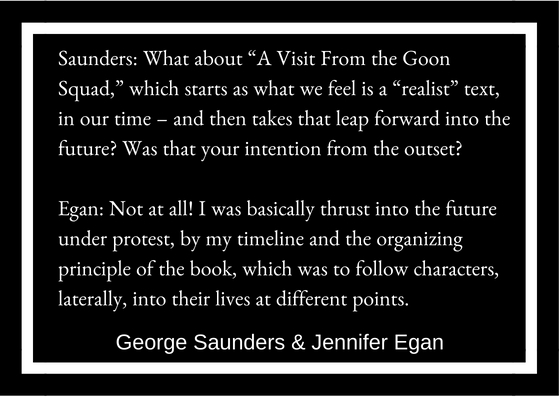
This exchange was profoundly validating to me. I chase my characters and grind my molars, dismayed by where they’re going, reluctant to accept their direction, and upset because I’m again proven not to be in charge. Finding I’m in good company comforts me a little, like an amuse-bouche comforts me when I’m really hungry for pizza.
I enjoyed their conversation, so here’s a link, so you can read it, too.
I was contemplating going on strike this morning. Why not? I can, can’t I? My muses and characters go on strike when they’re disenchanted with the story. Isn’t it fair that I also go on strike?
I do not like the chapter I’m working on. It’s almost finished. The characters and muses agree, yes, that’s the chapter. It’s perfect.
My reaction is, I respectfully think you’re fucking nuts.
I’m aware that I am the writer, that the characters and muses are imaginary constructs that exist as part of my writing process. (Well, I hope that’s the case.) It’s a subject that takes me into an existential hole. I’m the writer, and I think, therefore I write, but I always seem to be driven by the muses and characters’ preferences and decisions. When I stumble in my writing, it’s generally because the characters object to the story’s direction, or the characters’ development.
This, I think, is turnabout is fair play. I object to what they’re doing. I don’t like it. There isn’t a writer’s block involved. The characters gleefully push their words their my fingers, and we make great progress toward the conclusion. So, it’s not a block. It’s a disagreement.
Frankly, the situation has been developing for a few weeks. Just a few days ago, I was complaining about my characters’ tendency to talk things over. I wanted action. No, they needed to talk it out. Well, they’re the characters, right? I’m just the writer. Despite our artistic differences, I yielded to them.
I’m going to yield to them this time, too. Because, number one, I feel the urge to write like crazy. I don’t like what I’m writing, but I feel obligated to write it. This brings up a couple questions. One, is it totally insane that I feel obligated to write it? Two, do I need to like what I’m writing?
I answer the first question, yes, you’re fucking nuts, but that’s not a problem, per se, and I answer the second one, but if I’m writing for me, shouldn’t I like what I’m writing? This prompts some internal dialogue between me, myself, and I, and the suggestion that maybe I do secretly like it, but I’m worried about how readers might react.
Interesting.
I’ve not put on my reader’s persona to address the issue because it’s just too early. It makes no sense to read this as a reader when I haven’t completed it as a writer. It’s a work-in-progress.
I console myself that this is the beta draft, not even the first draft, dude. I also console myself that many writers think their first draft is crap. So, you know, write the crap that the characters and muses are pushing, and then revise and edit the hell out of it once it’s written. Despite my disagreement with my muses and characters, getting it written remains the key. That’s my function as the writer. The mantra is, get it written. The mantra is, you’re still learning the story.
Okay, now that I’ve vented, time to write like crazy, at least one more time.
My characters are irritating me. I’m itching to get to the action, but here they go, talking it all out, establishing what they know. It’s maddening.
“Come on,” I shout at them. “Let’s go.”
But, no. They continue to challenge each other’s memories, grasp of what’s going on, and what they’re supposed to do. It rankles me.
Yet, I understand it. They’re people who have been forced together, selected for what they don’t know and what they haven’t done. They’re not the same people they were earlier in the series. Of course they’re confused. Some are also resentful, angry, and suspicious. In this situation, some don’t speak, but watch and listen. Others must verbalize it all.
I thought, hey, let’s initiate an attack on them.
No. That was rejected.
Not even a sniper killing one of them?
No.
A fight among them?
No.
An interruption, something that disrupts them and forces them to action, a realization, perhaps, or a sense of urgency? Only Richard has a sense of urgency. (Richard has assumed the mantle of mastermind at this point. The other character that’s restless and worried is Seven. But she’s an imaginary character, existing in imaginary time, biding the moment when she acts, waiting to see what happens, because she thinks she might have screwed it up.)
No; they’re talking.
They’re doing pages and pages of talking.
It’s too much dialogue, in my opinion. It kills the pace.
Sorry, the characters and muse answer. Pace isn’t our concern.
I guess I’ll let them talk for now, and then see if I can edit or revise it later. Honestly, working through their dialogue seems like the only way to move forward.
It was a frustrating day of writing like crazy. Thank god for coffee.
Got my three Cs – coffee, computer, and cookie. The cookie is an indulgence. I ate breakfast – granola and yogurt with blueberries – a few hours ago, but I feel hungry, so what the hell, I indulged myself and ate a cookie. Salty caramel, if you must know.
Admittedly, eating the cookie was a little bit of stalling. I was stalling my start today because yesterday’s writing events surprised me. Handley attacked Kanrin with a sword. Kanrin killed her. What was going on with Forus Ker? He just sat there watching. Meanwhile, the ship’s alarms continue to go off. Kanrin’s nets have been compromised. And where are the rest? What are they doing?
None of this was planned. The destination is known but the path is a wildly winding way.
Once I finished writing those pages and concluded that chapter, I cleaned up errors and checked continuity. Then I walked, and wondered, where are we going now? What’s supposed to happen?
All of this took me down paths about immortality and death. Born with a fear of dying, and still capable of suffering injury and pain, one doesn’t abandon those fears, despite the evidence of past experiences. Even if you’ve died and returned before, or you’re not sure that what’s happening is reality, virtual reality, or a hallucination, and even if you’re doubtful if the outcome matters because of everything else happening, coping with the natural emotional and intellectual stresses inherent in these paradoxes challenges your will and sanity. Put yourself in that position and imagine. And remember, whatever the brain or personality might decide, the body may have different ideas. We’re not the masters of ourselves that we’re told as children. It’s a lesson we learn as we age and our bodies and abilities decay. It’s a lesson that’s reinforced as we meet others with lesser and greater abilities than ourselves. Exploring these avenues of similarities and differences and the impact on our decisions and actions is one of the most exciting and delicious parts of my writing experience.
When I walked and thought, I struggled to know what was to happen next in this story? It’s stupid of me to wonder, but I can’t resist. I know, though, I’ll slip into the moment and begin typing, and things will come out that I never foresaw. Consciously, I don’t know what’s next, but once I assume the typing posture, out it comes, if I just let it.
Yeah, it feels like weird fucking magic, typing something when I don’t know what I’m going to type. After all these years of writing, the process still astonishes me. I hope it never stops.
Now fortified with sugar and caffeine, it’s time to write like crazy, at least one more time.
I’ve been working on the yard this week. It’s a personal Möbius strip. Cut the front grass, edge, weed, trim. Cut the back grass, edge, weed, trim. Weed, trim, and edge the side yards. Trim back the neighbors’ trees and bushes. Begin again.
I know, it’s my choice to have a lawn and do all of this. I can hire others. I can zeroscape. I’ve considered both. Or I can let the lawn go to hell.
We don’t use weedkillers or anything artificial on our lawn. The weeds multiply. Out come yellow dandelions. We accept them because bees and butterflies love them. I leave the dandelions when I pull the weeds. Well, mostly. I try to keep them at a reasonable number.
I like the yardwork. In a world where projects take so long to accomplish and we rarely see tangible results, the yardwork provides me with satisfaction that I did something. I also like being outside, and sweating, exerting myself, and feeling the sun and wind. It’s great.
Yardwork also frees my writing mind. Not much thought is required for yardwork, and that lets me think about writing and the work in progress.
I had a surprising epiphany about all of that yesterday. I thought, I don’t understand people. I don’t get their thinking. I struggle to understand their motivations.
I know these aren’t simple questions. Adrenalin rushes and endorphin highs contribute to the pursuit of our fixes. Financial gain, self-esteem, respect, and admiration can contribute. The need for revenge provides some stimulus to people, as does immaturity and warped views and skewed memories. Motivations are complex formulas.
I thought, I don’t understand people, and that’s what I like to write. When I write, I can explore the characters’ inner worlds. I can study their thinking and moods, relationships and memories. My future technology lets them have augmented memories and enhanced communications. Technological capabilities blend with organic skills to blur the lines. Personal scanning technology lets measurements of micro-changes in another person’s temperatures, heart rates, pupils and other biological indicators help detect lies. In more sophisticated people, these things can and are masked to trick others through technology. Sometimes, it’s like a technological chess match.
Writing about these characters help me learn. From them, it’s reaffirmed that humans are complicated. Matters such as truth and motivation are rarely black and white subjects. Skills like memories, self-awareness, and interpersonal communication vary immensely among people, but also in ourselves. We’re not always the same person today that we were yesterday. Allegiances waver. Certainty wobbles. Hopes sink and rise.
Now, with that cleared up for me, I have my coffee. Time to write like crazy, at least one more time.