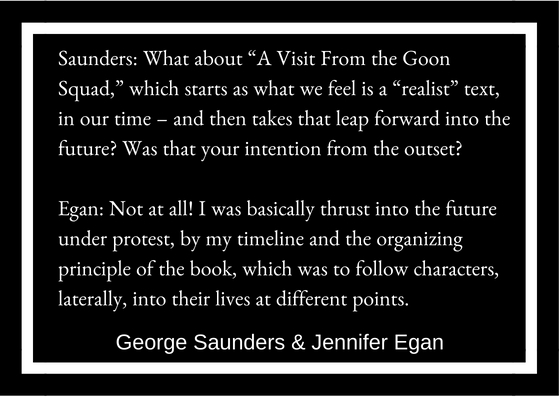
Saunders Asked Egan

This exchange was profoundly validating to me. I chase my characters and grind my molars, dismayed by where they’re going, reluctant to accept their direction, and upset because I’m again proven not to be in charge. Finding I’m in good company comforts me a little, like an amuse-bouche comforts me when I’m really hungry for pizza.

I enjoyed their conversation, so here’s a link, so you can read it, too.

Writer’s Strike

I was contemplating going on strike this morning. Why not? I can, can’t I? My muses and characters go on strike when they’re disenchanted with the story. Isn’t it fair that I also go on strike?

I do not like the chapter I’m working on. It’s almost finished. The characters and muses agree, yes, that’s the chapter. It’s perfect.

My reaction is, I respectfully think you’re fucking nuts.

I’m aware that I am the writer, that the characters and muses are imaginary constructs that exist as part of my writing process. (Well, I hope that’s the case.) It’s a subject that takes me into an existential hole. I’m the writer, and I think, therefore I write, but I always seem to be driven by the muses and characters’ preferences and decisions. When I stumble in my writing, it’s generally because the characters object to the story’s direction, or the characters’ development.

This, I think, is turnabout is fair play. I object to what they’re doing. I don’t like it. There isn’t a writer’s block involved. The characters gleefully push their words their my fingers, and we make great progress toward the conclusion. So, it’s not a block. It’s a disagreement.

Frankly, the situation has been developing for a few weeks. Just a few days ago, I was complaining about my characters’ tendency to talk things over. I wanted action. No, they needed to talk it out. Well, they’re the characters, right? I’m just the writer. Despite our artistic differences, I yielded to them.

I’m going to yield to them this time, too. Because, number one, I feel the urge to write like crazy. I don’t like what I’m writing, but I feel obligated to write it. This brings up a couple questions. One, is it totally insane that I feel obligated to write it? Two, do I need to like what I’m writing?

I answer the first question, yes, you’re fucking nuts, but that’s not a problem, per se, and I answer the second one, but if I’m writing for me, shouldn’t I like what I’m writing? This prompts some internal dialogue between me, myself, and I, and the suggestion that maybe I do secretly like it, but I’m worried about how readers might react.

Interesting.

I’ve not put on my reader’s persona to address the issue because it’s just too early. It makes no sense to read this as a reader when I haven’t completed it as a writer. It’s a work-in-progress.

I console myself that this is the beta draft, not even the first draft, dude. I also console myself that many writers think their first draft is crap. So, you know, write the crap that the characters and muses are pushing, and then revise and edit the hell out of it once it’s written. Despite my disagreement with my muses and characters, getting it written remains the key. That’s my function as the writer. The mantra is, get it written. The mantra is, you’re still learning the story. 

Okay, now that I’ve vented, time to write like crazy, at least one more time.
 

Another Complaint to Make

My characters are irritating me. I’m itching to get to the action, but here they go, talking it all out, establishing what they know. It’s maddening.

“Come on,” I shout at them. “Let’s go.”

But, no. They continue to challenge each other’s memories, grasp of what’s going on, and what they’re supposed to do. It rankles me.

Yet, I understand it. They’re people who have been forced together, selected for what they don’t know and what they haven’t done. They’re not the same people they were earlier in the series. Of course they’re confused. Some are also resentful, angry, and suspicious. In this situation, some don’t speak, but watch and listen. Others must verbalize it all.

I thought, hey, let’s initiate an attack on them.

No. That was rejected.

Not even a sniper killing one of them?

No.

A fight among them?

No.

An interruption, something that disrupts them and forces them to action, a realization, perhaps, or a sense of urgency? Only Richard has a sense of urgency. (Richard has assumed the mantle of mastermind at this point. The other character that’s restless and worried is Seven. But she’s an imaginary character, existing in imaginary time, biding the moment when she acts, waiting to see what happens, because she thinks she might have screwed it up.)

No; they’re talking.

They’re doing pages and pages of talking.

It’s too much dialogue, in my opinion. It kills the pace.

Sorry, the characters and muse answer. Pace isn’t our concern.

I guess I’ll let them talk for now, and then see if I can edit or revise it later. Honestly, working through their dialogue seems like the only way to move forward.

It was a frustrating day of writing like crazy. Thank god for coffee.

The Three Cs

Got my three Cs – coffee, computer, and cookie. The cookie is an indulgence. I ate breakfast – granola and yogurt with blueberries – a few hours ago, but I feel hungry, so what the hell, I indulged myself and ate a cookie. Salty caramel, if you must know.

Admittedly, eating the cookie was a little bit of stalling. I was stalling my start today because yesterday’s writing events surprised me. Handley attacked Kanrin with a sword. Kanrin killed her. What was going on with Forus Ker? He just sat there watching. Meanwhile, the ship’s alarms continue to go off. Kanrin’s nets have been compromised. And where are the rest? What are they doing?

None of this was planned. The destination is known but the path is a wildly winding way.

Once I finished writing those pages and concluded that chapter, I cleaned up errors and checked continuity. Then I walked, and wondered, where are we going now? What’s supposed to happen?

All of this took me down paths about immortality and death. Born with a fear of dying, and still capable of suffering injury and pain, one doesn’t abandon those fears, despite the evidence of past experiences. Even if you’ve died and returned before, or you’re not sure that what’s happening is reality, virtual reality, or a hallucination, and even if you’re doubtful if the outcome matters because of everything else happening, coping with the natural emotional and intellectual stresses inherent in these paradoxes challenges your will and sanity. Put yourself in that position and imagine. And remember, whatever the brain or personality might decide, the body may have different ideas. We’re not the masters of ourselves that we’re told as children. It’s a lesson we learn as we age and our bodies and abilities decay. It’s a lesson that’s reinforced as we meet others with lesser and greater abilities than ourselves. Exploring these avenues of similarities and differences and the impact on our decisions and actions is one of the most exciting and delicious parts of my writing experience.

When I walked and thought, I struggled to know what was to happen next in this story? It’s stupid of me to wonder, but I can’t resist. I know, though, I’ll slip into the moment and begin typing, and things will come out that I never foresaw. Consciously, I don’t know what’s next, but once I assume the typing posture, out it comes, if I just let it.

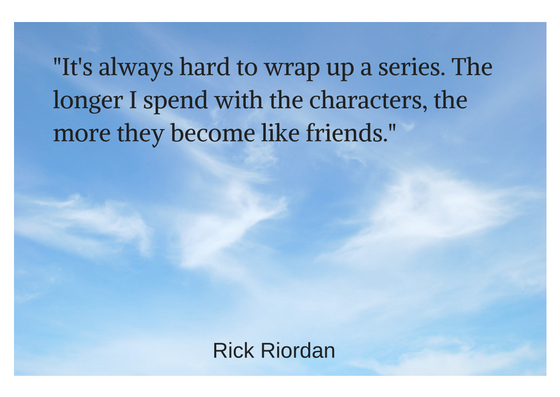
Yeah, it feels like weird fucking magic, typing something when I don’t know what I’m going to type. After all these years of writing, the process still astonishes me. I hope it never stops.

Now fortified with sugar and caffeine, it’s time to write like crazy, at least one more time.
Learning From Writing

I’ve been working on the yard this week. It’s a personal Möbius strip. Cut the front grass, edge, weed, trim. Cut the back grass, edge, weed, trim. Weed, trim, and edge the side yards. Trim back the neighbors’ trees and bushes. Begin again.

I know, it’s my choice to have a lawn and do all of this. I can hire others. I can zeroscape. I’ve considered both. Or I can let the lawn go to hell.

We don’t use weedkillers or anything artificial on our lawn. The weeds multiply. Out come yellow dandelions. We accept them because bees and butterflies love them. I leave the dandelions when I pull the weeds. Well, mostly. I try to keep them at a reasonable number.

I like the yardwork. In a world where projects take so long to accomplish and we rarely see tangible results, the yardwork provides me with satisfaction that I did something. I also like being outside, and sweating, exerting myself, and feeling the sun and wind. It’s great.

Yardwork also frees my writing mind. Not much thought is required for yardwork, and that lets me think about writing and the work in progress.

I had a surprising epiphany about all of that yesterday. I thought, I don’t understand people. I don’t get their thinking. I struggle to understand their motivations.

I know these aren’t simple questions. Adrenalin rushes and endorphin highs contribute to the pursuit of our fixes. Financial gain, self-esteem, respect, and admiration can contribute. The need for revenge provides some stimulus to people, as does immaturity and warped views and skewed memories. Motivations are complex formulas.

I thought, I don’t understand people, and that’s what I like to write. When I write, I can explore the characters’ inner worlds. I can study their thinking and moods, relationships and memories. My future technology lets them have augmented memories and enhanced communications. Technological capabilities blend with organic skills to blur the lines. Personal scanning technology lets measurements of micro-changes in another person’s temperatures, heart rates, pupils and other biological indicators help detect lies. In more sophisticated people, these things can and are masked to trick others through technology.  Sometimes, it’s like a technological chess match.

Writing about these characters help me learn. From them, it’s reaffirmed that humans are complicated. Matters such as truth and motivation are rarely black and white subjects. Skills like memories, self-awareness, and interpersonal communication vary immensely among people, but also in ourselves. We’re not always the same person today that we were yesterday. Allegiances waver. Certainty wobbles. Hopes sink and rise.

Now, with that cleared up for me, I have my coffee. Time to write like crazy, at least one more time.

Off-kilter

My writing world is a little off-kilter this morning. I’m again doubting that the muses and characters know what they’re doing. I suspect they’re conning me.

The muses and characters agree about what’s to be written, what’s happening, and what’s to come next. “Trust us,” they purr.

I’m jaundiced about their plans. “Seems like we’re going around in a bac.”

“A what?”

“Bac. ” I spelled it, “B.A.C. Big-ass circle.”

“Writers,” one muse mumbled to a character (Brett), who nodded back with an eye-roll. They didn’t care that I’d witnessed this, implying a disrespect that I didn’t like.

“We know what we’re doing,” another muse said, like a young mother speaking to her mother about the way she’s raising her child. “Just follow our guidance.”

“I am,” I said. “If you could let me in on a little more, I’d feel more comfortable about I’m typing.”

Several muses and characters unloosed scoffing sounds while another muse said, “We don’t want to burden you with too much.”

“I’m the writer here,” I said. “Shouldn’t I know where the story is going?”

“You do know,” one muse said.

“Yes, you know how it’s ending, don’t you?” said another muse.

Handley, a character, “Nothing personal, but we don’t want to give you too much to juggle. You already seem a little strained by the novel’s direction.”

“It’s more than a novel, it’s become a series,” I said.

“Exactly,” Handley said. “And there’s a great deal more material available that we could give you, but you seem tired of writing this.”

“Yes,” a muse said. “You’re weary of writing this, doubtful of the content, dubious of your skill and talent, and worried that you’re pulling a Wonderboys.”

I clamped my lips tight for a second before speaking. “None of that’s germane to this conversation. While that’s all true, that doesn’t change that right now, it seems like you guys are leading me in a — ”

“Big-ass circle,” a muse said. “Yes, we know.”

Realizing that I wasn’t going to win this discussion, and that the muses and characters weren’t going to tell me more until they thought I was ready for it, I finished my walk, purchased my coffee, and set up to write.

Time to write like crazy and see where the characters and muses take me. Do you know that the muses have never told me their names?

After the Revelations

This is not how I thought writing would go.

I had a romanticized, glamorized vision about the writing process and a novelist’s life. I thought I would be dictating the story, making it up and writing it down. Instead, here we go again. Philea finishes her wide-ranging tale and brings it back to the moment where it split away,  and joins two other paths. One path was forged by Pram when he told his part of this story, and the other path was forged by the six primary characters on the Wrinkle.

I’ve been waiting for this re-connecting. I’d seen and heard, experienced, if you will, what they were going to say and do once they came back together. Honestly, Philea’s side-trip astonished me. She went into a life that I didn’t know existed. It’s also surprising that it startled her as much as it startled me.

But, at last her side-trip is done. It’s time for those long-awaited next scenes. But before I go into writing those scenes, I need to soak in what Philea and the other characters experienced. She and Pram shared more examples of parallel life-experience-reality-existences — a LERE, their shorthand for other Now events that that lived (or are living) and share with the rest trapped in this cycle.

They’re trying to understand what will happen to them. They’re attempting to take a piece of information and fit it in with other pieces of information to create a substantive, believable cause and effect tale for what they’re enduring. That’s human nature, to fill in the gaps, color them with some form of logic or explanation, and make it all whole.

I feel for them, pitying them, because I know that’s not their nature. That’s not what they’re living. Even as they draw closer to the truth, sometimes even stating it in incredulous terms as a possibility, the six don’t always agree on the verbiage or logic. The logic argues against their standard expectations about reality, existence, and the arrows of time. Besides, not all of their experiences will support the truth, in their minds, because they don’t remember everything that they experience. Remembering more answers less by introducing more complexity and gaps. At this point, I think all readers will understand that.

So listening  to — hah, typing — my characters’ struggle to resolve these new fragments of information, I really feel for them. The passages of their thoughts and dialogue that I’ve typed leave me oddly reflective.

That’s a first, raw, impression. On greater thought, it’s not leaving me oddly reflective. Instead, I’m taking what I learned through my characters’ learning, and applying it to my existence, here in the real world.

We’re all pieces. We see ourselves as pieces that comprise a whole. Yet, few of us ever fit fully, completely, and comfortably. And when one of us goes, we struggle to see the new whole, because we remember the whole that we knew, and lament its changes. We search for answers and rarely find closure and resolution. We remain wondering.

With these notes softly echoing in my mind, I sip the final dregs of cold coffee and end my day of writing like crazy.

Cringe Writing

Philea continued to dominate my recent writing sessions. During yesterday’s effort, she took me down paths that had me cringing. It wasn’t the sort of stuff that I generally write. It was contrary enough to my normal voice and style that I considered whether it should be continued. I wondered if she’d breach the series’ borders and was taking off into the wrong direction.

This prompted a guidelines review in my post writing walk. They were good reminders.

  1. Write like crazy. I’m still finishing this book and series. (The series is Incomplete States, and this novel, the fourth, is Good-bye, Hello.) Basically, open the doors, portals, floodgates, valves, lit the fuse, whatever metaphor works, and let it go. Editing is for later, when it’s all done.
  2. The characters are allowed latitude to explore themselves and the story. This has the additional benefit of allowing me to explore the story and characters.
  3. I’m an organic writer. While I know where I expect to end up, the paths I follow are being created as I go. That’s the same with the characters. A compass is used to keep us going in the correct general direction, making corrections as necessary.
  4. Let the readers decide. Readers bring all kinds of conceptions and ideas to stories they’re reading. They find their own interpretation of truths and myths, and apply them. They won’t all enjoy the same books, or even the same parts of a book.

That last point, about readers deciding, emerged from early critique groups. I’d noticed several biases develop in a writing group. Not surprising, as they’re all readers before they’re writers.

  1. Some like to be told everything. They don’t want any gaps in what was said or happened. They don’t want it to be abstract. Others prefer that their imagination fill in the gaps, or that, this is like life, and we don’t always know all of the answers.
  2. Some writers/readers like a leisurely style. The want to slow down and breath in the atmosphere.
  3. Some prefer style over substance, or substance over style. 

I tend to write in a very active voice. It’s my preferred voice. But, I use multiple POV (sometimes first person, but third person dominates). In giving latitude to characters, I notice some of them don’t like a direct, active voice.

After thinking about that, I realize, well, of course. I don their skins and minds when writing from their POV. When I do that, I try staying true to them and their voice. Just like real individuals, they have styles of observing, thinking (and applying knowledge and lessons learned), interacting, and taking action. They carry emotional and physical baggage. These traits direct their voice when the story is being told via their POV.

This wasn’t something I developed on my own. I’m always developing on other writers’ shoulders. This specific point came through an epiphany I had while reading J. Franzen’s The Corrections about fifteen years ago. I later cemented my impressions while reading Wally Lamb, Michael Chabon, Louise Erdrich, Tana French, Kate Atkinson, and others.

Of course, in a qualifying pause, I change up styles to reflect pacing and tension. I use shorter sentences and words in confrontational scenes, epiphanies, fights, and arguments. That brevity contributes to a more direct and intense feel, speaking for myself — yeah, it’s my blog post, right, so who else could I be speaking (or writing) for? — as a reader and a writer. Your preferences might vary.

As a reader, I’m not married to any one style. I like enjoying books and taking what I can from every one of them. Many books end up surprising me, and I like that most of all, as a writer and a reader.

So I cringed and wrote Philea’s part about Holes and The Stipulations. I won’t predict whether it’ll make it into the published version.

Time to get back to writing like crazy, at least one more time. 


Startled Again

Once again, the characters knew what was happening. Following the action, I typed.

While all were heading for the same ending, the characters took different paths. Where they frequently demand attention for themselves like hungry little kittens, today, the characters were coordinated about who should go when. “Start and type this chapter,” one said, and that was done. “Continue with this chapter,” another said when the first was finished, and that was done. Meanwhile, the revelations made and the other characters and points they introduced surprised me — again. They talked about things that I’d never considered, leading me into directions that caused me to say, “Wow.”

Two thousand words later, after intense typing, I told them, “I need to stop.” My ass was asleep, for one. My coffee remained, cold and oily, and my stomach announced it was empty and required something be put into it. But beyond those prosaic matters, I wanted to revel in the characters’ revelations. It’s embarrassing and humbling to make this admission, but it’s like I’ve been reading some terrific book, but strangely, it’s the one I’m writing.

I should put that in quotes, as it honestly felt like I was transcribing what I saw and heard. It’s surreal. I suppose I should be jaded by this process by now, but it still strikes me as a surreal experience. It still amazes me. It’s still fun.

I know that I’m not the only writer who experiences writing in this manner. I’m probably the only one who regularly gushes about it in blog posts. I have read other posts where the blogger is skeptical that my sort of process happens. They doubt that I can’t know what the characters know. That’s writing, though, a different process for all of us.

Enough. Done writing like crazy, for at least one more day.

Blog at WordPress.com.

Up ↑