Book Three

“Deep breath,” I told myself, and scoff, mocking myself with, “Why?” Editing and revising the first two books in the Incomplete States series had gone well. The weeks of editing and revising had flown past. This is fun and rewarding. Yes, there are challenges, but no deep breaths are required, just time, space, and coffee. Fortunately, I have all three.

Word can tell a lot about a document. In this instance, Word tells me that I began this novel on March 3, 2017. I edited it for sixteen hundred twenty-two minutes. It’s two hundred fifty-five KB. At seventy-two thousand, nine hundred seventy-nine words, it’s over twenty-five thousand words smaller than each of the first two books in the series, Four On Kyrios and Entangled LEREs. The series’ final book, An Undying Quest, is largest at one hundred fifty thousand words.

The third book’s working title is Six (with Seven). I’m ambivalent about that title. I’m not certain that’s this is the final title. I’ll find out while I’m editing it.

Doubt about the series still assails me. Have I told enough for it to make sense, or did I tell too much and bog it down? Is it too chaotic for people, becoming too challenging for them to read? The reader in me felt it read well, but I won’t have a better sense of it all until I finish all four books. That stream of thought amuses me because readers all bring and find their own meanings. Even as I’m doubtful, I’m also optimistic. I think that if readers find the series, they’ll enjoy it. I’m reminded, too, of people I know who read the first book of a series, enjoy and recommend it, but never read another book of the series.

Thinking about the four books, I’ve come across several places where I recall thinking while I was editing, there’s another book there. It seems like another book is always possible.

Meanwhile, the muses are becoming pensive. Novel ideas are erupting. Besides these new ideas, old concepts exist that I want to pursue. Part of this is because, while I’m not writing but focused on editing and revising this series, I’m reading several books a week, which fires up the muses.

While walking yesterday, I thought, this series is a science-fiction infused fictionalized history of the future. That gave me a good laugh.

Okay, time to write edit like crazy, at least one more time.

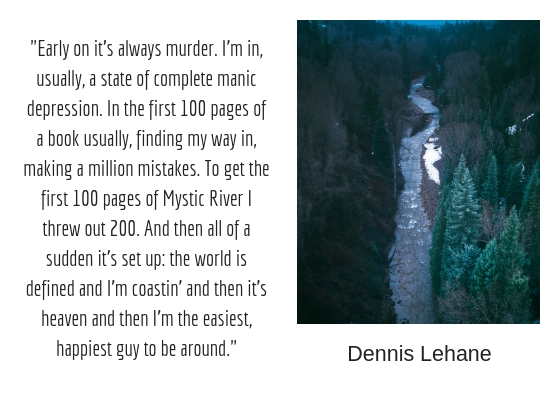
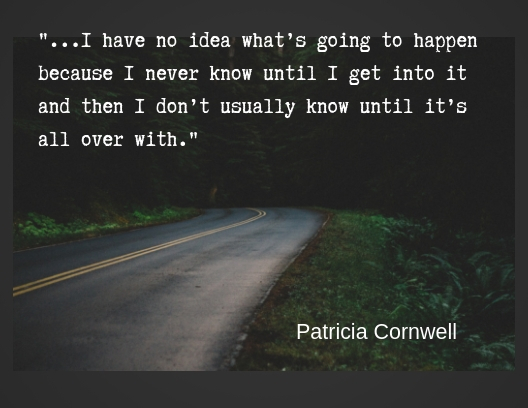
Philip Said

I used a foggy background for this quote because I think the quote illuminates the fog of writing. It’s applying your experiences, and things others describe to you, to imagine another’s experience to tell a story.

A Good Day

Today was a wonderful editing and revising day, mostly because there was little of either required. It’s a good day, I thought.

Having a good day feels like a reward. The bad days must be endured, and they often end up being productive. I mean, by a bad day, a day where I feel tired, depressed, and flirt with thoughts about not writing ever, ever again.

I know, though, that the writing on good, bad, indifferent, and mediocre days isn’t likely to be any different. Bad days mostly refer to my attitude before I start writing, editing, or revising. Once I start and my focus is on my writing, my attitude doesn’t matter.

For all that I know, what I read, edited,and revised today could have been written on a bad day. There’s a good chance of that being true, because I covered almost seventy pages today. I generally write one to two thousand words a day, which typically amount to less than ten pages, depending on dialogue and density. I probably covered a week to two weeks of writing, so there were probably some bad days in there.

Now I’m done writing like crazy editing like crazy. Time to go do other things, like eat.

Crystallizing

I can certainly tell that Entangled LEREs was the first book written in the Incomplete States series. (Back then, the working title was The Long Summer.) I’m a third of the way through it in the initial editing and revising process, and I’ve deleted four chapters. Those chapters, written while I was exploring and developing the novel’s concept, no longer fit the overall story arc. To keep them in would be indulging myself.

So, off they went. The muse(s) didn’t argue at all, so I must have made the right decisions. Still, I saved each chapter intact as a file, with a note about where they came from, and updated the Editing Checklist to show what I did, and why.

The chapters were fascinating remnants of the genesis of the initial concept and the finalized concept. I remembered struggling daily as I wrote, trying to decide, what is this novel about? As the finalized concept crystallized, one novel became two novels, and then burgeoned into a series. Characters and their tales, plot twists and settings all arose. I didn’t include everything; sometimes I knew that what I was writing was writing to think, exercises to help me understand what I was learning and where I was going. They were saved, too, just in case I later veered.

In point of fact, the largest document of the twenty-five documents (including the four books) I created while developing this series is the document called “Circle (working doc)”. At five hundred pages, it’s one hundred ten thousand words and seventy-nine chapters. Some of the chapters made their way into the beta version of the four books. Many have notes about my intentions when they were written about where they should be in the narrative. Several of the chapters were written as snapshots of action, outcomes, or discussions between characters to help me understand the story arc but included information that I felt shouldn’t be ‘given’ to the reader.

They might still end up in the final first draft of the four books. I don’t know, and won’t know until I’ve completed this phase of editing and revision.

That’s what it’s all about.

I Find

The first two parts of Entangled States, ten chapters, are like reaching a coast. The direction doesn’t matter. You hit the stretch where the land and sea meet. It’s turbulent, with crashing waves and hissing, seething waters. Taking it all must be done in pieces. There is the sea and the land, and there’s also the sky. Each exercises its own elements, colors, and behaviors. Once you pass this borderland, you’re released from the complications inherent to progressing from sea to land and freer to relax and take more in.

Now into part three of the book, it settles down again. I remember writing all of this, and recall thinking about the parts, and the placement of these chapters and scenes, and how they’ll interact. At that point, it was like being too close to a pointillism piece of art. Distance is needed for the colors to blend and become something more than blobs.

Wild, to think, while writing it, I saw these blobs and strokes, and applied them, and now I need to step back to comprehend the whole. I was realizing the whole on one level while I already saw and comprehended it on another level. Then, not so wild, as I write to help clarify and understand what I think.

Nerves

I’m nervous as I’m editing this second book in the Incomplete States series. The series’ first book, Four On Kyrios, was straightforward for the most part. This book, Entangled LEREs, is well-named, with entangled stories and characters. It reminds me of Slaughterhouse Five meets The Sound and the Fury, Cloud Atlas, and Lincoln in the Bardo. Editing becomes intense for me. I imagine readers asking themselves and the book, “What’s going on? I don’t understand.” Makes me want to revise it to make it clearer and more linear.

The muses push back against that impulse and insist that I don’t change anything. And there it goes, I’m cringing and sweating, thinking, what am I doing? “Trust us,” the muses urge. In response, I hold my head and rub my forehead and temples, and think, pitting desire to change things against the muses’ directives.

The muses remind me, “You’re in the middle of the series. Don’t make any major changes until you’ve gone through all four books.” Right, because the mud settles later, and it all becomes clearer. These are mysteries in mysteries, all part of the concept and story. Yes, I remember writing these chapters and battling the muses about it back then.

Man, it makes me nervous, though. My jaw hurts from gritting my teeth. Should a writer have such a love/hate relationship with their muses and the novel in progress? I remind myself that I was going all in, that, yes, I knew when I was writing it that it would be way out there. I remember those battles with myself from back then. I hope readers can get through it and find the effort rewarding. Even as I nurture that hope, I remind myself, I write for myself. I’m my only guaranteed audience.

I think it’s time to call it a day.

Blog at WordPress.com.

Up ↑