Coupling

It’s been three joyous writing (and editing) days. Having one such day always energizes and intoxicates me. Returning to life’s normal routines and patterns afterward is deflating.

But then, coupling three days together feeds the highs, giving me a sensation of feeling invincible and omnipotent. It’s empowering but frightening because it must be kept in context for what it is.

That energy can’t help but spill over into other things. It stirs something that’s deeper and more primal in me. The short and long of it is that I’m accomplishing, creating something tangible from my mind’s energy and my physical exertion, and that is rewarding. I set a goal, and I’m working toward accomplishing that goal. When successful progress and its accompanying energy continues over three days, this sense parlays into a belief that I can do anything, because, hey, look how good the writing and editing is progressing. Woo-hoo.

Common sense helps ground me. Writing (and editing) and the rest of life aren’t the same. Thinking of this reminds me of some hotel chain’s commercials. They went along the lines of, “Let me operate.”

“You’re a doctor?”

“No, but I got a great night of rest.”

It’s all about how you feel, and the self-confidence that it stirs. I think the chain was Holiday Inn Express.

Meanwhile, however, some of my mind views all this with deep suspicion. “Maybe you’re fooling yourself,” at least one advisor whispers. “You’re probably not that good.”

It’s an amusing proposition because it demands that I hold two contrary ideas in mind, that I am that good, and that I’m not that good. Parts of my writing is probably amazing, and parts are probably crap. This is a draft, and I’m the writer, and I wrote it for me, so if I enjoy it as a reader, mission accomplished. It’s natural that others will dislike it, not get it, enjoy it or not, decide that it’s, “Okay,” (shudder), or love it. None of that’s within my control except that I wrote it for me, and I enjoy it.

Am I conning myself? You bet! But I think I’m also being realistic. I know, too, that I’ll probably encounter days when I feel sick about reading what I wrote because it needs a lot of work.

Accepting that I must stop now is a reluctant choice. I love the immersion of writing and editing my novels. I know myself, though, and my writing process, and its capricious nature. I know that going out on a high helps sustain progress because I feed off expectations created by past success.  It at least makes it easier to get to the document the next day.

So, sadly, but joyously, time to stop writing editing like crazy, one more time.
ERROR!

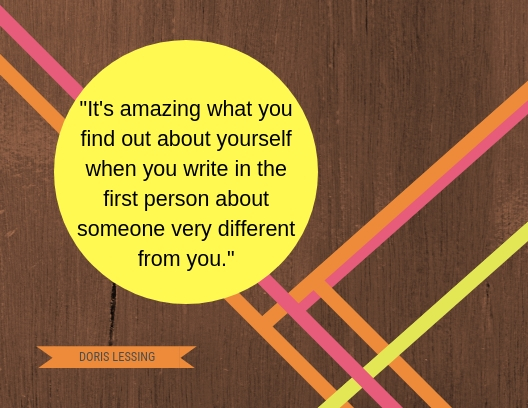
My writing is done through typing, so this might might sound odd. Sometimes, when the words are speeding through me and I’m in the scene, I close my eyes as I type, because I don’t need to see the words. Weirdly, the words are a distraction, and get in my way. With my eyes closed, I jump into a fast rhythm.

A problem only develops when I open my eyes and discover I have one or both hands incorrectly positioned on the keyboard. It’s first funny, but then aggravating, because I was streaming, and I don’t really know what I was typing.

Yeah, just happened a short time ago, when I decided to rewrite several pages. Hoo, boy. Gulp some coffee and begin again. That’s all I can do.

Character Questions

My friends surprised me last night by asking questions about the writing process. They were interested in how I come up with characters (and whether I ever used people that I know as the basis), and how I know when a book was finished.

Coming up with characters isn’t difficult. Some people do huge sketches of the characters before they start, detailing everything possible about the character. I don’t, although I’ve tried doing that, because that’s what I read a writer should do. I don’t do it before I start, but I will do a physical appearance at some point to keep matters aligned. I usually also develop their backstory so that I’m aware of who they are, and document that, again, to keep matters aligned, but I don’t usually do these things until after the character has been introduced.

The thing is, when I introduce the characters, I know their general personality and behavior patterns, whether they’ll be optimistic, sullen, joyful, belligerent, dismissive, etc. All of them are composites. I do lean heavily on people I know in to establish a guide about how the character will think and behave, but the characters don’t share a physical appearance or name with the real people. Usually, too, I use more than one acquaintance as the character’s foundation. One acquaintance will be the guidance for political views while another provides the guidance for religious views, and another will be the foundation for attitudes about eating and exercising, etc.

Like people, each character exists on multiple spectra regarding how they think and act. The spectra are about the facets of life. Everything we think about and do exists on their own spectra, in my mind. I’ve noticed how people behave while driving vice their behavior in personal relationships and work relationships, their politics, and so on. I’ll often notice differences about their behavior. Naturally, I notice the same about myself. I know what I think and then do, sometimes surprising myself by my whims and impulses. Sometimes I rationalize that action, and sometimes I’m clueless about why I thought one way and did another.

I’ll decide, in a fashion, how much they slide along their spectra. Again, this is a reflection of what I think I see in people. I think of these spectra as one hundred point sliding scales. Zero means people won’t deviate on their spectrum. As you can imagine, that’s somewhat rare. Most people known to be true will still have a slight variation, recognizing that adhering to absolutes are difficult. And although someone might be low on the scale in their personal relationships, meaning they can be trusted in confidence, they can be high on the scale in other relationships, such as work, and thus, be considered less trustworthy.

I didn’t share all this with them, of course. That would be TMI and cruel, in a sense. They don’t need to know it. But their questions prompted the thinking, so I felt the urge to write about it to help me understand it.

As far as when the novel is finished, I begin with a sense of an ending when I first start on the concept. As with the concept, the ending changes and shifts as it develops, becoming sharper and clearer as the concept becomes clarified and the story lines and character arcs develop substance. The ending I want will often strike hot and hard in the middle of the writing process. I have no problem writing that sketch-up, knowing that the words will be changed, and some of the substance will be modified. But it gives me a firmer goal.

Sometimes, I find that that ending is wrong, that I missed, because the story took unexpected swings. That’s not a worry, but another challenge to put on my writing hat and find a new ending. In any case, from the writing process, I find an understanding of an ending that satisfies me, the reader.

Of course, that’s just the beginning. After finishing writing the novel, I read, edit, and revise it, and while doing that, I’ll adjust the ending as I think needs to be done.

Will I change it based on others’ input? I can’t say yes or no. First, it depends on the input. Readers find different things in books, especially if it’s a complex work. That’s great. I have a hope about what they’ll take away from my novels when I write them, but it’s based on what I wanted to find as a reader. So, I bear in mind that I’m writing for myself first. If their input finds appeal in me, then I’ll work with it.

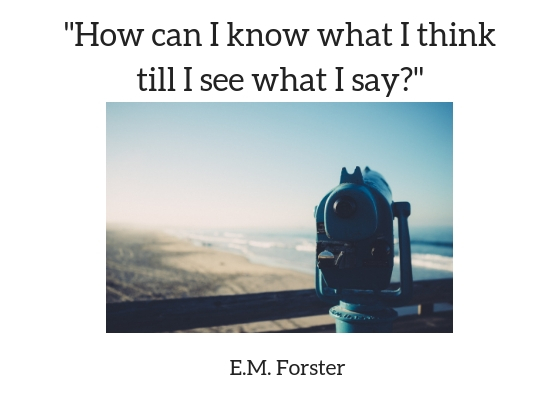
Enough. I understand what I think. Time to write like crazy, at least one more time.

The Heat

Now we come to the part of the novel that I say, “Huuuhhh?”

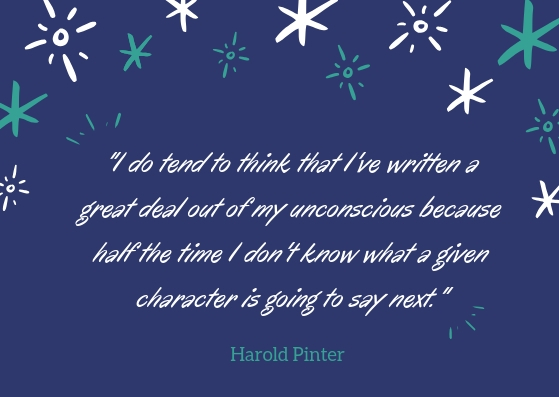
I’m editing and revising the fourth novel, An Undying Quest, in the Incomplete States series. I remember writing these chapters last December and January of this year. First, there were five chapters, which became ten, a reflection of the multiple POV. These chapters were being written in parallel in a mad heat of intensity. The muses were crazy and insistent during that time, and I sat back and typed as fast as I could.

Typing as fast as I can leads to a lot of stumbling over the keys, and a great deal of swearing as I miss a stroke, realize it and back up, muttering, “Fuck, fuck, fuck,” as I do. The chapters were interesting to edit in the first pass after writing them because sometimes the tense changed. In reflection of that, I came to see how I was sometimes doing method writing, imagining myself to be the character to take in their senses, know their thoughts, and act correctly. I wonder, in retrospect, how that writing process affects my relationships and interactions with others. It intrigues me, too, that I can’t remember what I wrote, but I remember writing and editing it.

The weave pattern of these chapters means they’re more challenging to read and edit. The twists give me pause. To track them, to ensure they’re correct and consistent, delivering the end of that stretch while staying true to the concept, arc, and ending, required me to drop back and create another document. The document’s contents are, “This happened here,” and, “That happened now.”

Yes, it’s tricky, but it delights me. That worries me that I’m not being objective.

Yes, it’s tricky.

Time to write edit like crazy, at least one more time.

Impulse

I considered my plans for today last night.

It was about midnight. Today, from what I saw, would be part of a continuum, another day of editing and revising. While I’m happy to make progress and I enjoy what I do, sometimes I get tired of the unending routine. Sometimes I long for a break.

Then I brightened because, hey, I was beginning to edit the fourth and final book in the Incomplete States series.

While I’d been thinking these things, I’d been preparing to close down the computer for the day. Instead, I opened the file for the fourth book’s cover. I regarded and admired it for a while. I’d created covers for the four books as carrots, to make the books seem more tangible and remind me of my goals. With covers, the effort seems to have more promise. It seems more real.

Sitting down, I opened the book’s Word document and began reading and editing.

There wasn’t any plan behind this impulse. One chapter began two. Soon, without me noticing, it was one thirty in the morning. I’d read and edited six chapters. Short chapters, I’d worked through but forty pages. This is a six hundred page, one hundred fifty thousand word draft. There’s a lot more to go.

Despite complaints from my butt cheeks, eyes, neck, and hands, and a more sensible side reminding me that I need to sleep, I didn’t want to stop. I was enjoying what I was reading, and pleased that I’d written it. But prudence finally won.

Now, guess what? Time to write and edit like crazy, at least one more time. I think I may need more coffee.

Blog at WordPress.com.

Up ↑