The Twelve Stages of Writing

Thoughts on a novelist’s life as they cope with conceiving, writing, revising, and publishing a novel.

  1. Jubilation! What a great idea! I must start thinking about this and writing. This is brilliant! Coffee, quick!
  2. Doubts. Wait…what was it about? I don’t know…that’s more complicated than I realized, and derivative as hell. What the hell…why would those characters do that? What’s their motivation? Man, I need some caffeine just to make sense of this. Better go get some coffee.
  3. Bargaining. Look, let me play a computer game and then get through just one day, just one hundred words, just one scene, just one paragraph today, and I promise that I’ll write more tomorrow and catch up. Give me some coffee.
  4. Denial. Why am I doing this to myself? I don’t have what it takes. I’m not smart enough or talented enough. I’m such an idiot! Why did I ever think that I could write a novel? Let me just finish my coffee and go.
  5. Acceptance. Well, I’ve gone this far. Might as well finish the damn thing. Then, maybe I’ll set it aside for a century, and take a look later, see if I can edit and revise it, and make something out of it. I need a fresh cup of coffee.
  6. Jubilation! Hey, this isn’t so bad. This is pretty good. It just needs some work. It’s all coming together. Give me some coffee.
  7. Doubts. I don’t know…what was I thinking when I wrote that? I don’t even remember writing that part. Who is that character? I don’t remember them. I have never seen so many typos in my life. Even the coffee tastes bad. What a waste.
  8. Bargaining. Listen, self. If I can just finish reading and editing this part and sleep on it, I know that I’ll find a way to make this all work, and then I’ll take a break from it all. More coffee, please.
  9. Denial. Who am I kidding? This is absolute garbage. I’ll never make it as a writer. I can’t even type. Even if I finish this, who will ever read it? Maybe I should work on something else. I need more coffee.
  10. Acceptance. No, you’ve come this far. You owe it to yourself to at least finish it. Maybe more coffee will help. Come on, you can do it. What’s the saying? Just open any vein. Sure. Give me some coffee.
  11. Jubilation! This is pretty damn good. Now all I need to do is find someone to publish it. Let me hunt for an agent. But first, some coffee.
  12. Doubts. I’ll never find an agent or a publisher. Maybe I should self-publish. But then I’d need to have a cover made, hire a copy-editor, and then do all the marketing once I publish it. Let me drink a cup of coffee and think about it…

How ’bout you, writers? Any thoughts on the stages of coping with your writing efforts?
Building By Deleting

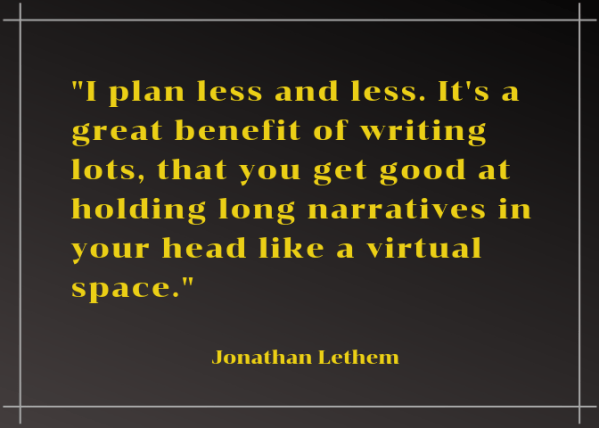
I’m continuing to work on the novel-in-progress, April Showers 1921. Its challenges remain remaining and satisfying with a few dips into frustrating.

I’ve recently re-discovered the joy of deleting to build and improve the tale. When I began with the concept, it had a bajillion directions that it could take. I wrote about half of them, writing two to three thousand word chapters about the directions, exploring the characters, plot, and arcs. That resulted in a complex novel with a complicated plot, and extensive raw material. As I neared completion of the first draft, I met the muses at a crossroads. We agreed that some matters needed clarified and changed.

With mostly their guidance, I went through, exploring that first mess. Sometimes I attempted to work something into the mix, mostly because I enjoyed the passage. But, as often noted, sometimes killing favorite scenes help. As I deleted them (putting them into another documented that was a collection of these things…just in case…), I discovered how much the process sharpened my insights into the characters, situation, storylines, plots, and arc. With more focused insights, my writing and story-telling became crisper. My direction was better defined; I had more understanding of the final destination.

All of this wasn’t done overnight, but through several days of frequently frustrating searching and thinking. Sometimes I went backwards and then had to retrace my steps.

Now I’ve gone on into thinking of this mass as more like a giant piece, waiting to be sculpted molded, or carved. Unlike working in clay, wood, stone, or other hard, substantial materials, the novel’s characteristics change, depending upon how, where, and why they fit. Some pieces of the novel are solid. Only fine chiseling and polishing are needed. Other sections are thick, and I carve whole chunks away. Some are softer and more pliable, demanding shaping to improve coherency, pacing, motivation, and story-telling.

The process of writing and thinking about writing a novel often intrigues me as much as the novel-in-progress. As every novel is unique, so is the process used to write it.

Got my coffee. Time to write like crazy, at least one more time.

Beep…beep…beep

That’s the sound of me backing up. It annoys many others in the coffee shop when I back up when I’m writing. “Can you stop beeping?” they shout. “I’m on my cell and I can’t hear myself think.”

Sorry.

I’m backing up from yesterday’s writing. Oh, what a miserable day. I don’t know where the muses were, but they weren’t here. Did they stage a walk-out? Maybe. Don’t know.

I knew I had to make some links, slow down and let the story breathe, to improve the novel. That’s what I was trying to do. After a fitful session, I’d written a lot but I felt like it was horrible. I didn’t like it.

The muses agreed this morning. As soon as I awoke and finished thinking about my dreams (more family and dogs – WTH?), a muse rep said, “You know that stuff that you wrote yesterday?”

“Yes.”

“Well, it’s terrible.”

“I — ”

“It muddies the flow and does nothing for the pacing or coherency.”

“Yeah, I — ”

“This is what you need to do instead. First, delete all of that crap.”

“Crap is a little harsh, don’t yo — ”

“And then, this is what you write.” He proceeded to tell me.

I thought the proposal over. It was a lot better, and made more sense. I nodded. “Okay, I will. Thanks.”

My thanks went to empty air. The muse was gone. Guess they were off to help some other poor writer.

Got my coffee and took my first gulp of the blessed hot, dark, bitter brew. Time to write like crazy, at least one more time.

The Muses and Me

Yeah, another writing rant/post. Aren’t you lucky?

I wondered again about this writing process and how much control I have. Writing today, I reached a scene where I stopped writing to say, “I don’t want this to happen.”

The muses answered, “Okay, we appreciate your opinion. Now write the scene.”

“But — ”

“You’re wasting time,” a muse said. “Pitter patter, get ‘er at ‘er.”

Jaw clenching, I put my hands on my lap and glared at the computer screen. “I’m the writer here. You’re not the boss of me.”

“Yeah, we are,” the muses said with hooting laughter. As their laughing mounted, one shouted, “He thinks we’re not the bosses of him.” That fired their laughter into higher mocking tones.

Saving my work, I locked my computer and went for a walk to shut them up and think.

I couldn’t appreciate their case for what they wanted to happen. I didn’t have an impressive alternative, either. Hard to argue with them when they have a plan and I don’t.

Dismissing that for the moment, I reflected on the epiphany that I’d had, that, ah-hah, I need something else at the beginning, “something else” being mental shorthand for a more involved and complete opening scene (or chapter) that properly sets up the story and consequences, a piece that gives the reader more reason to be invested with the main character, along with the supporting protagonists.

As many writers before me have said, the first draft is the writer learning the story, and you can’t write the beginning until you’ve finished writing the end. All this seems especially true with this novel in progress.

Returning to my writing, I sat down and did as the muses decreed. It was the best thing to do because, at this point, I was wasting precious writing time, analyzing what they were telling me to write and my reasons for not wanting to write that. Besides, this is just a draft. I can always edit and revise this part later, right? I can even delete it.

That cracked the muses up. “Sure,” they said. “Of course you can. You’re the author.”

Sometimes, I’m not fond of the muses. They can be so mean.

The coffee cup is empty except for a cold, bitter dribble. Time to stop writing like crazy, at least one more time.

Blog at WordPress.com.

Up ↑