Isabel Also Said
Science fiction, fantasy, mystery and what-not
I was thinking about my organic writing process, and how much of it is piece work.
Like many writers, I had a concept in the beginning. Then I developed a sketchy framework. Then, like many writers, I wrote to tell myself the story, to realize most of the facets, discover the plot, story and character arcs, and to find where I will begin and end. Today, I’m working on a climatic chapter, the penultimate moment. I’ve already written the end and denouement. Writing this series of scene that is this chapter means that the series’ beta version is done.
In true piece-work fashion, I’ll put together all these raw chunks of words and story until I can see the entirety. Then I’ll begin reading, editing, and revising, cutting and changing as necessary to find the right story (or stories) out of this mass of words. I’m reminded of a sculptor studying rock, marble, and wood, studying it to see what art is within the mass, waiting to come out.
From the beta will come the first draft. From the first draft will come a second draft, something that’s workable and complete. With the second draft, maybe I’ll have something to give to an editor. I’ll see. If I need to, there will be a third draft.
It’s been a long process for me to learn these things, that the first product isn’t the final product, that it won’t be perfect — that it’ll probably have substantial flaws — but whatever flaws are found doesn’t mean that I’ve failed. Writing is a journey and exploration. But it’s not just the story being explored; the novel isn’t the end-all of the journey. Most of the journey and exploration is about me, about learning how I think, what I imagine, and what I don’t know. When I write, more of myself and my attitude is revealed to me through the characters and novels than I ever realized would happen back when I first thought, “Hey, I think I’ll write a novel.” Part of this is learning, how do I cope with setbacks, disappointments, and frustrations? How do I found and maintain the pace and discipline to traverse the arcs and write a novel, or a series? How do I deal with going the wrong way?
I think that may be where many beginning writers struggle; they don’t realize how much of writing is about themselves as much as it is about the story they’re writing. It can be daunting, descending into our private depths to face the person within. It’s a test of resilience to face yourself and your shortcomings, and find ways to address them.
Time to write like crazy, at least one more time.
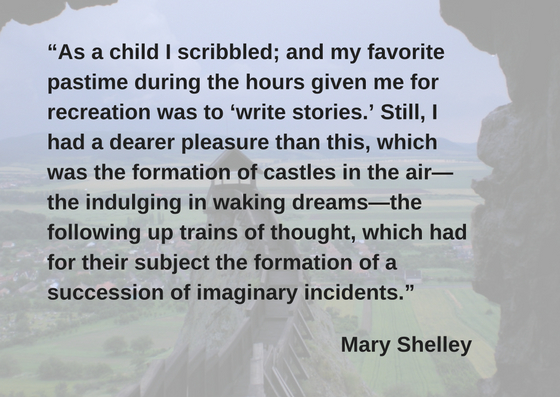
I remember telling other neighborhood children stories that I made up, often citing them as my dreams. Sometimes they started as a dream, but I often just began telling an incident. I remember that once a dozen children a year or two younger stood in my cousin’s garage, listening to me tell them a story that I was making up as I stood there.

I agree. Get it written. Then you can correct it.

I so agree with this quote. I expended several years finding my quiet place. Because of the classic stereotype, I thought that it was an office in my house with a desk and a typewriter. When that failed to satisfy my writing desires, I bought notebooks and pens and haunted coffee shops. The next step in my writing evolution was to walk to the writing location to clear my mind of non-writing and re-focus on my writing efforts. The last step was to take my laptop with me and forego the pens and notebooks (although I always have one of each with me). The coffee shop is noisy with business, music, and conversations, but it’s free from the interference and incursions of writing at home.
It took years, but the result is worth it. If you want to write, don’t just do what others are doing; find what works for you.