Science fiction, fantasy, mystery and what-not
Last week, Trump ordered the attack of Venezuela to kidnap their president. This strategy has been pulled lifted from dusty history books.
Trump is claiming this is a ‘law enforcement’ action and not a military action. Not only is this not original, but it’s been used before, with extended, problematic results.
Looking back at history, early involvement in Korea was called a ‘police action’. President Truman was playing with the truth to avoid the need for Congress to declare war before sending in troops.
Tens of thousands of American soldiers were killed. A heavy U.S. military presence in Korea began in the 1950s and continues in 2026.
Vietnam is another place where early U.S. military involvement was categorized as a ‘police action’. Hundreds of thousands of people were killed during that police action. Environmentally, the war wreaked wholesale destruction on Vietnam and its people.
Politically, the Vietnam War became a catalyst for the emerging generation gap. Cultural and moral splits arose across the United States as demonstrators took over streets and campuses to protest the draft, deaths, and war. Our involvement in that war created a symbolic battlefield in the United States as involvement was argued.
As a person born in 1956 in the United States, I vividly remember the news reports of these demonstrations I read about as a teen or saw on television. As a retired military member, I heard too many horror stories of Vietnam. Films of the bombing campaigns such as Operation Rolling Thunder and Linebacker I and II were shown to us, including the violent destruction.
I remember the My Lai massacre, a scandal that shocked us, and young John Kerry’s testimony. I recall photographs of children burned with napalm. The vivid imagery of Operation Babylift and the fall of Saigon are seared into memory.
I imagine that Trump and his advisors are madly spinning that this is nothing like either of those wars. Glances back to early newspaper articles reveal slow, soft involvement in them, just as we see unfolding for us today.
Trump’s Administration has revealed confusion about what’s intended in Venezuela at this point. Trump informs We the People that the United States will ‘run Venezuela’. Venezuelan Vice President Delcy Rodríguez has taken over as interim President to manage the country.
Much as you would expect if another nation attacked the United States and kidnapped Donald Trump, acting President Rodríguez made a defiant speech against allowing any nation to run them or treat them like a colony.
Trump responded as a bully, threatening acting President Rodríguez she’ll pay a bigger price if she doesn’t comply with his demands. The messages and mannerism of Trump’s response don’t project an early or peaceful resolution, as he included threats to send more military into Venezuela.
Attacking Venezuela aligns with Trump’s practice of making and breaking promises. Trump campaigned against getting involved in other nations militarily.
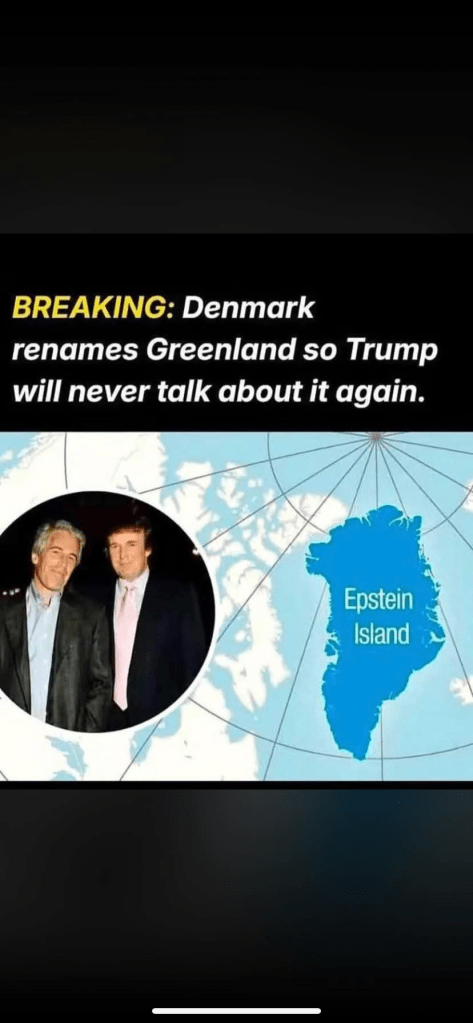
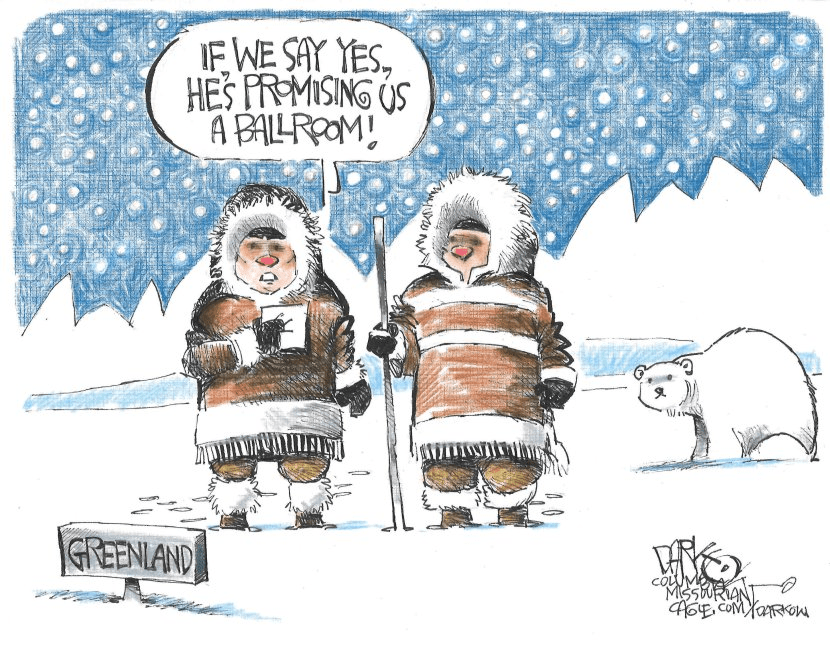
Yet, Trump has continually employed the military as a baseball bat during his second term’s first year in office. He’s suggested annexing Greenland is a good idea, and has implied using military action against Mexico and other nations is possible while recently adding Cuba to the conversation.
My last concern goes back to ‘exit strategies’. Trump complained mightily that exit strategies for U.S. involvement in Iraq and Afghanistan didn’t exist. He then established a clumsy exit strategy for removing troops from Afghanistan (the Doha Agreement) which President Biden executed.
*An important side note to Trump’s approach to the Doha Agreement is that he didn’t include the Afghani government in the negotiations. This is the same approach he’s trying to end Russia’s invasion of Ukraine, not including Ukraine in the negotiations.
During his first term, Trump also directly answered reporters’ questions with the response, “I don’t do exit strategies.” That doesn’t bode well for the United States now.
We know from Trump’s business practices and marriages, his business strategies are bankruptcy, divorce, or cheating on his businesses and partners. But in those endeavors, he lacked the U.S. Treasury’s resources and U.S. military power.
It feels to me, Trump is making the same historic mistakes the United States made in the past, repeating his own patterns of impulsive errors. But now, the stakes and consequences are much, much higher.
It’s cold and cloudy in Ashland this morning. Our temperature went to 34 F about 8 PM last night. It’s still there. Stagnant air rules us today, Wenzda, December 31, 2025. Tepid sunshine squirms in past the clouds. With this sun and air combination, we expect high temperatures in the low 40s today.
Dad passed this morning in San Antonio, Texas. He was comfortable, as far as we know, and passed in his sleep, 92 years old, a veteran of Korea and Vietnam.
I received a text from Dad’s wife about his state yesterday afternoon. She said that he was in the last stages. I thanked her and then wrote a few texts to tell others. Afterward, I left my home office. As I did, I basically told Dad, goodbye, good luck, thanks, and I love you.
When I entered the adjacent room, a huge swirl of Dad energy swept around me. I was alone. Suddenly the room felt brighter and warmer. I sincerely and honestly felt Dad was with me.
It lasted about fifteen seconds and then left. I wondered if Dad had died but there weren’t any messages telling me of his death. I just smiled and accepted. Maybe as mystical and out there as it seems, my father and I made another connection just to say hello and goodbye one more time.
The hard part of Dad’s passing is done — getting the news and telling others, then accepting it. I’ll think and grieve for years, embedding his memory and life into my pantheon of existence.
The Neurons are playing “Flowers” by Miley Cyrus in the morning mental music stream. They made an interesting choice. I don’t understand it any better than I understand some of the dreams I had last night. That’s life.
I hope peace and grace come by your place and give you a hug. May the days ahead be gentle with you. Cheers
I loved aircraft when I was a kid. I was specially enamored with the sleek, fast fighter jets. I built models of them as soon as I was old enough. I soon had the entire ‘century series’ of jet aircraft the U.S. was fielding. The stubby little centerline jet F86 Sabre Jet was my favorite aircraft. For that, I don’t know why. I do know that I discovered a book about it at our school library. We were in there to read a book and write a book report about it. The book was called, Sabre Jet Ace.
I don’t remember anything about the book except that title.
Spring forward to the mid 1970s. I’m now in the Air Force, working command and control. This was at an ATC training base named Randolph Air Force Base. We weren’t involved in the flying in that command post, and the shifts were slow, long, and boring. Into it came our new director: Major Gross. With so much time on our hands, Major Gross would wander around, looking for conversation. I politely indulged in, asking questions about his career.
A Nebraska farm boy, he’d ended up in the Air National Guard, where he became a pilot. In the early days, he flew P51 Mustangs in Korea during that conflict. “Beautiful aircraft,” he said. “I loved flying them.” But the Air Force was modernizing. He was forced into jets. “Much easier to fly.” The jet he flew was the F86 Sabre Jet.
His story became one of hardship. He was sent home, became a civilian, and started a business. When that failed, he joined the Air Force as an enlisted person. Then, as an enlisted man, his reserve unit was called up. Through bizarre machinations, he became an officer and a fighter pilot again. This time he ended up flying in Vietnam in a century series jet, the F105 Thunderchief, but Major Gross’s aircraft was in an unarmed configuration, conducting Wild Weasel missions. I so enjoyed hearing his stories, and he was willing to share.
As it happens, I ended up working with three other pilots with F86 Sabre Jet experiences. None were aces. One was a vice wing commander when I met him. He started jets on the F84 Sabre Jet, then was moved to F4s, which he didn’t like flying nearly as much. He survived combat missions in Vietnam, but then had a dual engine flame out while taking off from a base in England. Although he safely ejected, his seat malfunctioned. Both legs and his spine were severely damaged. He was told he’d never walk again, but he’d overcome that prognosis and was now a regular runner.
The second officer, another major, went from flying the F84 to A37s in Vietnam in a close air support role. The third office, a captain, converted from F86s to F4s. He flew them in Vietnam, too. Shot down by a SAM while flying a combat mission, he was a prisoner of war for several years. He never spoke about those stories.
I appreciated what men endured, serving our country, even if, like many — including several of them — I didn’t agree with the Vietnam War. The book which originally titillated me probably romanticized the war.
These pilots never did. As for me, I didn’t become a pilot. My eyesight wasn’t good enough back then. I always wonder, would I have been any good?
In a final aside, I was sent to Kunsan Air Base in Korea sometime in the early 1980s. The US Air Force was primarily flying F16 Fighting Falcons at Kunsan, but they shared facilities with a squadron of Korean F86 Sabre Jets.
They still struck me as a pretty plane, although they seemed so small compared to the F4s, F15s, and F16s frequenting the base. I was able to meet and chat with several Korean F86 pilots. Fun aircraft to fly, they told me. Light and nimble.
I could only imagine.
Today’s choice arrived in the stream because of a chance encounter with a friend.
I’m retired military, 1974 – 1995. He was in the Army for almost five years. Most of that time was in Vietnam. May, 1969, was his one year anniversary of being in country. It was a bloody year for him. He lost many friends. He was also nineteen.
We guessed that it was just a juxtaposition of insights that brought about the darkness dragging him down this weekend. This is twenty nineteen, which kicked off the memory of being nineteen, when he was in Vietnam fifty years ago. It’s probably because of Memorial Day, and the many men walking around with Vietnam Vet hats on their heads, and the television shows talking about different military campaigns. It could be his sense of mortality. He’s getting older, as he reminded me.
He never cried when he spoke but he did a lot of sniffing, some quick eye wipes, and sometimes coped with a trembling voice with some deep breaths. Vietnam offered some hairy days, and he was grateful to have survived without too much damage, get home, go to college under the GI Bill, marry, and have a family.
After we shook hands and went our separate ways, and I was walking under the lush green trees, past beautiful beds of colorful flowers as cars rolled by and people pursued their celebrations of Memorial Day, I started streaming an old favorite song.
Here, from nineteen seventy-four, is William DeVaughn with “Be Thankful for What You Got”.