Aging Reflections: the Balance.

A NYTimes headline scored my attention today:

5 Money Lessons From Readers in the Trenches of Elder-Parent Care

Regular visitors to my blog know that my family have been dealing with my aging mother for years. She’d been living a good life; a fall on some stairs changed that trajectory.

Mom fortunately had a good partner, Frank, as she moved toward her 80s. His drawbacks including increasing deafness, blindness, and being five years older than Mom.

We could see what was coming: Mom would need more and more care. The care would become more and more expensive. Frank would be less and less able to help Mom.

I spoke with Mom about it over the years, advocating to get someone in to help her clean and help her take care of herself. I also kept suggesting that they move into smaller place, such as an assisted living facility or a ‘senior’ community.

Mom resisted most of the suggestions. She didn’t want to leave her house. That home represented her life. She bought it on her own, then got her GED and went to nursing school. Mom opened her home to her grandchildren, taking care of them while my sisters went to school or worked.

I eventually convinced Mom to accept someone coming in and cleaning a few times a week. I paid for it, which helped Mom accept the help. She was also willing let that person in because it was a neighbor and someone she knew.

The arrangement ended when the cleaner suffered cancer and could no longer work. Worse, Mom was falling more often. Her recovery arcs were longer. Each hospital episode left her with more challenges. Yet her will to live was undiminished.

Things took a drastic turn last year. Frank, her partner, fell down the stairs. Hospitalized, he went into a coma and died, 95 years old.

This was devastating for us on multiple fronts and forced Mom’s health from concern to crisis.

Mom tried living alone when Frank was in the hospital and everyone hoped he would recover. Falling, though, Mom couldn’t get up several times and slept on the floor. Cooking was a struggle, so she took shortcuts such as eating sardines with crackers for dinner. She grew thinner and weaker.

My sister took her in. Sis set up a nice space for Mom. Perhaps the biggest drawback was that it was located in my sister’s finished basement. It started out fine but soon devolved into a cold war between Mom and everyone living there. Mom has been vulnerable to UTIs, and we think that was part of the problem.

Mom ended up making suicidal comments. She ended up hospitalized and then in an assisted living place where she does not want to be.

All this is just foreshadowing to me. I’ll be 70 in a few months. My wife is a year younger. One sister is two years older, and another is two years younger. The other two sisters are 8 and 10 years younger than me.

The thing is, even as Mom needs help, all of us are also reaching that point. While I’ve been hospitalized and treated for several issues in the last five years, I’ve rebounded. The same can’t be said for my wife, my sisters, and their husbands.

We’re all facing the same issues that others face in this article: how do we help our parents when we’re crossing the threshold into needing help ourselves?

This is the Silver Tsunami, a term many do not like.

I’ve considered moving to be closer to my sisters and Mom. There are many legitimate excuses for why that hasn’t happened. While our southern Oregon home is ideal for us, the location is not any longer. Just under 1900 square feet, the house is single storied with two bathrooms, and three bedrooms. One bedroom is the home office. This is where we spend our most time, reading, exercising, watching television, on the computer.

The area, though, has been enduring droughts. With the droughts have come water shortages, wildfires, and smoke. As those hit, the local economy has suffered. As a result, Ashland is facing a financial crisis. Adding to that crisis is that two major employers, Southern Oregon University (SOU) and the town’s hospital, Assante Ashland Community Hospital, faced their own crises. Those crises forced them to drawdown in significant ways, with more on the way.

At this point, the future is not ideal. As the article points out, we’re not alone in our problems, both with our own health and aging, but also with helping our parents.

What’s troubling me as much as anything is how the GOP has responded. Trump has cut social services to the aging population. He instead wants to spend more money on the military. Equally troubling is that the GOP goes along with this.

There’s already a growing rural hospital crisis in the United States. With Trump in office, madly spending, the national debt has crossed the point where it is now larger than our Gross National Product.

Yet, Trump’s spending priorities are geared toward bailing out countries, starting wars or using the military as a stick to threaten other nations. These do nothing to help our nation’s aging citizens. Trump’s policies have instead resulted in higher prices across the spectrum, which makes everything worse for anyone living a marginalized life. Including people like Mom.

Projections show that it’ll probably get worse, with more citizens requiring healthcare and living assistance. Natural supply and demand for personnel, food, assistance, and medical care will further drive up costs.

It’s a terrible spiral. As wealth becomes more concentrated in the hands of billionaires who care mostly for themselves and their businesses, the rest of us will keep sliding further into debt and crisis.

Sadly, that is Trump’s America. As it now stands, it’s the future for far too many.

Some may say that I’m being fatalistic. I reply, I’m just reading the news and watching the trends.
“Come From Away”

My wife and I had a mini-staycation yesterday. First we went to the matinee performance of a play, “Come From Away”. Dinner out at a Mexican restaurant followed.

  • The Oregon Shakespeare Festival staged the play. A musical, the book is based on the 9/11 attacks and Gander, Newfoundland, Canada, when 39 aircraft and almost 7,000 people were diverted to the island after US and Canadian airspace was closed after the terrorist attacks.
  • The play was energetic and uplifting. Production values and performances were superb. Afterward, we thought, it must have physically, mentally, and emotionally exhausting. Each actor played several rolls. They often picked up and carried chairs with them, representing their carry-on bags. Chairs and tables were re-arranged to be council meetings, diners, air-traffic control towers, buses, and aircraft.
  • Gander was only a place of 9,000 itself, but with one of the largest airfields in the world. That airfield had been built during the early days of transatlantic travel, when a final fuel top off was needed to cross the ocean. Aircraft landed there coming and going from Europe.
  • The people of Gander were powerfully represented as caring and giving. Differences were set aside to come together to help all these travelers cope with trying circumstances. Passengers had no idea what had happened for hours. Those who spoke little English, who came from places where martial law ruled, were terrified when soldiers arrived and began ordering them off the aircraft and onto buses.
  • One person took it upon herself to find the animals in the aircraft and ensure they had food, water, medicine, and care. There was a lot of singing, dancing, and explanation, along with a new romance, and the end of an old one.
  • Most interesting, high school students also attended. Many of them were confused about what was going on. While those of us born well before 9/11 were transfixed by history and our own memories, these young people were frequently baffled. History was explained to them after the play was over.

Last, most compelling, was the juxtaposition of the times. Here we are, so very polarized by the American president, Donald Trump, and his policies. Establishing guidelines that cuts the legs off of empathy and sympathy, giving speeches which demeans anyone who isn’t American, indeed, anyone who doesn’t support him, there we were, watching people coming together to help one another. It is especially poignant now, as Trump trashes Canada again and again, while declaring himself the ‘unity president’.

Watching the play was a very, very powerful experience. I highly recommend seeing it, if you ever have the chance.

It will remind you of what we can be.

Taking Stock: Another Year of Trump

With another year under Trump completed, it’s time to take stock.

I was one of those who predicted that Trump would be aggressive in his immigration policies and against political opponents, and would be detrimental to our nation. I believed Trump’s social, economic, and trade policies would worsen life for people in poverty or needing assistance. And, while there may have been places where the Federal government could have been trimmed, DOGE’s cuts did not address needs or cause and effect.

So, here we sit.

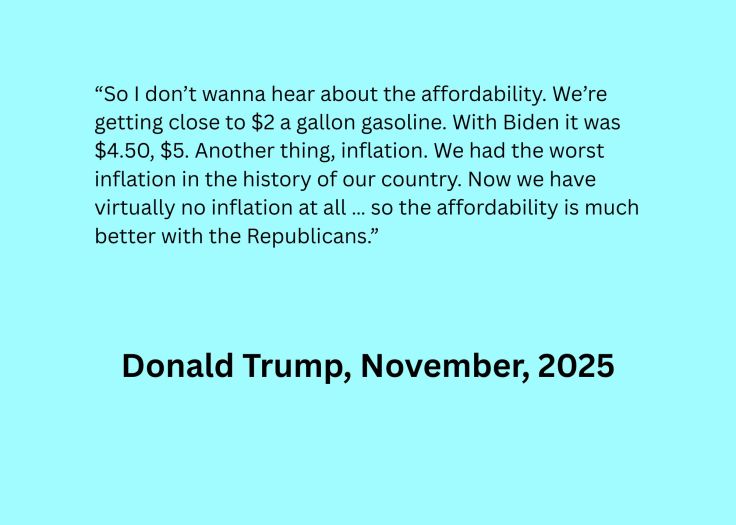
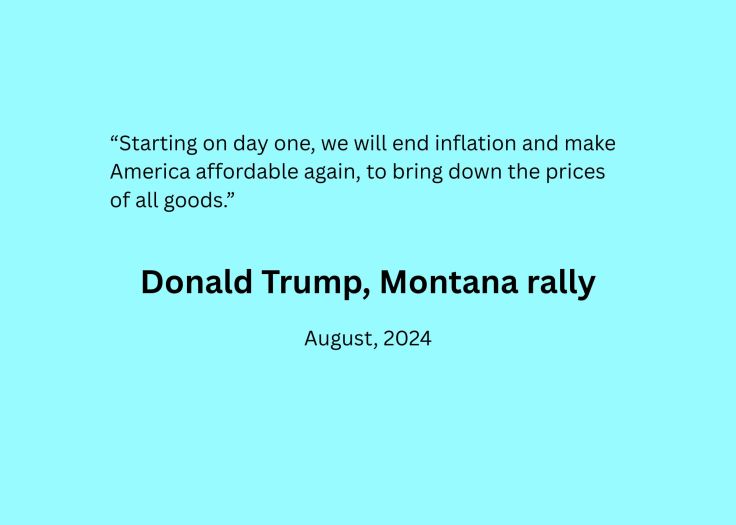
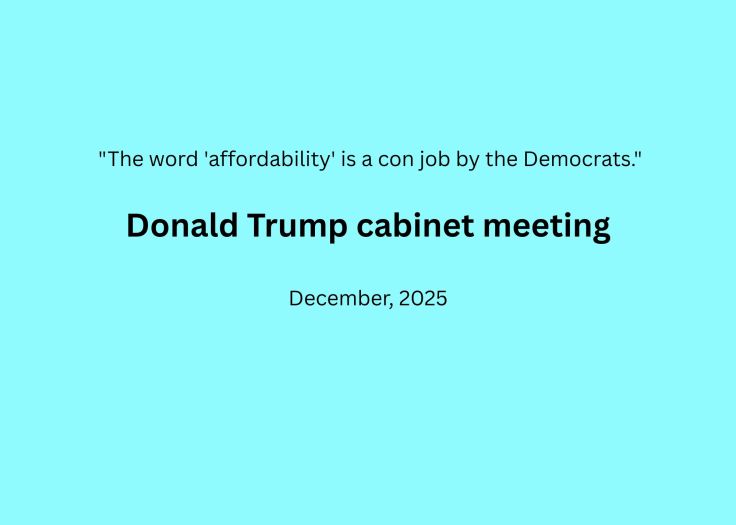
Affordability remains an issue for many places and families, even if Trump and his cabinet claim otherwise.

Plans for more ICE facilities have community leaders across the nation pushing back, worrying about social and economic impacts.

Dealing with flattening revenue streams and running out of surplus funds, local and state taxes and fees are rising to compensate for Federal cutbacks.

Insurance rates and repair costs for personal vehicles are rising. So, too are healthcare premiums and healthcare costs, further eroding spending power for many families and individuals.

Housing prices are high, and Trump says he wants them to go higher.

New car sales dropped in 2025, surprising analysts who thought sales would rise.

Uncertainty among corporations is showing up in job reports. Corporate layoffs touched a level not seen since the 2008 recession. New employment is flat with companies backing off hiring plans. Minority unemployment rose, and disparities widened.

Tourism to the United States is down, affecting the hospitality and tourism industries. It’s uncertain now how proposed Trump policies to request people’s social media history might affect travelers to the United States.

Measles outbreaks continue to rise in the United States. 2025 saw 2,255 cases, the most since 2000. 2026 is expected to be worse.

These patterns culminated in falling consumer confidence in 2025.

None of this surprises me. History and science told me that this is where Donald Trump’s philosophy would lead. The results are catching up with his decisions.

And voters are awakening to the impact.

Fridaz Wandering Political Thoughts

‘Trump Gold Card’ launches, offering expedited immigration pathway with a $1 million fee

Trump shows his true colors — gold — again. Doesn’t care about freedom. Democracy. Health. People. The environment, the nation, nor the world. Just power. Wealth. Gold.

Shouldn’t be long before his campaign launches:

“Got gold?”

He’s a crime against humanity.

Life in Trump’s Alternative World

My wife and I climbed into the car. I started the engine. After over revving it, I began driving in reverse. My wife asked, “Why are we in reverse?”

“Everyone says that you get better mileage in reverse.” I swung the transmission into drive. “Now I think I’ll go this way.” I turned on the windshield wipers.

My wife peered into the sunlit blue sky. “Why are the windshield wipers on?”

“We need gas,” I declared. “We don’t have enough money for a full tank.”

“I’m starving,” my wife replied. “I thought we were going out for dinner. Where can we get something to eat?”

“We don’t have money for food. Just hold on.” I pulled into a miniature golf course. “I think I’ll play a game.”

My wife objected, “I didn’t think we have the money.”

“Don’t worry, we’ll get more money.”

I went in and paid for the game. Before teeing off, I went back to the car. Jumping in, we drove off.

My wife looked around in puzzlement. “Where are we going?”

“Straight ahead.”

“This is the opposite direction of where we were going.”

“Don’t worry, I’m taking a short cut.”

“What happened to your miniature golf game?”

“I played it. Set a new record. I was stripes.”

“But you weren’t gone five minutes.”

“I know. It was the fastest golf game ever. I scored more points than anyone in the game’s history.” I steered the car into the path of oncoming traffic. “They were amazed. Said they’d never seen anyone play like that. They’re giving me a special golfing medal.”

A truck almost hit us. My wife screamed. “Get on the right side of the road. What is wrong with you?”

“Don’t worry,” I replied, “they’ll get out of our way.”

The car’s engine coughed and sputtered.

“What’s wrong with the car?” my wife asked.

“I think it’s the wind,” I answered, throwing open the door.

My wife gasped. “What are you doing? The car’s still moving. You’re going to get yourself killed.” Leaning across, she grabbed the wheel and began steering.

After turning on the radio, I leaped out of the car and rolled across a lane. A car screeched to a halt, almost hitting me. Leaving their car and coming toward me, the driver said, “Oh my God, I almost hit you. What’s going on? Are you alright?”

Beaming, I took off my shirt. “Aren’t I ripped?” I nodded toward my car as my wife managed to steer and stop it. “It’s my wife. She made me do it. She’s crazy. Doesn’t know a thing about flying. She shouldn’t be allowed near a boat.”

Stepping in front of a car, I waved my arms. “Help, help. Call the police. This guy’s trying to kill me.”

More FAFO News

Here we go again. We didn’t know…we didn’t think that it meant — yeah, fill in the ending. It’s classic ‘leopard ate my face self-pity.’

In this case, the ending is Carol, a woman in Missouri. They love Trump in Missouri. Voted strongly for him. Now they’re shocked — shocked — that it turned out that voting for Trump and his policies meant that someone beloved in their community would be affected.

A Missouri Town Was Solidly Behind Trump. Then Carol Was Detained.

“I voted for Donald Trump, and so did practically everyone here,” said Vanessa Cowart, a friend of Ms. Hui from church. “But no one voted to deport moms. We were all under the impression we were just getting rid of the gangs, the people who came here in droves.”

She paused. “This is Carol.”

So, yeah, they were okay when it was other people’s lives being torn apart and disrupted as people are deported under PINO Trump’s monstrous, careless, unthinking, and cruel deportation policies. They were okay when it was, say, someone in California, Michigan, North Carolina, Vermont, Massachusetts, Arizona, or any of the rest of the states. You thought Trump was compassionate? Thoughtful? Actually, what the fuck were you thinking, Missouri?

This is what you voted for, Missouri. I hope you start thinking more deeply about things in the future in the ‘show me’ state. Carol and the rest of us would appreciate it.

A Little Thought

Yes, this is about politics. The life aspect called Fuck Around, Find Out. Trump voter edition.

A woman posted about how bereft she was. She met a boy when she was sixteen. He was her first in all relevant ways. In love, they married and had a child.

She voted for Trump. She doesn’t say why. But that love of her life is an ‘illegal’, as the political shorthand is used. Even though he’d been in the United States before he could walk and lived here and here alone all of his life. He’d tried a few times to become a U.S. citizen. For sundry reasons, it wasn’t accomplished.

Now, fulfilling his campaign promises, Trump’s forces came and took her man away.

I surely do feel for her and her daughter. I don’t want to pile on. Explain, this is what you voted for. Nor remind her that her vote was going to upend many other people’s lives.

I really just wished she had listened to Trump before she voted. Thought about the ramifications of his promises. Then made her vote. And I want to ask her, what lessons will you take from this?

Yes, that’s what I wonder.

Blog at WordPress.com.

Up ↑