John Also Said

Science fiction, fantasy, mystery and what-not
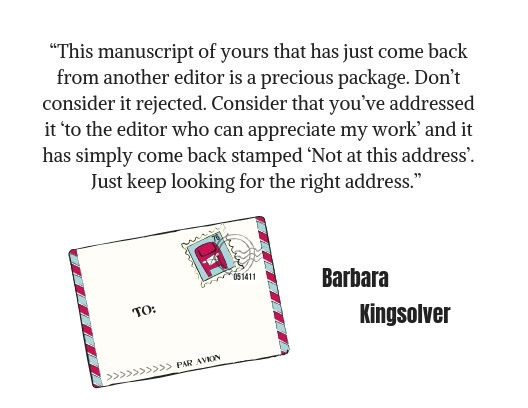
I like her outlook. I hope I can adopt it.
I know as part of the dream’s setting that I’d bought a place in Germany. It seemed like a condo or apartment in an older building. The building was a mysterious maze of rooms and halls. Most were not well lit. Rain lashed the windows and could sometimes be heard drumming.
The place I’d purchased was filled with things, which were mine, now. I was exploring, mostly in darkness, to see what these were. Spotlights lit the objects when I came across them.
One object was a black box with raised, golden letters in another language. Someone with me, a female who was never seen and whose role wasn’t defined to me, said with excitement, “That’s Jewish.” They went on about the language on the thing. The object looked to me like it could be a complicated metal camera or something that stamped other materials to form or shape objects.
Focusing on my guide’s explanation, I heard her say, “The Nazis took things from the Jews.”
I was trying to understand how they’d come to be in this building, which now reminded me of a Nazi building I’d toured when I’d been stationed in Germany. It had apartments inside where government officials lived, along with offices.
“It belongs to you,” my mysterious female guide said.
I was excited to own something like this but also disturbed, because it had been stolen from others. My guide was going on about being able to make money from it.
I left her to explore more on my own and ended up back in my living quarters, which was part of the same building. I discovered more objects. I also discovered my quarters and new building seemed to be poorly maintained. Down in the lowest level was a ill-kept garage area. I discovered squatters had been using it, accessing the area by raising the garage door. I learned this from seeing one squatter open the garage door, revealing pouring rain, slip out, and close the door. Making a note of that, I continued walking about. Most of the flooring was missing from several levels, and animals were coming in via tunnels in some rooms.
Yet, I was excited by what I found left behind by previous tenants. My guide reappeared. Showing me something, she said, “You can sell this and easily make fifty thousand dollars.”
That pleased me, but I told her, “I’m not selling anything that was stolen from anyone.”
She said, “We don’t know if anything is stolen.” She must have known I was recalling what she said before, because she said, “Many of these things were made before world war two, but we don’t know how they got here. They could have been stolen from the Jews, or the Jews may have lived here and left them behind. They belong to you, now. That’s what was agreed when you bought the building.”
I wasn’t mollified, but I became cautiously optimistic that I could sell some things and make some money. Returning to that first black piece with the golden writing, I stood and admired it, framed in white light and surrounded by darkness.
***
As I edit and revise the Incomplete States series, I’d begun to become optimistic. I thought, maybe instead of self-publishing this series, I can find representation and a publisher.
It’s part of my never surrender approach. My hope became stronger this weekend. My wife and I saw Worlds of Ursula K. Le Guin. Listening to UKLG recount how difficult it had been to become published, how nobody got her when she sought publication, but how much she believed in herself, reminded me of my writing efforts and suspended publishing efforts. My writing, as she said about her writing, is not easily categorized. Yet, I thought, too, it’s arrogant to compare myself to her, for I’m in no way her measure as a thinker and a writer.
This dream, I think, reflects my doubts and concerns. Every day, as I edit, I enjoy what I’ve written. It excites me. But doubts haunt me.
It reminds me, writing is a lonely business, especially as a struggling novelist. That, I believe accounts for the dream’s darkness and the building’s dilapidated state, and the never ending rain, putting a damper on my hopes.
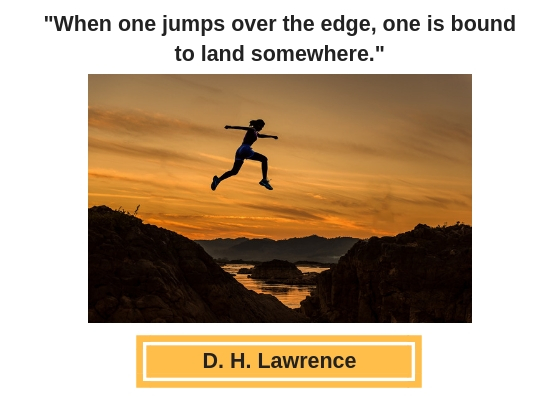
Personally, I think many writers worry about where they’re going to land, so they avoid jumping over the edge. It is safer, but it doesn’t take you very far.
You have to make that jump, whichever one that you see holding you back.
Yes, I am addressing myself.
Last night’s main dream started out exhausting. I think of it as the main dream because I seem to recall snippets of other dreams. I know from other times that I often have several dreams that I remember in a night.
This one was the last dream of the night. I know that because I awoke from it, and it was morning. Like many recent dreams, chaos flushed the first part. I found myself in a crowd. It was extremely noisy. Everyone was walking, including me, but anxiety suffused me from a dozen different issues. First, I panicked about having my laptop with me. Then, after a weird struggle of turning around and looking for it, I discovered I was carrying a bag. Stepping to one side, I opened the bag and confirmed my laptop was inside.
One problem was solved, but now I worried about the date and time. I started walking again, but I seemed to be walking against the stream of people. Making eye contact with others, I asked them, “What time is it,” or “What’s the date?” Some answered, but I couldn’t understand or hear the answers.
That cranked my anxiety to higher levels. Around that time, I found myself at a crossroads between several corridors. Walls and windows were on either side. I realized that I was in an airport. It shocked me that I was in an airport without knowing it. Then I remembered that I’d flown in. Knowing that, I realized I needed to get my bags and leave the airport.
Nothing made sense in the airport, though. The signs seemed contradictory, and it was more crowded and noisier than before. People jostled me and ran into me, pissing me off. Somehow, I found the baggage area, got my bags, and left.
I needed to go to a hotel. I thought it was close and decided to walk. With a hot, humid, and sunny day outside, I was soon sweat covered. My feet hurt, and I was tired and thirsty. I also wasn’t sure where I was going, stopping to look at signs several times. I remember thinking, I wish I had a map, and I remember thinking about setting up my computer and trying to get online to find where I was.
I didn’t do that, though. I kept deciding which way to to and walking. Eventually, I realized that I was close to the ocean, and that’s where my hotel was. That excited me and gave me new hope. Seeing a sign for the beach, I went that way.
The beach wasn’t busy. It was flat, with white sand, and a bright blue sea. Walking toward the crashing waves with my luggage, I reveled in the smell, sight, and sound, and then stopped to enjoy it. There was a large rock off the coast about a hundred yards. I thought I recognized from my travels, but I couldn’t place it.
Looking back, I noticed a man in a black suit with a white shirt and a blue tie step onto the beach. I thought it was strange beach apparel, and that a suit was too hot for this weather. No one else was on the beach, so I wondered what he was doing.
I realized he was coming toward me. His approach made me anxious. I didn’t know him or what he wanted. Coming close, he called me by name, and said, “I’m glad I found you. We’re ready to start.”
“Okay,” I answered.
He took my luggage but I kept my laptop. “Is it far?” I asked.
“No, it’s just up here, around the corner,” he said.
I felt good because that meant that I’d been going in the right direction even though I’d been clueless.
We went around the corner of a building. I realized it was my hotel. But we didn’t go there, which surprised me. Without saying anything, the man in the suit led me across the street. People were lined up by a building. As I approached, some clapped. That confused me, and then some engaged me. I realized from talking with a few and looking around that they had a book that I’d authored, and were talking to me about it. They wanted me to sign it. So I stopped and started signing books and talking to people.
The man in the suit tried interceding. “We should go inside,” he told me. “It’s time to start.”
Apologizing to the people, I followed him, and then woke up.
Surprise and confusion filled me when I woke up. I knew where I was, but I didn’t think I should be there. Sitting up, I looked for my laptop bag, panicking when I didn’t see it, and then sought the man in the suit. As I didn’t see him, either, I realized that I’d been dreaming.
It astonished me because it felt so real. After thinking about it, I decided, what a hopeful, wishful dream.
I haven’t personally known many published, established, successful writers.
There was Maya Angelou, met at a conference in San Francisco one year. Larry Niven, met at a computer conference in Europe while I was in the military. And there’s Ellen Sussman, met at a writing conference in Fort Ord, California, one year.
Then there are Lawrence Block, Orson Scott Card, and Sue Grafton. I met each of them in different years at writing workshops in Yellow Springs, Ohio. I enjoyed conversations with each, but especially Sue Grafton. “F is For Fugitive,” and “G is for Gumshoe,” were out and doing well, along with the earlier books in her series.
Doing well. Hah, what a cliche to portray that the books were on the New York Times bestseller list.
I was living in the dorms for that writing conference. I’d brought a bottle of white wine with me from Germany. Sue and I ended up at the same table in the dining room, and I shared my bottle with her. She’d just signed a big publishing deal. Her happiness and excitement were delightful to behold.
It was like that with Ellen Sussman, years later. She and Sue were fresh from the effort of trying for years to break through when I met them. As each put it at that time, “I’m living the writer’s dream.”
You know how encouraging that is to a writer striving for that dream? Yes, if you’re in any of the arts, you probably know full well the effort of struggling alone on your personal trek, wrestling with your demons and chasing your muse. There’s little encouragement. People often know you as that oddball who comes in with their computer or notebook and sits at a table, drinking coffee and scribbling or typing. Or you toil in secret, not daring to let light shine on your dreams of figuring out what’s in your head and spitting out stories and novels. Few know; fewer encourage.
All of these writers are met understood it, and were gracious and humbled by what they’d achieved, but Sue and Ellen were closer to it. The fire of struggle and the joy of catching fire still burned bright when I met them. I was happy to follow their success as it developed in the subsequent years.
I haven’t seen Sue since meeting her that year decades ago, except in newspapers, magazines, and on television. But her enthusiasm and determination helped me push to keep going and going, to never give up. There will be setbacks and diversions, and demands that can’t be refused, but if your dream is strong, you need to feed it and keep it burning, and keep going. It’s not over until you give up. That’s what I learned from her.
I’ve seen it in other writers, ones who I haven’t met, but whose story I still know. John Scalzi. Andy Weir. Kathryn Stockett. Lisa Genova.
It can happen. Just don’t give up.
I became a little distracted while ordering my coffee. That trite statement is an understatement. I didn’t know Sam was speaking to me. Looking inward, listening to other voices, I was experiencing the bloom of another writing concept in my head.
After ordering my coffee and paying, I drifted off with an internal sigh. This concept, too, needed to be kneed aside. I’m on the third book of a trilogy. Need to get it done, and then on to the etcetera of publishing. Once the trilogy is done, it’s back to the third of a novel in a series that’s already published. There are many more novels loaded in my mind in that series to pursue. There are finished drafts that require editing and publishing, and there are marketing needs.
Seems like no matter how much coffee I drink, there’s not enough time to write. Bummer, as I think “Mrs. Elf” could be a fun write.
Ah. Time to write like crazy, at least one more time.
Hey, writers, I don’t know if you’re aware of this, but there are agents seeking writers.
I didn’t know. My wife came across that this morning while surfing the net. “Here are two agents looking for writers.”
I said nothing.
“One’s looking for dystopian novels.”
Of course they are. Dystopian literature is faring well, isn’t it?
I’ve done the agent route. I used to subscribe to sources full of announcements about agents looking for new writers to represent. There’s typically a lot of unwritten fine print between the announcement and reality. It’s a lot like someone selling you acreage on the moon and then explaining what you really own.
I’d often check out these agents seeking new writers, and enter the discovery phase. They only represented Canadians, women, writers from South Africa, or Antarctica. They didn’t want these sort of novels. They did want these sort of novels, forcing me into evaluating my novels to see if they could be wedged into their holes. No epics, please. No dystopian novels. No dragons, swords, or fantasies, etc.
If I managed to convince myself that I fit within their narrowly defined needs, then I needed to address their specifically defined submission requirements. Some preferred a ten page outline with a ten page synopsis and the first fifty pages. A few wanted a paragraph or two in summary, and maybe a longer synopsis, and the first five, ten, twenty or fifty pages. Others did not ever want email or electronic submissions because they worry about computer viruses; send it to them by U.S.P.S. A few had their own application for submitting your novel online for their consideration.
Promised responses varied. Some agents stated they’d only contact you if they were interested. If you didn’t hear from them within six weeks, feel free to submit elsewhere. Some were iffy, specifying they would try to respond but they’re very busy, you know, sorry. More concrete specifications were sometimes given that they would attempt to respond in a window of time or by X number of days. Almost all were adamant, DO NOT CONTACT ME IF YOU HAVEN’T HEARD FROM ME. Likewise, most did not like simultaneous submissions, because, say you submitted to them, and they liked your submission, and decided to work with you, and then they find out that another agent also wanted you. You’ve wasted their time. That makes them very hurt and angry.
I read about the process from the agents’ points of view, too. Know thy enemy business. They cite the numbers of submissions received, the reading and time required of them to consider an author and their submission. It’s tough because they’re busy with existing clients and contracts. You understand.
Sure, that’s why I was contacting them, because publishing is a business. I submitted to the requirements and submitted to the agents, and tracked it all. Websites and apps exist that will track your submissions and the salient details associated with them, you know, so you can quantify the business process of submitting and being rejected. I just kept an Excel spreadsheet. It was as effective as anything putting my gloom into numbers.
I’m a bitter, cynical and impatient person. I struggle with these traits, and internalize my frustrations and disappointments. These submissions to agents were carbohydrates for all of these negatives and my fears and flimsy self-confidence. So, I quit doing that. Eventually, I declared, “Fuck it,” and self-published. Well, it’s not much more fun than the agent grinder. Publishing is a harsh business, just like any twenty-first century business.
So I’ve resigned myself. I write; I self-publish. Dreams and hopes really end about there.
Understand, I don’t hate agents. I’ve met some, and they’re very nice humans. They are all about businesses. I get that. That’s the world of today, and the conundrum that we ride.
It’s an odd expression, a pick-me-up. Slang, it’s an expression for anything that raises our spirits. It used to be that it was about tonics or drinks but it’s moved beyond that.
For me, a pick-me-up can be an inspirational story, its use today. While going through the inbox and surfing blogs last night, I encountered a 2016 article about famous rejections.
I love famous rejections. Like many struggling writers, I look for those tales of famous writers and novels being rejected only to find publication and vindication. This post featured five famous that I already knew. Still, it was fun reading and a nice pick-me-up. After those five, a list of fifty more famous, successful rejected novels was posted.
Need a pick-me-up for your writing day? Check out Michael David Wilson’s column, ‘5 Famous Bestsellers That were Rejected (And 50 More).
 Michael Seidel, writer