Chaim Said

Science fiction, fantasy, mystery and what-not
Well, I’m up the creek. No, it’s not a creek, but a river as wide and powerful as the Amazon or Mississippi Rivers.
It’s all about writing, of course. I’ve used many metaphors to explore and explain my writing ventures, progress, and process. All of them, despite being disparate, are correct and accurate. My writing processes changes as I go through different phases of conception, imagining, creating, writing, editing, and introspection.
Paddling on a broad river seems the correct metaphor, simile, or analogy for now. I have a firm idea of where I’m going, yet currents attempt to pull me into different directions. Swirling eddies trap me with bursts of vacillation about which way to paddle. Right now, the river of words and ideas are bright and shiny. Sometimes, though, the sun goes down. Moonlight and starlight might help then, but sometimes, I’m alone out there, lost in darkness, on the river alone.
Muses often help me out, throwing lines, shouting directions and encouragement. So does the habit I have now of reading interviews with published authors in my quest for a quote. Many of those writers have tales of being out to sea, up in the air, trudging through a hot, dusty desert, or locked in solitary confinement. They write about writing for themselves for years, sometimes being published but with little to speak of in the ways of sales or recognition. They continued writing because they’d discovered the joy of writing for themselves.
Then, suddenly, bang, an agent signs them. A publisher publishers one of their novels. A rave review punches through the public’s consciousness. An actor, director, producer, studio head, whatever, reads their novel, buys the rights and makes it into a movie. Overnight, they’re a sensation after years of writing for themselves.
The joy of writing for myself can’t be overstated. I’m on a river now because while there’s sounds and sensations, I’m mostly in solitude, communicating with my muses about where I’m at, what I don’t like, and what I do enjoy. I’m going with a flow. Although it might not seem like it from everything else written above, it feels like a process flowing with quiet confidence and satisfaction.
Your results and processes are probably different, of course. Or perhaps they’re the same, or you see some nugget of yourself in the now of your existence, doing similar to what I’m doing. No matter how your process works or changes, I wish you well on it.
The coffee is gone. Time to pack up and head out for a sweaty walk in the hot sunshine. It’s been an excellent day of writing like crazy.
Cheers

I’m working on two novels right now. One is an “official” novel, destined for publication. The other novel is the unofficial, not-to-be published parallel story to that novel.
Coming to that point has been an interesting process. My normal process generally has several documents. First, of course, is the beta document. This is expected to become the book. Another document is about brainstorming and epiphanies. A third is a bible of terms, characters, settings, relationships, and major milestones and turning points. Fourth are snapshots. These include expanding thinking about characters, relationships, settings, historic references, just a handy guide to easily find information. I’ll often add notes about why something was decided, and where it’s included in the novel.
Last of my many documents is the deleted scene compilation. These are chapters that didn’t work, wrong turns, if you will. Sometimes they’re overcome by new concept or plot developments. Sometimes they’re deemed redundant, or they’re telling about something that I already showed. Sometimes they’re the original chapter that I wrote, which was then edited and revised. I keep them for just-in-case needs.
Why so many? I don’t know. This is what my process evolved to be. It works for me. That’s the critical component.
To this mix of documents, I’ve added the parallel story. It originally began as the deleted scenes document. I found it added a mystique, an intriguing veneer to the true novel to explore what’s happened in parallel and then have the original novel react to it.
I don’t work on the parallel novel much. It’s not meant to be a final document. Scenes are not deeply fleshed out, but are taken far enough to enable my understanding of what happened that will affect the novel in progress. Characters are sharply defined, because their thinking, decisions, and actions affect the real novel.
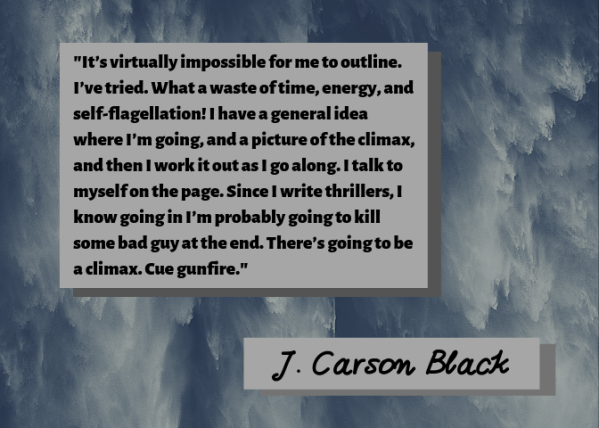
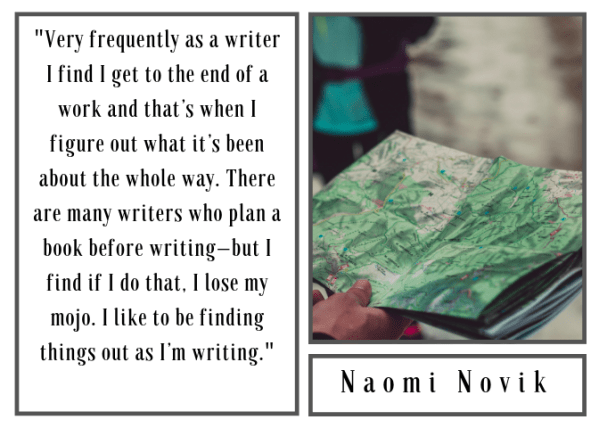
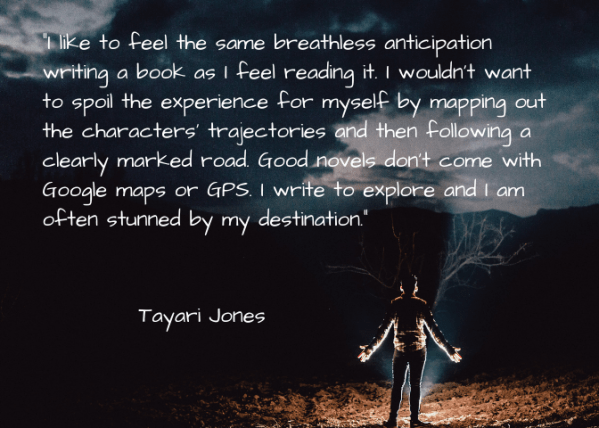
This is all part of the organic writing process, what some call pantsing instead of outlining. In looking at total word counts for all these documents, I estimated that I write two and half words of background and thinking material for every word in the novel. The beta draft of April Showers 1921 is forty-four thousand words. The others total about one hundred ten thousand words when added together.
That aligns with my last project’s results. Incomplete States is a series of five novels that total four hundred eighteen thousand in their latest draft. The supporting documents are just over a million words together.
Got my coffee. Time to write like crazy, at least one more time.
I recently met a person at the coffee shop who discovered that I was a writer. They asked me to tell them about what I was writing.
Sorry, no.
In a hurry, I said, “Sorry, it doesn’t work that way,” and departed. But after walking away, I began thinking about my answer, constructing the reasons that it doesn’t work that way.
In my early days, I was always eager to tell people about what I was writing. My position changed for several reasons.
Policy exceptions exist. First, if you’re an agent or publisher, I’ll be polite and do what I can to tell you what I’m writing and why it excites me.
I can also talk about the writing process (I probably enjoy talking about it too much), especially to other writers. As part of that, I’ll share some of a WIP with other writers. Whether it’s me and my expectations, or their experiences, or our empathy, or all of these things along with other aspects, I think other writers are worthy recipients to hearing about my WIP.
Thinking about all of this, I realize that my attitude is a major hindrance to selling agents or publishers on my finished novels. I love being subtle and complex in my writing, and accomplish that, in my mind. Lot of people don’t have the patience for subtle and complex, and it’s hard to convey in the first twenty pages, along with a synopsis, pitch, and hook. I’m just not good at that shit. Admitting it means that I need to work harder on it, along with my first twenty pages.
I suspect that my writing style likely only appeals to one percent of potential readers. Not a problem, to me, because there are many readers in the world. The larger problem is that I probably need to submit to one hundred agents to get one interested, and they’ll probably need to pitch it to multiple editors and publishers. So, I feel like I’m looking at a high and steep rocky mountain to climb.
I’ve been climbing it for a while, and will keep going. Each time I reach one ridge, I think I’ve reached the top only to find there’s more climbing to do. That’d be a problem if all of this conceiving, imagining, writing, editing, and revising wasn’t so much damn fun.
It’s also addictive.
Okay, enough reflecting. Time to write like crazy, at least one more time.


 Michael Seidel, writer