Geez, why didn’t someone tell me? I’d probably have a lot more hair if I hadn’t started writing novels.
Yeah, sure.
Science fiction, fantasy, mystery and what-not
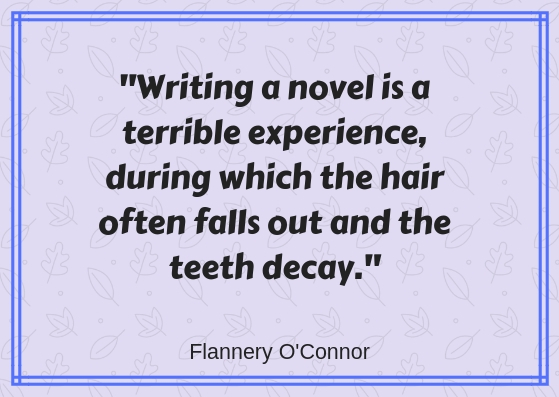
Geez, why didn’t someone tell me? I’d probably have a lot more hair if I hadn’t started writing novels.
Yeah, sure.
It was an excellent day of editing, with little re-writing or revising required. Five chapters were edited. Although I kept part of myself separate as an objective measure to ensure continuity and clarity, reading my work was a reader’s delight. This was the sort of book I enjoy, and I was pleased with myself for what had come of my efforts of drinking coffee, staring out windows, talking to myself, dreaming, thinking, and typing. So, congrats to me.
Meanwhile, this evening, I had spare time to kill. It happens often when the daylight hours grow shorter. It suddenly seems like, hello, it feels like eight at night but it’s four P.M. I have energy but the darkness discourages activities.
So I’m reading. I’m usually reading several books. To pass time this evening, I resumed reading Carlo Rovelli’s book, The Order of Time.
His book is a slow read for me. I typically read a few pages a week. Sometimes I don’t read it for a week or two. His book gives me a lot to think about. As I read, ideas stir in me like mice creeping out in search of food. I begin pacing, hunting for the handle about what I’m thinking.
And suddenly, I realize, there is a potential sixth book in the Incomplete States series. There is something else that can happen, that can be done. It seems like it should be done.
Drawing out a notebook that I kept for scribbling about ideas, I confirmed that I’d formed the basis for this final book back in March, 2017. There it was, in the musings about Chi-particle states as they decay and transition from being imaginary and traveling faster than light to gaining mass and energy as they slow to less than FTL, to interacting with a wave-function collapse to establish arrows of time. In those fourteen pages of thoughts, written over three days, was the answer that could be the basis for the final book.
I’m astonished that I overlooked something that I think is sort of obvious, now that I see it.
Naturally, a muse leaps out to take charge. Words flow like lava from an erupting super-volcano. Opening a new doc, I type. As I do, ideas accelerate. Scenes expand. Dialogue rushes in. Plot points follow. Pages are typed.
Of course, I was writing at home. That’s fraught with interruptions as my wife laughs aloud at things she sees and reads on the Internet, plays videos, and talks to me about the news. The cats come in to see why I’m making that noise with my fingers and whether it’s something that they can eat, and if it’s not, can I give them something to eat?
All this puts me on edge. I’m frustrated with the interruptions, excited about the ideas, and pensive about writing another book in the series. Knowing me, one book can easily become two, or three. I’m almost finished with editing book four, A Sense of Time. Do I really want to pursue a sixth?
It’s anguishing. It feels like, I’ve envisioned the framework for the book so I’m now compelled to write it.
I didn’t know how to finish this post. I write to help me understand what I think. I write to channel my thoughts and enthusiasm. I write to wonder…
I returned to the new document to read what I wrote. More ideas and arcs are squeezed out of me. I’m reluctant to agree to the muse and write a sixth book but the writing fever has me, again begging the question, who is in charge here? Is there a master?
I’ll see what I think tomorrow, when it’s time to write like crazy, at least one more time.
I was at a social event the other night. I encountered some casual friends. They knew I wrote fiction and asked questions.
Now, I’d vowed not to talk about writing, particularly my writing, because once that faucet is opened, it seems to break, and nobody can turn it off. I’d planned succinct, polite answers for the questions that are usually asked.
But these folks persisted in inviting torture. One answer led to another question and requests for expansion and clarification.
Basically, they first asked, “How do you start?”
I understand that question. I get it often. I know that people read a book and think, this was written from beginning to end. That’s what I thought when I first began writing.
That works for some writers, but not for me. I explained to the others, I just begin writing. I see a scene, I hear a voice, I met a character, and I begin. I usually have little idea about what’s going to happen or who the characters are. I’m learning this, along with the story. I’m usually beginning in the middle, or toward the end. It’s only after I learn the characters and situation more that I start to see how the novel starts, because then, when I see what happens, I ask, “Why do that happen?” Questions like that take me backwards, toward the beginning.
They also wanted to know if I outline.
Generally, I don’t. I’m an organic writing. But sometimes, a scene all comes in at once, or scenes and the story becomes complicated, requiring some process of clarification. I’ll sometimes outline that aspect, just to help me handle the information, find gaps, and fix them. I also use snapshots to do thinking outside of the novel’s context. These are documents that aren’t included in the novel, but help me grasp what’s going on. That helps me make sense of what I’m trying to convey, but it also helps me track information that I don’t share with the reader, usually because I don’t want it revealed too soon.
Generally, I don’t. I’m an organic writing. But sometimes, a scene all comes in at once, or scenes and the story becomes complicated, requiring some process of clarification. I’ll sometimes outline that aspect, just to help me handle the information, find gaps, and fix them. I also use snapshots to do thinking outside of the novel’s context. These are documents that aren’t included in the novel, but help me grasp what’s going on. That helps me make sense of what I’m trying to convey, but it also helps me track information that I don’t share with the reader, usually because I don’t want it revealed too soon.
“Do you ever get writer’s block?”
Yes, and no. I don’t embrace the expression. It’s too glib and provides a false impression about my process.
I sometimes struggle with a scene or direction and don’t know how to take it. I’ve learned that I can overthink things, so I tell myself, don’t overthink it. I’ve learned to trust my subconscious mind and instincts, and that I just need to get out of my own way. I’ve learned that I don’t need to write everything in sequence, so write something else and come back to the problem later. I’ve learned to take a walk or read a book or do something to let my mental resources work without my attention.
“How do you know when it’s done?”
When I, as a reader, think that I, as a writer, have explored and answered the questions and problems put up throughout the novel, within the context of what I set out to do, then I think it’s done. That’s part one. Part two, I write for myself, and my pleasure. If I take pleasure from what I’ve written, including the ending, I’m satisfied that it’s done.
I admit, sometimes the ending that comes surprises me. “Is that it? Really?” Upon further review, sometimes it isn’t, but sometimes it is. It’s a process.
I also give the finished manuscript to people I trust to tell me their thoughts about the novel, including the ending, and there are editors. Novel writing is generally an individual endeavor, but finishing a novel often requires several minds, especially if you’re driven to get it right.
Scheduled events then began, saving them from more explanations.
I took a break from my editing to write and post this. The process actually went, I’ve been editing and writing for hours. My butt’s asleep and my neck is stiff. I need to stretch and take a walk. While taking that break and walking, I remembered and thought about this conversation and decided to create this post.
Time to get back to it.
What’s –
The complexities are a challenge to keep aligned. Just when you think you have them, they –
Kanrin came to me in my dreams.
Kanrin is one of the main characters in my current work in progress, a series called Incomplete States. I’m editing the last book in the series with dreams of publishing them next year.
I’ve recently been dealing much with Kanrin. A fully-fleshed character who is well-understood, he’s the main character/star of the current chapters being edited and revised. It’s going well, meaning no problems have been discovered.
In the first dream, Kanrin and I were there, and he was talking about his situation. We were outside for this, and I was watching him in profile. The day was late, with night’s purple shades being drawn. A chilly wind and dropping temperatures had Kanrin in a jacket with his hands in his pockets. Wearing a hat pulled low, he was looking out over a rough, rolling green landscape as he talked. Past him in the dimming light were pastures, fences, and stone walls. I don’t know if he was aware that I was there. He didn’t deliver anything that I didn’t already know, but he did put it in some new way.
Awakening, I considered going to the computer and working on the ms. As it was four thirty in the dark and I was still groggy with sleep, I declined and nestled in for more zzzs.
Imagine my reaction when I dreamed of Kanrin again, essentially talking about the same thing that he addressed before. Okay, odd. I must be really into those chapters. Perhaps something bothered my subconscious.
About thirty minutes had passed since I’d awakened from the first dream to when I awakened from the second dream. It remained too early to go to work. I went back to sleep.
Which gave Kanrin a third opportunity to visit me, addressing again the ideas, concept, and story that he’d addressed before.
It was seven thirty when I awoke from the third dream. I got up now, but didn’t go to work. I went into my usual routine of feeding the rug floofs. If whatever Kanrin was sharing was important, I was certain it’d come out when I was editing and revising today.
Got my coffee. Time to write edit like crazy, at least one more time.
It’s been three joyous writing (and editing) days. Having one such day always energizes and intoxicates me. Returning to life’s normal routines and patterns afterward is deflating.
But then, coupling three days together feeds the highs, giving me a sensation of feeling invincible and omnipotent. It’s empowering but frightening because it must be kept in context for what it is.
That energy can’t help but spill over into other things. It stirs something that’s deeper and more primal in me. The short and long of it is that I’m accomplishing, creating something tangible from my mind’s energy and my physical exertion, and that is rewarding. I set a goal, and I’m working toward accomplishing that goal. When successful progress and its accompanying energy continues over three days, this sense parlays into a belief that I can do anything, because, hey, look how good the writing and editing is progressing. Woo-hoo.
Common sense helps ground me. Writing (and editing) and the rest of life aren’t the same. Thinking of this reminds me of some hotel chain’s commercials. They went along the lines of, “Let me operate.”
“You’re a doctor?”
“No, but I got a great night of rest.”
It’s all about how you feel, and the self-confidence that it stirs. I think the chain was Holiday Inn Express.
Meanwhile, however, some of my mind views all this with deep suspicion. “Maybe you’re fooling yourself,” at least one advisor whispers. “You’re probably not that good.”
It’s an amusing proposition because it demands that I hold two contrary ideas in mind, that I am that good, and that I’m not that good. Parts of my writing is probably amazing, and parts are probably crap. This is a draft, and I’m the writer, and I wrote it for me, so if I enjoy it as a reader, mission accomplished. It’s natural that others will dislike it, not get it, enjoy it or not, decide that it’s, “Okay,” (shudder), or love it. None of that’s within my control except that I wrote it for me, and I enjoy it.
Am I conning myself? You bet! But I think I’m also being realistic. I know, too, that I’ll probably encounter days when I feel sick about reading what I wrote because it needs a lot of work.
Accepting that I must stop now is a reluctant choice. I love the immersion of writing and editing my novels. I know myself, though, and my writing process, and its capricious nature. I know that going out on a high helps sustain progress because I feed off expectations created by past success. It at least makes it easier to get to the document the next day.
So, sadly, but joyously, time to stop writing editing like crazy, one more time.
Today’s editing was like surgery. I wrote Book Four, An Undying Quest, in a coffee-stoked and idea-infused blaze. Feeding me, the muses took me in different directions simultaneously. One over-arching arc was eventually uncovered as definitive. Excising paragraphs, merging, and clarifying the one great arc and staying true to the final concept and story involved a lot of reading, thinking, and revising.
Thank god for coffee. Terrific day of writing editing like crazy. Time to call it a day.
I might go get a doughnut.
My friends surprised me last night by asking questions about the writing process. They were interested in how I come up with characters (and whether I ever used people that I know as the basis), and how I know when a book was finished.
Coming up with characters isn’t difficult. Some people do huge sketches of the characters before they start, detailing everything possible about the character. I don’t, although I’ve tried doing that, because that’s what I read a writer should do. I don’t do it before I start, but I will do a physical appearance at some point to keep matters aligned. I usually also develop their backstory so that I’m aware of who they are, and document that, again, to keep matters aligned, but I don’t usually do these things until after the character has been introduced.
The thing is, when I introduce the characters, I know their general personality and behavior patterns, whether they’ll be optimistic, sullen, joyful, belligerent, dismissive, etc. All of them are composites. I do lean heavily on people I know in to establish a guide about how the character will think and behave, but the characters don’t share a physical appearance or name with the real people. Usually, too, I use more than one acquaintance as the character’s foundation. One acquaintance will be the guidance for political views while another provides the guidance for religious views, and another will be the foundation for attitudes about eating and exercising, etc.
Like people, each character exists on multiple spectra regarding how they think and act. The spectra are about the facets of life. Everything we think about and do exists on their own spectra, in my mind. I’ve noticed how people behave while driving vice their behavior in personal relationships and work relationships, their politics, and so on. I’ll often notice differences about their behavior. Naturally, I notice the same about myself. I know what I think and then do, sometimes surprising myself by my whims and impulses. Sometimes I rationalize that action, and sometimes I’m clueless about why I thought one way and did another.
I’ll decide, in a fashion, how much they slide along their spectra. Again, this is a reflection of what I think I see in people. I think of these spectra as one hundred point sliding scales. Zero means people won’t deviate on their spectrum. As you can imagine, that’s somewhat rare. Most people known to be true will still have a slight variation, recognizing that adhering to absolutes are difficult. And although someone might be low on the scale in their personal relationships, meaning they can be trusted in confidence, they can be high on the scale in other relationships, such as work, and thus, be considered less trustworthy.
I didn’t share all this with them, of course. That would be TMI and cruel, in a sense. They don’t need to know it. But their questions prompted the thinking, so I felt the urge to write about it to help me understand it.
As far as when the novel is finished, I begin with a sense of an ending when I first start on the concept. As with the concept, the ending changes and shifts as it develops, becoming sharper and clearer as the concept becomes clarified and the story lines and character arcs develop substance. The ending I want will often strike hot and hard in the middle of the writing process. I have no problem writing that sketch-up, knowing that the words will be changed, and some of the substance will be modified. But it gives me a firmer goal.
Sometimes, I find that that ending is wrong, that I missed, because the story took unexpected swings. That’s not a worry, but another challenge to put on my writing hat and find a new ending. In any case, from the writing process, I find an understanding of an ending that satisfies me, the reader.
Of course, that’s just the beginning. After finishing writing the novel, I read, edit, and revise it, and while doing that, I’ll adjust the ending as I think needs to be done.
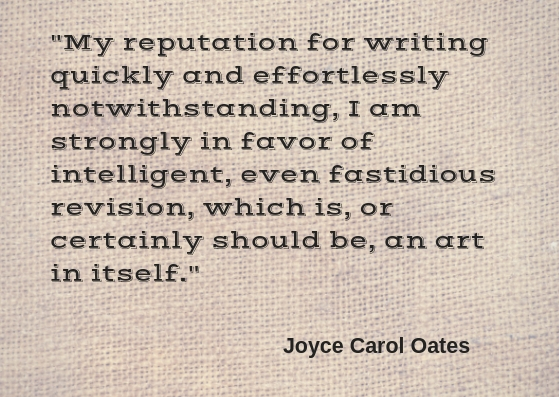
Will I change it based on others’ input? I can’t say yes or no. First, it depends on the input. Readers find different things in books, especially if it’s a complex work. That’s great. I have a hope about what they’ll take away from my novels when I write them, but it’s based on what I wanted to find as a reader. So, I bear in mind that I’m writing for myself first. If their input finds appeal in me, then I’ll work with it.
Enough. I understand what I think. Time to write like crazy, at least one more time.

 Michael Seidel, writer