Writing Madness

First, some acknowledgements were required. Then decisions, followed by introspection, and finally, action. Yes, it was a typical writing day.

I’d finished writing the first draft of April Showers 1921 and found it a hot mess. Part of that were unreasonable expectations (who, me?) about how the first draft should read, along with unreasonable comparisons to published novels being read. I know that one author comparing their work to another author’s work has never been happened before, but I couldn’t help myself. It probably had to do with a bad moon rising, a hormonal surge, or general malaise.

I’d also begun hearing editors, publishers, critics, and readers in my head. It was a crowded damn place, and they were a damning crowd. Foolish, I know, to consider anyone else while you’re writing the first draft. It’s one of my problems with being human.

Third, I was over-thinking every aspect of everything that I was writing. I know, writers never do that, and yet, I was, for some reason.

Fortunately, I was able to intervene with myself.

I have a habit of hunting for quotes about writing, writers, and the process and curses. I’ll often hunt for interviews with authors to find these quotes. It shouldn’t surprise many that I focus on quotes dealing with whatever issues are vexing me.

This week, I found quotes from Jane Bardam and Anna Burns that helped me get over myself. Jane’s quote, “We never know what we’re writing about, even when the book’s over,” first struck me. Becoming overwhelmed with my concept, I felt like I’d become trapped in blackberry bushes and couldn’t escape. I’d become paralyzed trying to analyze and understand what I was writing about. That was just shutting down my brain.

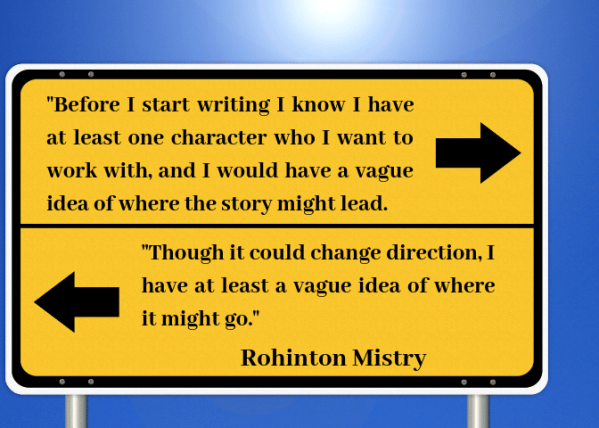
Likewise, over-thinking what was going on undermined my writing process. I then came across Anna Burns’ comments. She was all about how the characters turning up and telling their stories. That’s exactly what I normally do, when it’s all going well. Anna continued about it being a messy process, and that it’s sometimes told backwards.

Yes, and yes. Those were true for me.

But the last part was what saved me. Anna said, “Eventually, though, the book cleans itself.”

That reverberated through me. I’d gone from trusting my muses, the convenient label I apply to the thinking that comes out of my subconscious spigot, to trying to think my way through everything. In other words, I’d suddenly begun approaching this creative process backwards.

Those interviews and their insights helped me re-balance myself. “Relax,” I said. “Trust yourself. Trust your instincts. Trust the process.” Those calming words pulled me out of my funk and put me back on track.

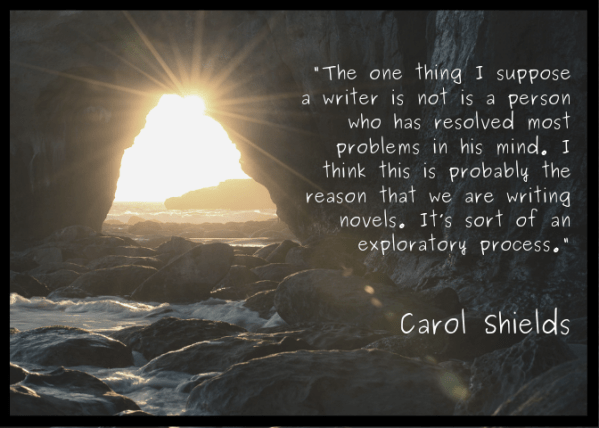
None of this is like splitting the atom. It’s basic writing process. Of course, your experience will probably vary. For me, it’s always about finding and losing myself, trusting and questioning, struggling, and then succeeding. It’s about being willing to fail, recognizing that failing isn’t permanent, and that there must be a way to go forward; it just must be found. That can be daunting.

Been a good day of writing like crazy. Time to quit and pursue other crazy. Cheers


Building By Deleting

I’m continuing to work on the novel-in-progress, April Showers 1921. Its challenges remain remaining and satisfying with a few dips into frustrating.

I’ve recently re-discovered the joy of deleting to build and improve the tale. When I began with the concept, it had a bajillion directions that it could take. I wrote about half of them, writing two to three thousand word chapters about the directions, exploring the characters, plot, and arcs. That resulted in a complex novel with a complicated plot, and extensive raw material. As I neared completion of the first draft, I met the muses at a crossroads. We agreed that some matters needed clarified and changed.

With mostly their guidance, I went through, exploring that first mess. Sometimes I attempted to work something into the mix, mostly because I enjoyed the passage. But, as often noted, sometimes killing favorite scenes help. As I deleted them (putting them into another documented that was a collection of these things…just in case…), I discovered how much the process sharpened my insights into the characters, situation, storylines, plots, and arc. With more focused insights, my writing and story-telling became crisper. My direction was better defined; I had more understanding of the final destination.

All of this wasn’t done overnight, but through several days of frequently frustrating searching and thinking. Sometimes I went backwards and then had to retrace my steps.

Now I’ve gone on into thinking of this mass as more like a giant piece, waiting to be sculpted molded, or carved. Unlike working in clay, wood, stone, or other hard, substantial materials, the novel’s characteristics change, depending upon how, where, and why they fit. Some pieces of the novel are solid. Only fine chiseling and polishing are needed. Other sections are thick, and I carve whole chunks away. Some are softer and more pliable, demanding shaping to improve coherency, pacing, motivation, and story-telling.

The process of writing and thinking about writing a novel often intrigues me as much as the novel-in-progress. As every novel is unique, so is the process used to write it.

Got my coffee. Time to write like crazy, at least one more time.

One Typo

I was writing several days ago, working on the novel in progress, April Showers 1921. I’d dream the novel, seeing the cover and knowing the main characters and a lot of story. Yet I was struggling to find and fulfill the potential the dream had shown the novel to have.

I plugged on, though, searching, testing, writing, and then tossing some of it away, trying to find the right path. Completing a scene, I went back over it, making minor changes. I uncovered a typo, an ess attached to a word, changing the noun from singular to plural. While laughing at the images that plural conjured, I deleted the letter, but then reconsidered what the plural could mean to the story. Within a few seconds, that extra letter and the shift from singular to plural opened up a new range of ideas. I went with it.

Results surprised me. That typo bloomed like algae, taking over that scene, but also illuminating masses of the underlying concept. The typo changed the main character’s interactions with others and shifted the entire story by several degrees. The typo opened unexpected mind streams. I surfed into new directions again and again, reacting with surprise, but also with satisfaction that this novel was becoming something different than how it’d been going. All of this is what causes fiction writing to be so engaging and entertaining for me.

Got my coffee. Time to write like crazy, at least one more time.

The Next Book

I’m working on two novels right now. One is an “official” novel, destined for publication. The other novel is the unofficial, not-to-be published parallel story to that novel.

Coming to that point has been an interesting process. My normal process generally has several documents. First, of course, is the beta document. This is expected to become the book. Another document is about brainstorming and epiphanies. A third is a bible of terms, characters, settings, relationships, and major milestones and turning points. Fourth are snapshots. These include expanding thinking about characters, relationships, settings, historic references, just a handy guide to easily find information. I’ll often add notes about why something was decided, and where it’s included in the novel.

Last of my many documents is the deleted scene compilation. These are chapters that didn’t work, wrong turns, if you will. Sometimes they’re overcome by new concept or plot developments. Sometimes they’re deemed redundant, or they’re telling about something that I already showed. Sometimes they’re the original chapter that I wrote, which was then edited and revised. I keep them for just-in-case needs.

Why so many? I don’t know. This is what my process evolved to be. It works for me. That’s the critical component.

To this mix of documents, I’ve added the parallel story. It originally began as the deleted scenes document. I found it added a mystique, an intriguing veneer to the true novel to explore what’s happened in parallel and then have the original novel react to it.

I don’t work on the parallel novel much. It’s not meant to be a final document. Scenes are not deeply fleshed out, but are taken far enough to enable my understanding of what happened that will affect the novel in progress. Characters are sharply defined, because their thinking, decisions, and actions affect the real novel.

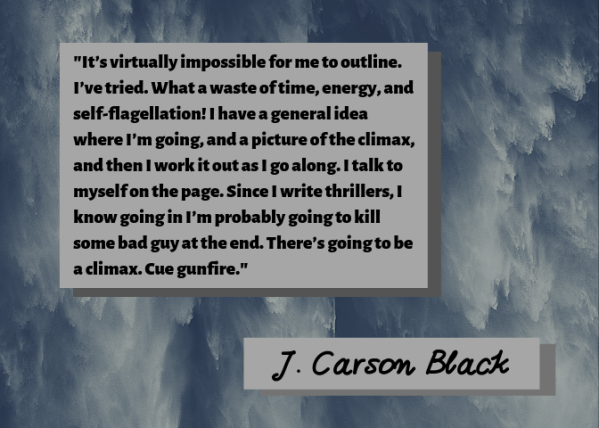
This is all part of the organic writing process, what some call pantsing instead of outlining. In looking at total word counts for all these documents, I estimated that I write two and half words of background and thinking material for every word in the novel. The beta draft of April Showers 1921 is forty-four thousand words. The others total about one hundred ten thousand words when added together.

That aligns with my last project’s results. Incomplete States is a series of five novels that total four hundred eighteen thousand in their latest draft. The supporting documents are just over a million words together.

Got my coffee. Time to write like crazy, at least one more time.

A Day Without Writing

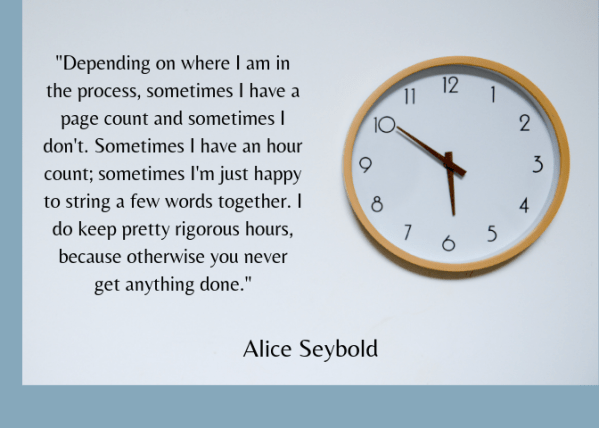
I didn’t write write yesterday. I had a full schedule of other activities planned. Yes, it’s rare that I take a day off writing. I think there are usually six days a year that I don’t write, and they’re usually sick days, travel days, or holidays. Might as well face it, I’m addicted to writing.

When I say that I didn’t write, I mean that I didn’t sit down with computer, crayon, or paper and pen. I wrote, but it was all in my head. I’ve noticed before that not writing and breaking out of my routine to do other things stimulates my writing. Same thing happened yesterday. I was writing fast in my head.

After getting home close to midnight last night (and with over twenty-six thousand steps on the Fitbit), I had a lot to write this morning. The writing session was one of those intense, fast-paced, and focused affairs that I so love, one where I take one or two gulps of hot black coffee as prelude to the process, and then unleash the muses. An hour or two later, butt sore and with half a cup of cold coffee still available, I stop, spent like a marathon runner.

It’s been an excellent writing week. Having discovered that simultaneous submissions to agents are now considered normal (yeah, you probably all knew that already, didn’t you?), I’ve submitted Four on Kyrios to six agents. I’ve taken my writing approach to procuring an agent. With writing, I write and press on, and with agents, I submit and press on.

Meanwhile, I’ve jumped into a new novel-writing project, April Showers 1921. As always, it’s great fun here in the beginning, when ideas spin like polished, multi-faceted gem stones, letting me think about all the possibilities. Often, though, as I contemplate the facets, the muses say, “Here, we’re going this way. Come on.”

That’s how it’s been. I’m not arguing with them. Fools argue with muses, because mortals always lose any argument with a muse. That’s just fact. I looked it up on the Innertubes, and found a Youtube interview with Shakespeare about it, so you know it’s true.

Now, though, I’m at the après writing juncture that requires me to stop. Don’t really want to stop because it’s been great but I know that I’m finished for the day. Other things remain to be done, my energy is shifting, and my body is saying, “Excuse me, but can we move? Would it be possible to bend and stretch, reach for the sky, stand on tippy toes, and all that?”

Sure, body. We’ll go do some of that. Time to stop writing like crazy, for at least one more day. Just let me gulp down this cold coffee and we’ll get out of here.

Waste not, want not, right?

Catching Wind

I encountered a friend last night. “How’s your writing going?” he asked. I’m paraphrasing the conversation.

As I’d been socializing more, I’d created an elevator answer for that question. “Great. Finished writing a series of five books last year, and then I edited and revised them, completing that at the end of the year, wrote a synopsis of the first novel, and compiled a list of agents for submission. Meanwhile, I’ve started writing a new novel.”

“You’re already writing another book? Don’t you need to take a break?”

“No. Writing is a pleasure. I didn’t need a break. Starting a new novel is always energizing.”

“How do you come up with ideas?”

“There are always ideas. Ideas come on from watching animals, the weather, people’s voices, expressions, and stories, newspaper articles, new inventions, dreams, reading, watching television, movies, music. Deciding which one to pursue is the challenge.”

“How do you decide?”

“It’s really about which one catches the wind and takes off. I don’t make a conscious decision about what to work on so much as I start writing. Then it comes out.”

Thinking about that today as I finish my day of writing like crazy, I reflect on all the story, novel, play, and musical ideas locked up in my mind, wondering which will ever be realized. I think if I physically could, I’d be writing twenty-four hours a day to satisfy my imagination and muses, and that still might not be enough.

Ironically, I dislike socializing. Socializing is an energy thief. It requires that I carve time out, set it aside, and focus on being polite, friendly, and speaking with others. All that is exhausting. Yet, inconveniently, socializing stimulates my writing ideas. Listening to people, watching them, and breaking out of my routines fire new ideas. There’s always a catch, isn’t there?

Now, sadly, time to stop once again. Bummer.

Blog at WordPress.com.

Up ↑