Margaret Also Said
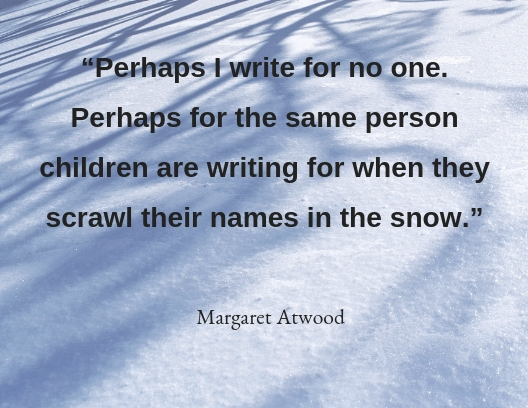
Science fiction, fantasy, mystery and what-not
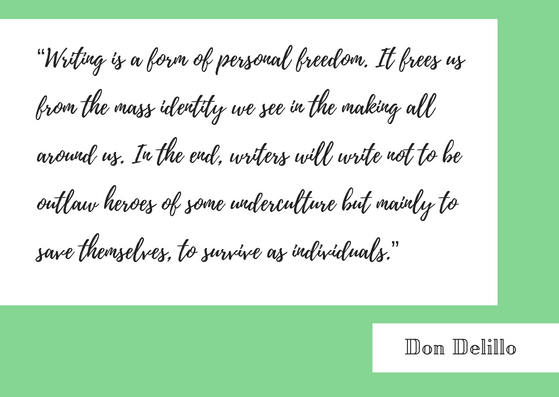
What do you think? Do you agree with this quote?
I sat down to write and poured out a paragraph.
Then I stopped to regard what I wrote.
Yech, I said. It was as appealing as a dirty cat litter box.
I don’t wanna write, I whispered in my inner vault, aware of the blasphemy that I was uttering.
Nor did I want to walk. I’d completed two and a half miles. The thought of another step depressed me.
I wanted to be on the beach, basking in sunshine as I listened to the waves and watched them crash on the shore.
I wanted to be reading a book, sitting at a restaurant, enjoying food that I don’t allow myself to eat because it’s not healthy. I wanted to be listening to music and laughing with friends. I wanted to be flying away, driving away, buzzing away.
I didn’t want to be writing, walking, doing yardwork, cleaning the house, or eating healthy.
Just like that, I knew I was into one of my dark moods. It was overtaking me like a terrifying storm.
Nuts, I said. Nuts.
I returned to writing. Every word felt like a struggle. I kept pushing, looking for a carrot to use, urging myself, just finish this paragraph, and then doing it again. I really needed a club. It’s a day like this when I could use a personal training urging me to push myself. Without one, I had to do it alone.
It was a gritty session. I actually counted the words. When it was nine hundred fifty, I said, good enough, and shut down. Then I grit my teeth and braced myself to walk. I wanted at least two more miles before going home.
I know the words that I wrote today will not seem any different from my usual output. It’s just the mood that’s affecting me. Sometimes I don’t need a carrot or a club. I just sit down and write. And then there are days like today, when neither a carrot nor a club seem like enough.
It was a terrible day of struggling to write like crazy, but tomorrow is another day.
I ran into a friend who is also a writer. She and I, along with a few others, used to meet for drinks and conversation. All writers, we talked about what we were writing and our writing processes, and complained about the non-writers and our struggles with them. Non-writers are rarely interested in our WIPs and processes. I can appreciate that. I’ve gone into eyes-glazing-over mode when others have gone into explanations about their processes about things like making soap or quilting.
Our outings were wonderfully healthy and happy times. Everyone in the group moved, though, leaving us to find other avenues or go without. I turned to posts like these to help me cope.
When we encountered each other on the street, we resumed our writing relationship, spending fifteen minutes catching up. Both had elsewhere to go, though, so we had to cut the encounter short.
One thing she revealed was that she’d begun using a typewriter to write. She’d slowly stopped writing as much as she used to write, and thought that part of her issue was that she found herself editing as she wrote when she used a computer. That process curtailed her productivity. Typing the work in progress, at this point essentially defining the concept, helped her because she held tangible evidence in her hand each day.
It was an interesting issue and approach. I can relate. Sometimes, when the writing way becomes denser, as it has in the current chapter in progress, tangible progress seems elusive. I type, think, edit, revise, and repeat. It’s not as much fun, but I discover that I still achieve about fifteen hundred words a day. That’s not an amazing amount, but it’s tangible progress.
Once in a while, I’ve returned to writing in a notebook. I consider that much rawer and intense. I’ve done so when I feel like I’m stuck. I usually felt stuck when multiple paths to pursue were available, paralyzing me with indecision and doubt.
In the end, I applaud her typing effort. Whatever it takes to goad yourself to keep writing, you know?
Got my coffee. Time to write like crazy, at least one more time.
Got my three Cs – coffee, computer, and cookie. The cookie is an indulgence. I ate breakfast – granola and yogurt with blueberries – a few hours ago, but I feel hungry, so what the hell, I indulged myself and ate a cookie. Salty caramel, if you must know.
Admittedly, eating the cookie was a little bit of stalling. I was stalling my start today because yesterday’s writing events surprised me. Handley attacked Kanrin with a sword. Kanrin killed her. What was going on with Forus Ker? He just sat there watching. Meanwhile, the ship’s alarms continue to go off. Kanrin’s nets have been compromised. And where are the rest? What are they doing?
None of this was planned. The destination is known but the path is a wildly winding way.
Once I finished writing those pages and concluded that chapter, I cleaned up errors and checked continuity. Then I walked, and wondered, where are we going now? What’s supposed to happen?
All of this took me down paths about immortality and death. Born with a fear of dying, and still capable of suffering injury and pain, one doesn’t abandon those fears, despite the evidence of past experiences. Even if you’ve died and returned before, or you’re not sure that what’s happening is reality, virtual reality, or a hallucination, and even if you’re doubtful if the outcome matters because of everything else happening, coping with the natural emotional and intellectual stresses inherent in these paradoxes challenges your will and sanity. Put yourself in that position and imagine. And remember, whatever the brain or personality might decide, the body may have different ideas. We’re not the masters of ourselves that we’re told as children. It’s a lesson we learn as we age and our bodies and abilities decay. It’s a lesson that’s reinforced as we meet others with lesser and greater abilities than ourselves. Exploring these avenues of similarities and differences and the impact on our decisions and actions is one of the most exciting and delicious parts of my writing experience.
When I walked and thought, I struggled to know what was to happen next in this story? It’s stupid of me to wonder, but I can’t resist. I know, though, I’ll slip into the moment and begin typing, and things will come out that I never foresaw. Consciously, I don’t know what’s next, but once I assume the typing posture, out it comes, if I just let it.
Yeah, it feels like weird fucking magic, typing something when I don’t know what I’m going to type. After all these years of writing, the process still astonishes me. I hope it never stops.
Now fortified with sugar and caffeine, it’s time to write like crazy, at least one more time.
I’ve been watching a show on Netflix called “The Fastest Car”. I like speed. It’s my one weakness. This show plays on the challenge, are sleeper vehicles faster than exotic machines like Lamborghinis, Ferraris, McLarens, Ford GTs and Vipers?
The sleeper vehicles are home-built machines. They frequently look like junk but are fast vehicles. You can’t call them cars. Cars are included, but so are trucks (including a diesel) and vans. There’s been a huge variety of machines. While presenting the challengers, the people talk about cars and their relationships with speed, racing, and the vehicle they’ll be using. Family is often a large thumb on the scales about what they’re doing and why.
With four cars racing, all can’t win. The defeated are usually philosophical about it, although some get hissy, challenging the fairness of something that happened. What is really interesting, however, is their absolute belief that they can and will win in the lead up to the race. They express doubts, but typically circle back and say, “I think I’ll win.” It’s that attitude that draws me to the show. As everything is considered and the cars are prepared, the men and women say, “I think I can win. I’m ready. We’re going to win.”
I like that attitude. That’s the sort of fire that writers struggling to make it need to exhibit. “I think I can win, and I’m going to do everything to prove it. It’s not for me as much as it is for xxx.” Xxx is the blank to fill it. They don’t want to win for themselves, but for those who believe and back them.
Isn’t that like a writer. We want to be published, and we’re driven to write. People often lurk in our lives, and we’re seeking to validate their belief in our talent, creativity, determination, and dreams. It’s a fuel that keeps us putting our ass in a chair with paper and pen or pencil, or at a computer keyboard or typewriter.
It isn’t just about me, we tell ourselves. It’s for everyone else. Remove them, though, and I think most writers will still be writing. I suspect those drivers trying to win would also still be going, even without trying to prove themselves to friends and family.
It may be the time,
the energy,
or the intentions,
or the hope.
It might just be the words or the dreams.
But you notice it slipping away,
through the cracks in the space of your life.
It’s the little things, at first.
Then you notice that much of it that you took for granted as yours has gone.
You never noticed the cracks.
You saw that it was two thousand.
Then it was twenty ten, twenty eleven.
Now it’s twenty seventeen.
It was January. Now it’s April.
Today, you order yourself, searching for the words and motivations in the cracks.
Today!
Before more is lost to the cracks,
today, you will write with abandonment.
Today, you will write like crazy.
At least one more time.
I’m mostly a self-driven vehicle, writing out of need to imagine and tell stories, and entertaining myself. Mostly, I energize via reading what I’ve written, editing and revising it and pressing on. Mostly, I write from practice and habit, walking to awaken the muse, giving her a mocha to encourage her engagement, and then shutting off everyone in me except the writer.
Mostly.
But that’s all about the writing side. The damn business side is depressing. The need for accepting rejection, considering advertising campaigns, hunting for copy-editors, beta readers, cover designers, publishing venues, publishers and agents are all depressing.
I’m not nuanced in demographics and specific costs structures, operating margins, etc., of the publishing industry, but I do understand that it’s an involved, expensive business on the traditional side, and it’s a crowded field in the self-publishing and digital publishing arenas. I understand on emotional, physical, intellectual and financial levels about the difficulties with finding representations, publishers, sales and readers.
That doesn’t make me feel any better.
I read fiction and non-fiction to study and absorb others’ ways with ideas, stories, characters, plots, words, settings, beginnings, middles and ends. I read them because I enjoy them. I want to be entertained and I want to escape.
But I read other writers ‘like me’ for true incentive about writing, dealing with rejection, and why it’s difficult to solve the writing, publishing, sales and marketing puzzles. Writers are my tribe; we write because we often feel we must, or we’re addicted to the dream or the process, or we’re using it to therapy to cope with who and what we seem to be.
Several families co-exist in that tribe. One family consists of the writers who have made it – King, Rowling, Chabon, Frantzen, Erdrich, Collins, Lee, Green – how many need be named? We each have our writing heroes.
My family is that other one, the family of writers who write each day, wonder how much writing is enough writing, publish short stories online, the writers who are struggling not to write, but to live and exist as a successfully published writer. I spent much time with their words and blogs online. I take comfort in our shared misery of struggling. It allows me to say, “See, it’s not just me. It’s not just Michael Seidel.”
And that’s a relief. I often think it is just Michael Seidel. I often feel like I’m right on the cusp of making a breakthrough and then the moment is gone. It’s exasperating and debilitating. Yet, I sense other writers live in that same zone by the words they write online.
From them, I get my fuel. Because sometimes, I want to stop. Sometimes the muse asks, “Excuse me, but are we wasting our time here?” Sometimes the internal writer agrees, “Yeah, shouldn’t we just go wash and wax the car and have a beer, or volunteer for some charities, or go find a job? Wouldn’t any one of those things be more productive than the daily rituals we follow?”
But my family of writers and I all answer, “No.” I can elaborate, “You’re not correctly measuring what it means to be productive, that being creative and imaginative is more worthwhile to me than those tasks you ask me to undertake instead.”
We know this. Commercial and critical success is a matter of validation and pride. It’s driven in part by family and friends asking us, “How is the book coming along? When will I be able to read it?” They do not understand the difficulties not just in writing, but in getting published and noticed, of making sales.
Usually, we don’t bother to explain the intricacies their question deserves. Nodding, we just tell them, “It’s coming along.”
Then we add the exchange to our fuel.
 Michael Seidel, writer