
Science fiction, fantasy, mystery and what-not
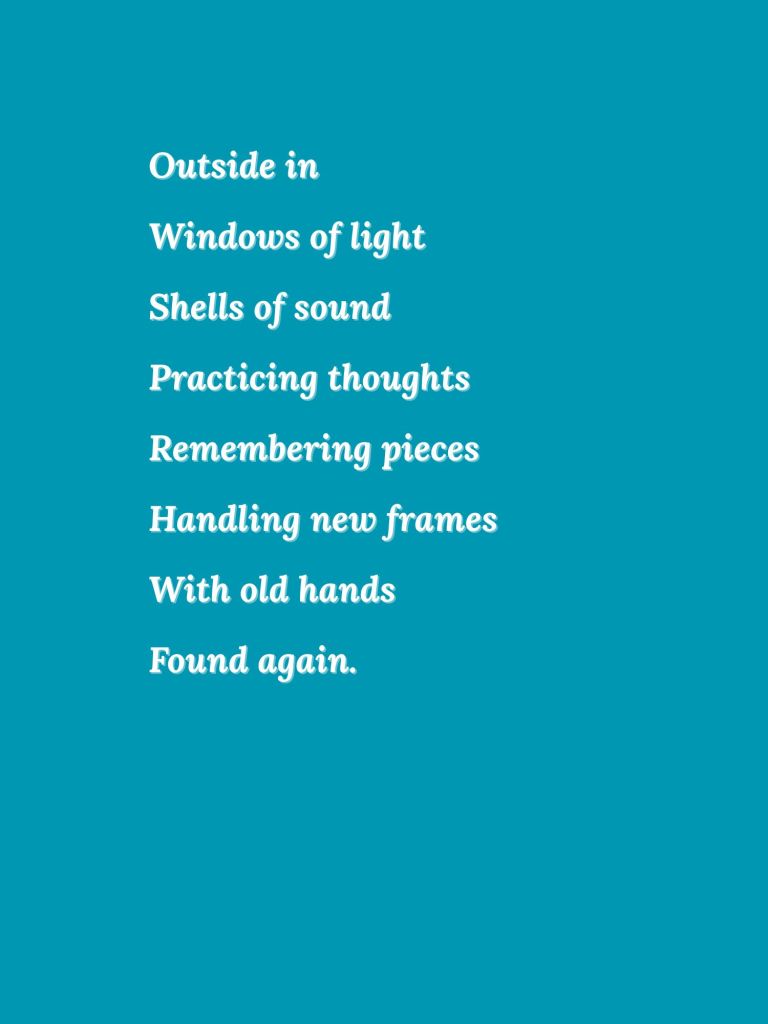
The explosion landed
In silence
Revealing exactly where he was wrong
And right
In one burst of time
Moment
Thought
Leaving him to sit with
details
Confloofcius (catfinition) – a wise cat who is said to have reached Furvana. Many cats follow the teachings of Confloofcius, which requires cats to meditate significant parts of the day. They sometimes meditate with their eyes open, but often with their eyes closed. Many people mistake meditating cats as sleeping cats. This gives rise to an erroneous perception that cats sleep many hours of each day, when they’re meditating, and trying to reach Furvana.
It begins with the chair. I’ve always preferred a hardback chair. We have none in our house. Sometimes I see old chairs for sale for a few dollars and think that I’ll buy one to have for this purpose.
But our dining room chairs are okay for my meditative purposes. I began meditating while stationed in the Philippines in 1976. I was very regular and disciplined about it for several years before drifting away from the practice. Sometimes, though, the urge to sit quietly in a chair in loose clothing in a silent room and followed the process comes to me. The practices are familiars and comforting. My mantra, established for me by my guru decades ago, still resonates with my core.
Meditating cleanses and focuses me, relaxes and calms me. It lets me listen better and think more clearly. It instills patience and distills my angers and frustrations while reinforcing my will and determination.
I only meditate for twenty minutes any more. Upon emerging, colors are brighter and softer, more vibrant but more separate. I see and hear more clearly. I usually meditate after making my coffee but before drinking it, as I like that smell swirling around me as my breathing deepens.
I’ll sometimes have an out-of-body moment. The first time it happened, six months into meditating, startled me, as I was suddenly looking down on myself from above. More often, my body will do small corrections, and feeling them will bounce me into conscious thoughts and out of the meditative state.
I always end by standing up and stretching. I always feel renewed. It’s not unsurprising to end a session and discover one of my cats contemplating me, just sitting and watching. I feel like the process attracts them.
Or maybe they’re coming over to see why I’m not moving, and are trying to determine if I’m still alive.
Some days –
You leap up, eager to engage. Yeah, you got work, but so what? You’re fucking ready! Give me coffee, tea, whatever, and stand back, ’cause here I come.
Other days –
The movement to remove yourself from that lovely bed is proceeded by a long sigh, a bit of ceiling staring, and an argument. “Is it really worth it today to get out of bed?” you ask yourself. “Can’t I just stay here all day?” Thoughts of responsibilities, deadlines, appointments and engagement roll over you like waves. Damn, you realize, I have to get up.
You throw the covers back and shove yourself free. Look out world, you promise. You hit me, I’m going to hit you back. Hard.
But some days –
Oh, Jesus, you think. Another day. There’s no end to them. I’m in a tunnel but there’s no light. Nada. Nothing. Zip. Zilch. “I hate my life,” you whisper.
But, what must be done, must be done. So you get out of bed, a stoic embracing of your duties and trudge through the day, engaging as it must be done but trying not to use much of your energies. Not on days like this.
But other days –
Ha, ha, ha, you think, with a surreptitious glance at the clock and daylight, I don’t have to get up today. I can sleep in as long as I want. I can do whatever I want. And with that, you bound up, because this is your day. You can do whatever the fuck you want.
But some days –
You awake and arise. You don’t feel really rested but you don’t feel tired, either. You don’t know what you feel. There are things to be done but nothing is pressing on more than the immediate need to pee.
You think of the things that you need to do and what you might do. You might go some places. You might not.
Thoughts are accompanied by small mental shrugs of indifference. You’re not really happy. You’re not really sad.
You’re not really anything.
You and the day feel like an onion. Some peeling must be done before anything useful is found. You’re not even sure if you feel like peeling it, though. It’s not a question of energy or attitude. No, you don’t know what it is. To know that would require some peeling, and you don’t feel like peeling. Perhaps you will after having some coffee or tea, or being up a while, or maybe you’ll feel like it after getting cleaned up. Who knows?
That’s how it is.
On some days.
But not others.
Each day brings a new requirement to re-balance priorities, needs, desires and the rest.
Each week brings an increasing gentle awareness of time.
Each month brings a new assessment of what’s been done, what needs to be done, what hasn’t been done, what you hope to do.
Each season brings new requirements for clothing, repairs, vacations, work and celebrations.
Each holiday brings a new influx of decorations – ghosts, Santas, elves and reindeer – and renewed promises to clean out the previous collection of decorations. Each effort bring renewed efforts.
Each departure brings thoughts and reflections. Each arrival brings anticipation.
Each year brings fresh nostalgia and growing awareness of mortality.
Each morning brings a new hope.
Each hour brings a new beginning.
And each thought brings a new perspective.
Each time, it’s not the same.
And each time, you wonder how has it changed?
Mucking through the morass of memories, moods, and meditation, I sought other directions. I wondered about my surfeit of wild dreams, trying to gauge, do others dream so much? It was like the Dream Network – Dreams, 24/7. (Your dreams on the eights.) Or is it that I’m just remembering more dreams? Maybe others remember but don’t talk about their dreams, citing their upbringing: “Mom always told me it’s not polite to talk about your dreams.” That needs modernizing: “Mom texted me it’s not PC to blog about yr dreams.”
Out of the meditations and meanderings, I remembered Florence Scovel Shinn. Following a whim, I duckduckgo’d her and found a website devoted to her. (What we can google but not duckduckgo? Yeah, it’s not as clean, is it? I predict it won’t catch on.)
On FSS’s page is an opportunity to do a random affirmation. I clicked the button, and this came up:
“The four winds of success now blow to me my own. From North, South, East and Wet comes my endless good.”
A pleasant sentiment, and apropos for a windy day. At the least, I read it and smiled before urging myself, “Come on, believe.”
There is a book called ‘The World According to Garp’.
It’s not an obscure novel so you might know it. Written by a guy named John Irving, who has written and published several pieces of interesting fiction. Some have even been made as movies. I think this one was made into a movie, and had several major actors star in it.
In the book I reference, the main character is TS Garp. TS Garp is an author. His mother, Jenny, a nurse, also becomes a writer. But her process irritates Garp (as I remember it) because she never seems to indulge in the silence of thinking and editing. She’s always hammering the typewriter.
I often think of that because I love that silence, when I drop a still bomb on my existence, cross my arms and stare out the window to think, where do I go today?
That summarizes my situation. I just finished a major piece of the pirates’ tale. Today, I’m thinking, do I continue writing the pirates’ arcs or do I turn to Pram and his team’s activities, or back to Brett and his role? Each have beginnings and middles to further develop in the push toward climax and denouement. The arcs all seem equally easy and difficult to write, that paradox of writing tension where you’re on a peak, trying to capture the lightning. But I’ve been spending so much time with Handley and her captain and crew, I’ve really enjoyed their company and know them so well. I wonder, how important is that? I know Brett very well, too, but he is a more complicated person, in a complex situation, and yet is the novel’s largest cog. But Pram’s POV offers a major twist and I’ve been sitting on the edge of that for several weeks, letting it brew.
So I sit in personal silence amid the coffee shop’s music and conversations, meditating to a degree about which story to take up. That’s actually a lame description of the process. I open the book in my mind and return to each arc’s place where I paused. Consideration of where they’re stopped and what’s to happen next is studied. From that process, one aspect gathers a stronger brightness, a sharper focus, a more immediate presence. My mind takes up its mental pen. I begin to see and hear words. Words become sentences. Scenes flower.
Then I know where to go, what to write, and I begin again, to write like crazy, at least one more time. Often it’s the middle of a scene. It may not even be ‘connected’ with what’s already written. I know I can write such bridges later. I’m interesting in writing down the bones. I’ll add verisimilitude and substance in the immediate edit. The immediate edit is the stage I conduct after completing a scene, just part of building continuity and managing pace and story.
In that marvelous way that brains can work, my thought processes are segregated and compartmentalized, and while I’ve been thinking about this post and my process and writing, I’ve been thinking about the novel and the aspects I’ve described. From these ruminations have arisen the next piece to write.
Here I go again. It is such a wonderful high, the sort of moments that you hope will never end….
First, let me say, this has everything to do with zombies. I wasn’t attacked by any zombie except for the phantom zombies within me. I can pinpoint it to the zombies that drive my desires to capitulate and eat foods I know I shouldn’t. These zombies are also called ‘habits’. They come out when I demonstrate a weak will.
Follow me two steps back.
The dark waters rose in me yesterday, increasing last night. I could feel them rising and battering me like a storm surge, and witnessed the tangible results in making my plans for today, as well as my reactions to my cats and wife. I didn’t want to do anything. Their neediness and complaints (which were actually requests to be petted and visit with me) exasperated, even infuriated, me.
Then, this morning, my toes were cold in bed. I suffered difficulty swallowing. Rising to feed a cat (it was six AM, after all – time to eat!), I could barely piss. The urine was a feeble dribble. Recognizing these symptoms, I cursed myself for yesterday’s diet, because this is what happens when I eat too much — or the wrong wheat, or wheat prepared in a way that disagrees with me.
I suffer from some wheat or gluten reactions. Its impact varies. I ate food I wasn’t familiar with it but I know it’s loaded with wheat. What sort and how it’s prepared seem to matter. These were baked goods. Baked goods afflict me.
It started with the growers’ market. My wife returned from shopping and having coffee with friends. She offered me the rest of her almond croissant. I accepted and ate it, to be polite, and I didn’t want to be wasteful. I blame my mother for that.
Lunch was Trader Joe’s fat free burritos. Love them but also know that their white flour tortillas cause bloating, swelling and inflammation in me. I suffer phlegm and swallowing issues. But I justified it because my computer had been returned. I was busy with it, very hungry, and the burritos were available and easy to nuke.
My wife had made a blackberry cobbler as a treat, and offered me a piece of that. I had two, to be polite. Mom always encouraged me to be polite.
Dinner, a chile relleno pie that featured a magnificent crust (complemented by a glass of pinot noir), was consumed late, after returning from the Nagasaki-Hiroshima Vigil’s closing ceremonies. I had two wedges, to be polite, followed by a another blackberry cobbler square. It was the kind thing to do.
Meanwhile, my mood was curdling like milk left out in the sun. I felt it, too, yet felt helpless in its face. To continue mixing metaphors and analogies, tides of dark water were rushing in and overwhelming me. I was stressed, irritable, short-tempered, and cranky as a sleepy three year old.
But it was only this morning, when pissing and looking back on the previous day’s eating that I saw the connection between my body, my food intake, and the dark mood. Click — hello. I’d always suspected it, but the mood change and association with food had never been so vividly demonstrated before. And — here is the zombie connection — it was mindless eating, which is pretty much what zombies do, isn’t it?
I addressed these things with morning meditation for 30 minutes, followed by health visualizations. Meanwhile I wrote about it in my head. That’s always great therapy for me. I debated about sharing it here. I write so much about me, the bloody blog may as well just be called, Me, Me, Me! But I posted it here anyway, just proving my point that this blog is all about me. But hey, look at its unimaginative name. See?
And zombies. This was also about zombies. Because, when I behave mindlessly, I become a zombie, an angry zombie with some pissing, bloating, and swelling problems, who ate some really good food.
This week, I enjoyed discovering and re-discovering reading regarding the brain and how it works, how we can change its workings, memory, and meditation’s effects on the brain. This all seems to be about practice, expectation, and changing expectations.
DelanceyPlace.com is a website that publishes excerpts from fascinating non-fiction. Back in 2015, they published an excerpt from a 2014 book. By Matthieu Ricard, Antoine Lutz and Richard J. Davidson, the book, Mind of the Meditator, is about how mastering a task transforms the brain’s pathways.
“The discovery of meditation‘s benefits coincides with recent neuroscientific findings showing that the adult brain can still be deeply transformed through experience. These studies show that when we learn how to juggle or play a musical instrument, the brain undergoes changes through a process called neuroplasticity. A brain region that controls the movement of a violinist’s fingers becomes progressively larger with mastery of the instrument. A similar process appears to happen when we meditate. Nothing changes in the surrounding environment, but the meditator regulates mental states to achieve a form of inner enrichment, an experience that affects brain functioning and its physical structure. The evidence amassed from this research has begun to show that meditation can rewire brain circuits to produce salutary effects not just on the mind and the brain but on the entire body. …”
Addressing how ‘the adult brain be still be be transformed through experience’, HuffPost had a related story this week, To Increase Your Well-being, Train Your Brain. Mimi O’Connor wrote, “Dr. Richard Davidson, neuroscientist and founder of the Center for Healthy Minds at the University of Wisconsin, Madison, believes that practice is the key element in changing our brains for the better. He is well known for his pioneering study with Buddhist monks. In that study he hooked the monks up to fMRI machines and observed their brains as they meditated. The monks produced gamma waves, indicating intensely focused thought, which were 30 times as strong as the control groups.’ Additionally, large areas of the meditator’s brains were active, particularly in the left prefrontal cortex, the part of the brain responsible for positive emotions. This study showed that conscious effort can change the neural structure, activity and function of the brain.” Dr. Richard Davidson was one of the other book’s authors, of course.
“Similar to the inspiring theme of the film Field of Dreams, “Build it and they will come,” Davidson’s motto seems to be, “Exercise them (neural pathways) and they will strengthen.”
Offering another point of view that affirms the same was Sophie McBain in Head in the Cloud. Her article addressed human memory and studies regarding the impact of computers and digital systems on our ability to remember. What becomes clear from her intriguing article is that, part of what affects our ability to remember, is our expectation of a need to remember. Here, in essence, we’re seeing the opposite impact of the other articles, where people who have computers to help them remember, don’t practice remembering, thereby weakening their ability to remember.
They’re all ripple effects, aren’t they, a sort of Doom Loop on the one hand, of expecting less and trying less, and so spiraling into achieving less, or conversely, a Halo Loop, of expecting more and trying harder.
Of course, I need to tie this back to writing. Practice writing, pursue it, try to master it, and the pathways and areas of the brain used for writing can be strengthened and transformed. Instead of believing you can’t, believe you can, and try. Being human, it’s rarely that simple, and people like Judith Sherven, PhD, can inject insights and ideas for re-working the subconscious programming behind the Doom Loop.
I’d also like to tie all of this back to time, reality and the nature of existence, but that’s for another post. Instead, I need to go off and write like crazy, at least one more time.
 Michael Seidel, writer