Another Philip Said
Science fiction, fantasy, mystery and what-not
Do you ever have an imaginary conversation with someone else, and their imagined responses convince you that they’re right, so you do something different than what you planned?
Yes, this includes imaginary conversations with animals.
Between the dreams at night, and the books I read
between the remembered movies, and the songs that I recall
between the conversations I have, and those I overhear
between the places I’ve visited and the places where I want to go
Between the thoughts about the world, and hopes and despair
between the people I watch and the events I see
between the need to think and the impulse to write
between the steps on my walk and the cups of coffee
Ideas come between the seconds
and the only relief is to write like crazy
at least one more time.
I’m reading Bill Browder’s memoir, “Red Notice”. Partway through, I’ve just finished the part of his life when the Asian markets tanked, tanking his Russian-based fortune in his company, Hermitage Capital Management. At this point, still in the first third of the book, he considers his options. It would be easy to sell off everything for what he could get, close the company, and leave Russia, but he disliked the impression.
His thinking reminded me of Stephen Covey’s “Seven Habits of Highly Effective People”. Habit Two is “Begin with the end in mind.” It’s my favorite habit. When I used Covey’s book in team building, I led an exercise to imagine what you want others to say about you when you’re finished, when you finally say, I’m done. It’s one of those things that provides extra motivation when it seems like your tank might be empty.
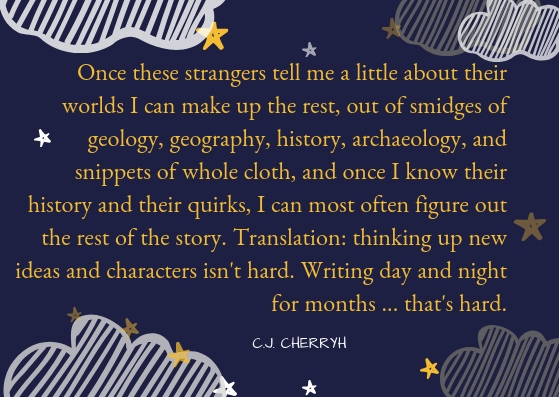
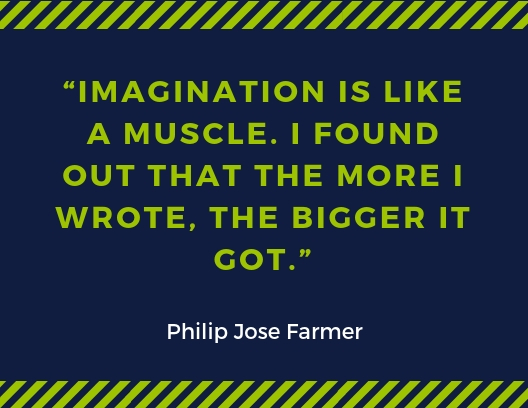
I feel like I need to remind myself of this today. My muses are tearing me up with their pace. I’ve been reading a lot, which is a catalyst to dreaming. Dreaming fires up my imagination, and imagination stimulates my writing. Or something like that; I don’t know the exact connectivity between these activities, only that they seem to act on one another in me. Simultaneously, I sometimes worry that I’ve gone off the tracks and have begun pursuing a delusional folly somewhat like Professor Grady Tripp in Michael Chabon’s novel, “Wonder Boys”. Michael Douglas played Professor Tripp in the movie.
Intellectually and emotionally, I know that doubts like these aren’t uncommon among writers, especially while you’re an unknown author and working on a long project. Personally, I know my rhythms and understand this is part of my modus operandi and my untamed impatience to get done and move on to other activities.
You probably get tired of reading blog posts like this. As it is part of my normal cycles along my personal spectrums, I end up thinking, writing, and posting about them. I share it as much to help me think through my situation, but also to let other unknown writers out there that they’re not alone. Every writer that I know goes through these doubts. Some let their doubts stop them from writing. Others take Professor Tripp’s path, figuring that if it’s never done, it’ll never be read nor criticized, creating Schroedinger’s novel. Is it brilliant or garbage? Nobody knows because he won’t let anyone read it.
Looping back to the post’s beginning, though, I don’t want that to be me. The end for that is a writer who never finishes or publishes. Good or bad, I will finish and publish despite myself and my fears, worries, and neurosis.
Time to write like crazy, at least one more time.
When I finished writing yesterday, I’d completed another chapter. Now I had three chapters that needed to be pulled together. Each was a thread that seemed unrelated to the others, even though I knew they were related.
Walking along, I thought about that writing process. I’d envisioned something happening to these characters, gone down several side trails (creating the three threads) and now had to tie them together to return to the original story line. I thought about how much of my writing seems like problem solving, and things I’ve done all my life, from solving math problems in school to logic problems done for pleasure, personnel issues because I’d become a manger, on to difficult business cases that required me to find, compile, and analyze data using spreadsheets.
I’ve heard people say that they wrote something but didn’t finish it, because they didn’t know what to do next. Resolving those things shouldn’t stop us, if we’re writers. We dig more deeply, searching for ways to finish the story we’re telling. How we get to that point that we find a way varies. I walk and noodle, and sometimes read other books. Reading fiction often seems to open another door in my mind. It’s a fresh reminder of the importance of reading if you’re writing. Reading stimulates my imagination and creativity.
While I walked and thought, I recognized that I was also intimidated. I was afraid of making a mistake, tying the three together. It’s a major moment in this series.
That amused me, since I knew that what I wrote when I write like crazy is rarely the finished product. I make mistakes, and correct them, trying to improve the story and how I’m telling it. But I also realized that I was over-analyzing what was going on, a regular problem I have with myself for everything from deciding what to order on a menu to, well, writing a novel.
I also laughed at myself because I thought, a million words written, and it seems like a million more to go. It staggered me to think that these four novels plus the support documents for this series added up to over a million words. It didn’t seem like a million words, but I never thought about the sum total when I wrote them. I just wrote, word by word, and it all came together.
It reminded me, too, of walking to get somewhere, and stopping partway through the journey because I’m hot, sweaty, and tired, and realized, I’ve come so far, but there’s more to go. So I pause, look around, accept that I have to walk on to get anywhere, and continue on the path that I began to follow.
So, deep breaths, I told myself. Just sit down, have some coffee, and write. I’ve written a million words; what’s a million more?
Okay, I’ve had the coffee, and I’m sitting down. Time to write like crazy, at least one more time.
She’s a Luddite, no doubt. Never had a computer or a personal email account. She’d had the one when she’d worked, in email’s early days. Didn’t have a cellphone and was only vaguely aware of selfies, and she didn’t have a television.
But she did have a P.O.T. – a plain old telephone – and an answering machine. When they called, though, it ringed without switching over. One day. Two. Twice on that second day, once each in the morning and afternoon, and then again twice on the morning of the third day. Official worry had launched by then. That. Was not. Like her.
Nerves coiling into a rat’s nest, they went to her house. Her car was there. The house looked normal. Sunning cats watched their investigation with narrow eyes, their ears pricked forward to hear their soft voices. Soft voices were needed in a moment like this, when you don’t know what you’ll find.
No one answered their knock.
They walked around the house. She wasn’t in the yard working, or in the shed. They checked the shed…in case.
The cats looked okay. They discussed it. How the cats looked meant nothing. A window was open for the cats to come and go. They could see a feeder half-filled with kibble inside, and a water bowl.
She kept her doors unlocked. That’s how she was. He remembered her answer to his amazement about how she lived. She said, scoffing, “I don’t think I remember where the house keys are.” They thought she was joking, but she said she wasn’t. Remembering that she didn’t lock her doors didn’t make them feel any better about the lack of connections to her.
Knocking again, they opened the door and called her name.
No reply.
Entering, they crept around, invaders of a friendly territory. It reminded him of entering a church when nothing was scheduled. It was a clean house, but not organized. That wasn’t a concern. They had other concerns, like bodies.
No bodies were on the floor. No blood. No signs of fights or struggles, as they’d seen in movies and television shows. They called her again, in bolder voices. The kitchen was clean. There was food on the refrigerator. The dishes were done. Nothing was in the sink.
They looked in all the rooms. No one was found. He went to her rotary Trimline phone and picked it up. He heard a dial tone. The answering machine was beside the phone. A red light showed it had power. Blinking showed it had messages. Maybe it was full.
Further walking around did nothing but reinforce the fact that they’d walked into another’s house without an invitation. “Let’s leave her a note,” he said. “Tell her we called and came by, and that her answering machine doesn’t seem to be working.”
They wrote the note, and left after two more minutes. They’d allowed that time in case she was out somewhere. She could return at any moment.
They closed the door behind them, and looked around again, to see what they’d missed. The sunning cats watched, and wondered who they were.
You’re living a long time. One hundred and five is now the average age of a human. That average is creeping up. We’re all living longer as medical technology monitors and addresses issues 24/7. People aren’t being born, and some children are being kept as children.
Thereby is an argument: if a child is kept physically, emotionally and intellectually at six years old because that’s the age their parent(s) prefer them, but they’ve been alive for forty years, how old are they? Most planets, corporations and governments hold that if they’re maintained at an age, they count at that age if it’s an age whereby they’re somebody’s wards or in a protected status. So, for example, some are adults (which varies mightily in the future) but look like they’re twelve, because they liked how they looked then, so they’re counted as their true age. But if they’re twelve and are treated as twelve years old even though they’re fifty, they’re treated as twelve.
Civilization is more complicated in the future.
One decision many face is what to embody. As memory is augmented to provide greater storage and enhance recall abilities because people are living longer, people typically embody their memories as an avatar that can be compiled as a physical presence. That way, instead of just engaging in internal dialogue with themselves, they can call out their memory and invite them to have a drink or share a meal while they discuss their recollections. Brett’s memory is a tanned blonde woman in a red dress (who doesn’t have a name) and Handley’s memory is a pirate named Grutte Piers, based on the real Piers Gerlofs Donia. These aren’t their first memories but they’re their current memories in ‘Long Summer’.
Something similar has evolved for sex. Many people have decided that fake sex with an avatar of their design is more enjoyable than having sex with another actual person. People have foibles. Foibles can be very irritating. The foibles can be mitigated to some degree but people are a bit unpredictable. Many people have learned that they don’t like their sex partners to be unpredictable.
To solve these issues, people often create one (0r more) sex avatars (sexatars?). Like the memory, it’s an embodiment that’s compiled to exist for a period. People can decide exactly who they resemble and how they’ll act. If they want, they can create animal avatars and have sex with animals as a human or compile or modify themselves to be animals and enjoy their sex. Whatever creepy depravities humanity enjoys can be indulged by creating sex avatars. A few people have married their sex avatars. Avatars are people, too, my friends, except they have different rights.
Sex and memory are the two main items people have embodied as avatars but a few people create others. Some have their intelligence or imagination embodied as an avatar that they can call out for visits. Brett has created an embodiment of his personal computer and communications systems, and calls it Carl. Others have gone the good and evil routes, creating twins of the opposite end of their moral spectrum (as they see it). A few enjoy themselves so much that their have avatars that are exactly like themselves created so they have themselves as company. Most find this doesn’t work well, that as people, they’re not the wonderful companions they thought they are.
All of the avatars are as that as anything humans create. Maintenance is needed or the avatars break down and cease functioning.
With all these facets acting in parallel, the population of humanity is slowly cresting, and the average age is creeping up. The oldest humans are upward of three hundred years old. Despite proliferation of new communication technologies and people living longer, people are living more and more in isolation, with only their memories, sex and other embodiments as avatar companions. Sometimes, they miss family or friends and have ideal avatars of them created, too. It makes for happier holiday meals. Meanwhile, Mom, Dad and Sis are alive on other worlds but never hear from Bro.
Yes, it’s an interesting and complex civilization, in the future. Another day of writing like crazy is in the books (ha, ha).
This post has been brought to you by coffee. Coffee: it’s good for thinking (and bowel movements).