
Today’s provocation comes from a friend named Herb. His opinions are published every Friday. Here’s his latest. I’m firmly with Herb; capitulating to Trump or trying to appease him inspires him to take more.
Where do you stand on this? Resist, appease, or capitulate?
Any effort to appease Trump only encourages him to seek more illegitimate power
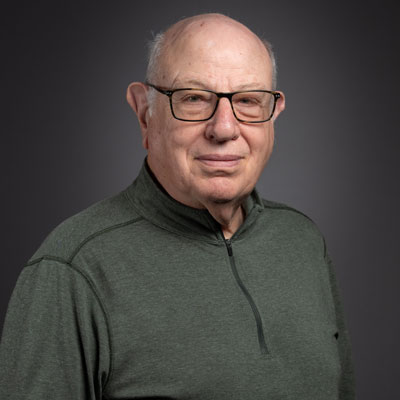
By Herbert Rothschild
After World War II, when the U.S. went to war, apologists frequently would cite Munich to justify it. Their point was that British Prime Minister Neville Chamberlain and his French and Italian counterparts foolishly believed that they could appease Adolf Hitler’s territorial ambitions by signing an agreement in Munich on Sept. 30, 1938, that allowed him to annex a portion of Czechoslovakia. Such capitulation to an autocrat’s demand was a mistake that must never be repeated.
I was much too young to assess the justifications for the war in Korea, but not for the one in Vietnam. The Vietnamese lived in a small country that had been under the colonial control of the French, then the Japanese, and the French still again after the Allies defeated Japan. I could see little resemblance between their long, painful and heroic struggle to recover their independence and Nazi Germany’s aggression against its neighbors.
Historical analogies are tricky, but they aren’t useless. Indeed, I believe that the United States now has reached its Munich moment. To compromise at all with President Donald Trump’s demands only abets his quest for unlawful executive power. Each concession encourages him to demand more. When he meets firm resistance, though, he quickly pulls back.
The latest confirmation of that analysis is the difference between what happened to Columbia University and what happened to Harvard. In March, the Trump administration froze approximately $400 million in federal funding to Columbia, citing alleged violations of civil rights laws, including the university’s handling of antisemitism and campus protests. To restore the funding, Columbia agreed to place its Department of Middle Eastern, South Asian and African Studies under “academic receivership,” transferring control from faculty to administrators for at least five years. The university also agreed to overhaul its admissions policies and disciplinary procedures, aligning them with federal directives.
Encouraged by that victory, Trump then went after Harvard. On Friday, April 11, the university received an emailed letter from Sean Keveney, the acting general counsel of the Department of Health and Human Services, making even more sweeping demands. The next Monday, Harvard firmly rejected the interference. Trump immediately announced that he was freezing $2.2 billion in research funding to the school and threatened to revoke Harvard’s tax-exempt status. Still, Harvard refused to back down.
Lo and behold, shortly thereafter one of Harvard’s lawyers received a call from Josh Gruenbaum, a top official at the General Services Administration. Gruenbaum, along with Thomas Wheeler, the acting general counsel for the Department of Education, and Keveney constituted Trump’s so-called antisemitism task force. Gruenbaum first said that he and Wheeler hadn’t signed the April 11 letter and that it shouldn’t have been sent. Then, he changed his story and said the letter was supposed to be sent at some point, just not on Friday while the task force was still talking with Harvard’s lawyers.
Harvard sued, claiming that the government’s freeze on its research funding is unconstitutional and the demands for control over its academic policies violate the First Amendment and other federal laws. The $2.2 billion is still frozen, but further threats have stopped.
The same dynamic has played out in Trump’s threats to impose tariffs on various countries. Take Mexico. Back in November, Trump posted on Truth Social that, immediately after assuming office, he would impose a 25% tariff on products from Mexico and maintain them until Mexico stops fentanyl trafficking and migration. Mexican President Claudia Sheinbaum pushed back in a letter I reprinted in a Relocations column published in early December.
After Trump assumed office, he veered back and forth over tariffs on Mexico, trying to intimidate Sheinbaum. On March 4, he imposed the 25% tariff, then two days later said he was postponing it until April. What finally happened was that Mexico was included in the 10% tariffs Trump has imposed as a minimum on all countries, but Mexican products that comply with regulations in the United States-Mexico-Canada Agreement that Trump negotiated during his first term were exempted. That exemption covers about half of Mexico’s exports to the U.S.
Trump’s apologists say that these aggressive moves and subsequent pull-backs are part of his negotiating strategy, and in a way they are correct. But the real goal of Trump’s negotiations isn’t deals but the enhancement of his own power. His aggression is the way he tests how successfully he can bully his opponents.
That is what he did with Columbia University. That is what he did with the law firms Paul, Weiss, Rifkind, Wharton & Garrison and Kirkland & Ellis and Latham & Watkins. And that is what he’s done with all the Republicans in the Congress. All of them caved, and their “prudence” simply incentivized him to push further. Like Harvard, like Mexico, like the law firms Perkins Coie and Susman Godfrey, like Ukrainian President Volodymyr Zelenskyy, the only way to deal with Trump is to say no.
Resistance breeds resistance. Early this month more than 500 law firms and 300 retired judges asked for leave to file two amicus briefs condemning Trump’s order stripping security clearances from and severing government ties with Perkins Coie. And this past Tuesday the American Association of Colleges and Universities issued a statement signed by leaders of almost 190 other universities denouncing “unprecedented government overreach and political interference” in higher education. That’s how movements grow.
On April 17, New York Times columnist David Brooks called for “a comprehensive national civic uprising” to oppose Trump. In the much-cited piece, he said that Trump is only interested in the acquisition of power “for its own sake” and is engaged in “a multifront assault to make the earth a playground for ruthless men.” He argued that we cannot deal with him piecemeal — institution by institution, sector by sector. We must coalesce into “a movement that possesses rival power.”
Good for Brooks, who was shaken out of his complacent conservatism when Trump assumed control of the Republican Party in 2016. The specific forms of resistance he advocated are lawsuits, mass rallies, strikes, work slowdowns and boycotts. While ending his list with “other forms of noncooperation and resistance” used by past movements that challenged illegitimate power, he stopped short of mentioning civil disobedience.
I think civil disobedience is necessary. Only when the Trump administration begins to jail nonviolent protesters will the diversified mass movement Brooks envisages coalesce. If I don’t get arrested in the next 12 months, I’ll consider that I missed my Munich moment.
Herbert Rothschild’s columns appear Fridays. Opinions expressed in them represent the author’s views. Email Rothschild at herbertrothschild6839@gmail.com.
 Michael Seidel, writer