

Science fiction, fantasy, mystery and what-not
I believe I am a leader. But then, I’m biased. I could just be full of myself. Arrogant. Too ignorant to realize that I’m not a leader, that others are blowing smoke when they tell me, or when they told me, I was a leader.
From my perspective, I’ve always been a ‘big-picture’ person. I like organization and decisiveness. I like decisions to be made quickly. I despise people and organizations who dither while trying to create a perfect plan, a perfect solution. No plans or solutions are perfect. But then, most of it can be modified later. Sometimes the modification will be harder.
That’s the way it goes.
I have been in formal positions of leaderships for several teams, in the military, in startup businesses, and in the Fortune 500 world. In surveys and assessments, I was identified as ‘authoritarian’.
That startled me the first time. I try to be inclusive. Try to coach up by inviting my team members to participate in decision making. But then, a decision is needed. I’ll ask them to vote. It seemed like many people did not want to vote, worrying that they’d make a mistake or reveal themselves in some way that they found uncomfortable. I don’t know. I’m guessing.
I already knew that I would make mistakes. That happens. Mistakes are good, as long as people aren’t hurt, killed, or traumatized. That’s part of the equation when decisions are made. Safety first. Almost always. But not necessarily always. Prioritization is and was needed about what is going on. The other facet of that is, learn from your mistakes. Internalize them and avoid repeating them.
And I have been criticized for assuming leadership. People asked, “Who put you in charge?” Fair enough. I don’t care. Who is in charge? What are we doing? Is there a plan? What’s the objective? Why are we all standing (or sitting) around doing nothing?
There was once an adhoc project established in the command section of a military unit. I walked in and was ‘volunteered’ to be part of it. I was a senior NCO at that point. Inside were several junior NCOs and junior-grade officers. One NCO later told me that a captain said, “Master Sergeant Seidel is joining us.”
And another said, “Oh, good. He’ll organize us and make a plan.”
Because that’s just who the hell I am. A bossy guy.


Young, probably in my twenties in this dream, I was outside with my wife and some friends. Sunshine bathed us in what felt like a warm, beautiful day.
An unknown and unseen man was telling me that he had a car for me. Excitement growing, I laughed and joked about what kind of car this guy was giving me when I looked across the way and saw the front end and passenger compartment of a red Dino Ferrari 246 GTS.

Gasping, I asked, “Is that the car?”
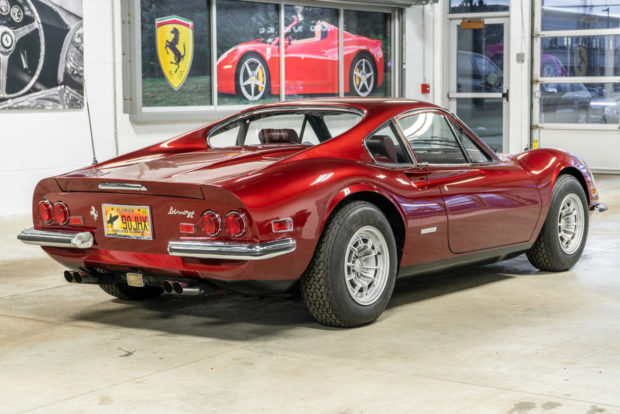
See, the Dino 246 (pictured in photos) was released in 1969. I was thirteen and had discovered sports car and Formula 1 racing. When the car came out, I found it stunning. Even better, a few years later, the 246 GTS was released. This was a targa version of the same car. I’m embarrassed to admit how much I studied and drooled over photos of this car. Eventually, a plastic model was purchased and put together, and the model found space on my bedroom shelves.
But the unseen man said, “No, that’s not it.”
Disappointment staggered me. Then he indicated a black 246 GTS sitting elsewhere. “That’s your car.”
Ecstasy fluttered through me as I goggled at the gleaming black gem of machinery. The man was explaining, “It’s not a 246, but an Evo.” Even as he spoke, I saw the flares that marked the Evo. Evos privately reworked Dinos with upgraded engines and mechanical gear, and not a targa, but a fixed top.
I couldn’t believe that this beautiful car was to be mine. I asked about it a dozen different ways and the man repeatedly assured me, “That’s your car.” Most of the rest of the dream was spent riding around in the car with my wife, showing it off to people and explaining what it was.
But then came a moment when I’d parked the car and found a man with a petrol hose in his hand standing by it. Going to him, I questioned him and discovered that he planned to dose the car with gasoline and set it on fire. I firmly told him, “You are not setting my car on fire.” My voice and words were enough to send him hustling and stumbling away. I then had to explain to others who came up what had transpired as the man with the hose watched from a distance. Seeing him watching, I thought, I’m taking my car and leaving.
Dream end.


Revision continues. Read. Change. Correct.
Two complicated chapters slowed progress. They remain in need of fixes. But I think their changes should be addressed in context of the entire story. So I press on into the next chapter. Read. Revise.
Those were complicated chapters. And important because of the revelations they delivered. So going through them meant patience and diligence.
But I felt that I lost some of the thread. I wondered if I was confusing myself with attempting too many changes to improve the flow. So, I want to let those chapters slip out of mind and see how they read the next time they’re approached in their natural order.
Page 306 is under scrutiny. The main protagonist is enduring an unidentified illess. Going through the prose affects me. Empathizing with the character, nausea and lethargy overtakes me. Dryness spreads from my lips, invading my mouth, takes over my tongue, slipping into my throat. My eyes grow weary. I want to stop.
But there are goals. There must be discipline. The goal for today’s session is to reach page 330, a completely arbitrary number presented to the pscyhe because I work better with order, structure, and goals, a condition of my personality and my work history.
After page 330 is reached, eighty pages will remain.
First, I’m going on a break. Stretch. Walk in the sunshine. Breathe in, as the character tells himself, breathe out. Like the song “Machinehead” by Bush: breathe in, breathe out.
I’m not looking for perfection. I just want to be happy with the story.


When he did chores at home, he always challenged himself with time limits. Vacuum the floors or wax the furniture by such and such time. What will you give me if I do, his neurons always answered, as he rushed about, intent on his artificial goals.
Other people would probably find it silly, maybe childish, making these fake goals, but these small goals helped prop up the day’s structure and keep time from getting away from him. It worked for him, so what did he care what they cared?
It’s not like anyone knew.
 Michael Seidel, writer