“Four On Kyrios”

I’m feeling breathless, worried, and giddy today. You probably suspect that it’s the smoky air because I’ve been complaining about the wildfire smoke so often in July and August. Well, you’d be wrong, suckah. We have good air today.

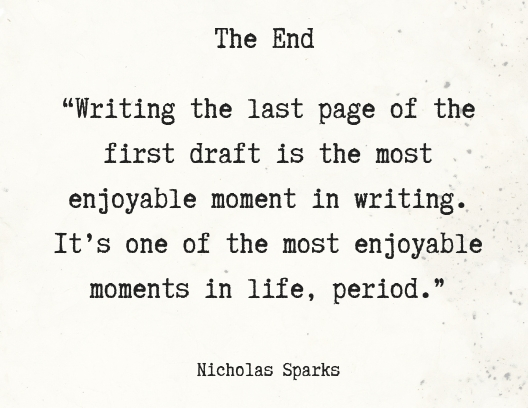
I’m breathless and giddy because I completed the first draft of Four On Kyrios today. The novel has officially made the transition from beta to first draft. At the same time, I received feedback from two friends who volunteered to read the beta version as a second pair of eyes. They’d finished reading the manuscript and offered their comments. Both were enthusiastic and are ready to read the next book in the series. That pleases me, but I’m worried because, as a writer, I’m unique among writers, and worry whether others who read what I wrote will describe it as gilded garbage.

That was decent sarcasm, wasn’t it?

Four On Kyrios is the first book of the Incomplete States series. It didn’t take me long to read, edit, and revise it. I attribute that speed to several points.

One, it was the third book in the series to be written. That advantage means that a great deal of thinking about the concept, plot, background, and setting was already completed.

Two, I edit and revise as I write. My organic writing process drives this pattern. Writing what’s already written helps me connect with the muses and continue discovering and telling the story. It shouldn’t surprise anyone that I fix grammar, punctuation, pacing, and continuity issues when they’re discovered. (Are you surprised?)

Three, Four On Kyrios is the smallest of the four novels in the Incomplete States series. MS Word clocks it at ninety thousand words and three hundred seventy-five pages.

Four, of the four novels, it has the simplest plot and the fewest characters. Those factors keep it easy to read and edit.

As this is the first novel in a series of four, it’ll stay in first draft status while I read, edit, and revise the others.  The four books were written to tell one larger tale, so they’re interconnected. I came out of the editing and revising process with one page of notes. Some are reminders, a few are continuity questions, and the rest were issues. All of the issues except two were resolved. They’ll remain open until I complete the other three books.

Most of the changes in the novel were more about expanding some scenes to slow down and let the characters breathe. I’ve been reading a lot since I finished the beta draft of the four books. Reading others’ published novels impact my ‘sense’ of the book. To me, this is the instinct we develop as writers because we read. It’s a feel for what seems right and correct about something we’re reading. It’s about flow and story-telling.

Just for the record, I’ve read Lincoln in the Bardo, A Visit from the Goon Squad, Godless, The Midnight Line, Time’s Eye, and Diary in the past few weeks after finishing the first three books of the Dire Earth Cycle. I’m now reading The Pagan Lord and The Order of Time and searching for The Triggerman’s Dance. I think La Rose might be up next on my reading, though. The Order of Time is a fascinating book about time, physics, and quantum mechanics by Carlos Rovelli. I don’t agree with all of his points, but it’s fun thinking about them.

Now, on to the next novel in the Incomplete States series, Entangled LEREs. I’ll begin editing and revising it tomorrow. Right now, though, my stomach is posting orders for something to eat.

I think I shall comply.

Funny to Think

Next month will mark the end of the second year of working on the Incomplete States quadrilogy. I hope to finish writing the fourth book in the series soon. At least, I sense the end feels near. Then I’ll have a beta version of all four books in the series.

Then the work begins, yeah, the real work. The creative writing part, hell, that’s fun and easy. Just turn your mind lose, and then tidy it up so it resembles correct written English and aligns with everything else written until then – to the best of my memory. I know from previous novels that I’ve finished that, in two years of writing these four books, I’ve forgotten a lot of what I’ve written. In fact, novel writing often feels like I’m a channel, a conduit through which the words and ideas flow. I write without remembering large swaths. That’s why the work begins after the beta versions are completed. Hidden in these four books are dead-ends and roundabouts, wandering paths and cliffs. Motivations have been established, shifted, and challenged. Facts must be checked and confirmed.

So on completing four books and about a million words in two years, it’s staggering and funny to realize, the work is just beginning to take the books from beta to first drafts to final drafts to publication. 

Once I finish the fourth book’s beta version – I call them beta because they tie in so completely with one another, they’re not truly a draft until the ties are cleaned up, so they have all the major features, but they’re not complete — I’ll probably take a break and write something simpler. Fans have been asking, where is the next book in Life Lessons with Savanna mystery series. Those books are usually less than one hundred thousand words, and a lot easier to write and finish.

Another day of writing like crazy has to be stopped to attend to real life. I love the tension of this moment, stopping while writing, when so much remains to be written. Makes me eager to jump back into it.

The Editing Season

Changes in seasons are important matters in our home. First, we’re an area that experiences all our seasons. Summer gets intensely hot. It’s normally over ninety degrees, with recurring jumps over one hundred degrees. Rain is infrequent. Winter isn’t bitterly cold but does prominently feature snow, ice, and temperatures in the night below thirty degrees.

These season changes require shifts. When spring changes to summer, shorts, sandals, and lights shoes and shirts replace boots, gloves, heavy coats, and jeans. A large cleaning project takes place. Bedding is changed. The furnace is switched off, and the air conditioning is inspected and put on standby. Gutters are cleaned, and the house is repaired.

I finished a novel’s first draft a few weeks ago. Since then, I’ve been editing it.

This type of editing is like a change of season. I’m reading for specific matters, addressing grammar and punctuation as I proceed. It’s not really about copy-editing functions. They’re included because I’m there. This editing is more about continuity, logic, pacing, and consistency.

The process had been going well, until the end of June. Then I crossed into a chapter called “Entrance.”

I’d written “Entrance” early on while writing the novel. It was one of several “genesis chapters” written as I embraced the concept and developed the settings, characters, and story dynamics.

I’m an organic writer, and often feel my way through the story like I’m walking through a dark and unfamiliar room. As I write, illumination grows. I see more of the room until it all comes together. It’s a non-linear process, though; I might write the far right corner for a while, and then the front left corner, and have very little idea about the space between them.

I don’t consider it easy nor difficult as a process. I enjoy the writing process, but the organic writing process sometimes leads to these situations. Something written early in the process no longer aligns with what later develops.

It is not actually a critical matter. It can be a critical matter. I’ve known of writers who are paralyzed when encountering these things. They’re horrified, and even despondent about what they discovered. For one thing, it means the beautiful piece they’ve crafted is flawed. That’s true, but, the flaw’s impact is dependent on its extent. I’ve known many writers who have a difficult time seeing that.

I realized this problem about two thirds of the way through the chapter. Awareness had been growing, and then a new light lit the room. I knew that this did not work, not as written. That meant it needed to be re-written, but I also needed to address that story arc and its continuity, find issues, and resolve them.

The first thing I did was walk away. Essentially, this was like encountering something unexpected during spring cleaning. Say, you’ve pulled out all your shorts, put the first pair on, and discovered they’re too small for you.

For me, I’d want more information. Did the shorts shrink, or did I grow? I’d pursue answers by weighing myself and trying on other shorts. Weighing itself isn’t necessarily helpful. As I’ve aged, I’ve seen my body shape shift. Although I weigh five more pounds than I did ten years ago, my shoulders are smaller and my waist is larger.

Once I’ve gathered more information, I can make decisions and establish a course to follow.

That’s what I did with the novel. Once I walked away and thought about it, I decided on a course of action.

  1. Think.
  2. Drink coffee.
  3. Relax.
  4. Put this into context.
  5. Read that chapter and the others in that arc to assess how much they deviate.
  6. Change as necessary.

To relax, I did other things. I read, watched television and movies, and did tedious chores. I pursued activities that didn’t require significant resources, and yet distracted me. Yet, every day, I opened the document to that chapter and began reading it again.

Relaxing was important, but not as important as putting the situation into context. I fall back on an old idea that’s one of my fundamental approaches to life: it’s better to have a good plan and do something, rather than trying to develop a perfect plan. That doesn’t mean that I don’t seek perfection, but I don’t let the pursuit of perfection paralyze me.

I still had a finished novel. It was still a rough draft. Its concept remained sound. Everything else I’d read and edited so far, several hundred pages into the process, remained enjoyable and promising.

Relaxing helped me understand that I had several courses available.

  1. Rewrite the rest of the novel to synchronize and align with this arc.
  2. Delete that arc and re-write the characters as necessary for the other arcs.
  3. Rewrite this arc and the characters as necessary.

Those were academic exercises. By this point in my writing, I know the stories and arcs, and how it all comes together and ends. I played with those exercises to uncover other potential mines.

Reading the chapter and consulting my notes, memories about decisions made and directions taken returned with time and patience. Reading the subsequent chapters in this arc confirmed my thoughts that, strange as it may sound, this chapter was an anomaly. It was a large anomaly, but just that, and not a precursor to a flawed arc.

I didn’t read that chapter just once completely, but three times, plus multiple partial readings, to develop understanding and insight. When I finished the third reading, I knew what I needed to change, and how. Then I began making changes.

I think a large part of this process is that this isn’t my first novel. Once upon a time, I wrote a novel and thought that first draft was supposed to be publisher-ready. I was naive. Reading that first draft of that first novel was depressing as hell; it was a mess. I learned from the process, and started writing another novel. I put that first novel away, because it was the first, and because I’m an optimistic. Inside myself, I tell myself, maybe I can go back and fix it someday. I do it all because, no matter what else I believe or hope, I believe I’m a writer, and I must write.

I’ve finished fixing that arc. Now I’ve resumed my process from the point where I stopped. One thing I’ve learned about my organic process is, as much as it’s about writing down words and creating a story, it’s about collecting and sifting through the raw material. The second draft is about clarifying and solidifying the vision I found when I wrote the first draft.

Last, I’ve learned that even when there’s a setback to the novel’s completion, there’s progress. Call me a foolish optimist, naive, or pragmatic, but I attempt to learn and I keep going.

Now I have my coffee, and it’s time to do it again, at least one more time. Then, once I finish this draft, which is still probably several weeks in the future, guess what I’ll do?

I’ll do it at least one more time. Then, I’ll turn it over to others, and go from there.
As I Edit

As I read, I edit.

As I edit, I check on the pauses and look at notes to confirm continuity.

As I read and edit, I’m surprised and delighted by how well the novel comes together.

As I’m delighted and surprised, I’m nervous and anxious. Will the enjoyment I find be sustained, and will others enjoy it as well?

Then, as I read, I forget.

Until there’s another pause and I edit again.

Raw

That first phase of writing fiction for me is collecting the raw materials. I have a concept and an idea of the story, characters and settings. All the elements enlarge, becoming illuminated, as I write the tale and finish the first draft. The first draft is always so raw. I’m not one of those who thinks the first draft is almost the final draft. It’s just raw material. Now it’s ready for shaping and carving. Sometimes I’ll add stuff, but mostly I add by removing material.

The work pace shifts into a smoother, more contemplative, and relaxing process. It’s like your dream house is being built. “It’s finally happening,” you keep telling yourself. “I almost stopped believing it would ever happen.” But tangible progress is visible. The foundation has been laid, the walls have been erected. Doors and a roof are in place. It’s less a collection of material and more like the place you dreamed. I feel the same with this novel in progress.

Time to write, edit and revise like crazy, at least one more time. Looking ahead, it appears there will be many more of these subjects to come. I embrace the pleasure of the work.

Schrodinger’s Novel

Phase one has been completed. A draft of the current novel-in-progress exists. One hundred eighty thousand words, it requires editing and revising.

That realization would have once fired me into an arc of despair a few years ago. Back then, when I finished the first four novels, (five, if I include the wreck of the very first miserable novel I wrote), I hated the idea of editing and revising. I wanted to be done with writing it and have the novel completed, damn it. But with the next four novels, I learned to embrace and enjoy this peculiar state. In honor of Erwin Schrondinger’s thought experiment about a cat, I call this state, a Schrodinger novel.

The novel exists but needs work. How much work isn’t known or understood. To reach that point, I must employ myself as a reader. (I don’t use outside readers until the second draft is completed and the initial kinks have been resolved.) Yet, because the novel is still incomplete in my mind and requires work, I, the writer, must also continue employing my intelligence, skills and creativity to resolve the issues.

With a tenth novel finished, I feel comfortable with my process. I’ve become more patient, mature and insightful about how I write. It’s fun and rewarding, because, damn, man, over the course of the last ten months, I’ve written one hundred eighty thousand words. That’s just what made it into the book. Twenty-five thousand more words exist in summaries, tracking documents, snapshots and thought exercises that I documented. Then there’s the stuff that I wrote and cut because it was going down a wrong path, failed to further the story, or I didn’t like it.

At this point, the novel has some semblance of the expected finished novel, subject to others’ feedback. That infuses me with powerful satisfaction.

There is a mood shift inherent in the process. My focus is sharper. I’m no longer fumbling and reaching to create a beginning and ending or to connect the dots. That, which is really the second most challenging aspect of novel writing for me, has been done.

The first most challenging aspect? To keep going when it became frustrating and I thought it hopeless. Sometimes I’d take a wrong turn. Sometimes, I’d write myself into a corner. “Now what?” I wondered. Sometimes, I’d read someone else’s novel and think, “How beautiful. I’ll never write that well.” Yeah, I do, I understand, but my writing is different from their writing, and has its own beauty.

Meanwhile, as I completed the first draft, other titles began arising as potential final titles. I often provide a working title that captures the concept and overarching story’s essence. That’s typically overcome by events as the transition from the abstract embedded in the concept to the tangible required to tell a story is processed and the actual words make their way from mind to page (or screen). One in particular arose more sharply and clearly: ‘Entanglements’. Unfortunately, that title is in use by several other writers for their novels.

As I write that and think, another novel title arises. I want to let it simmer for a few days before writing it for others’ consumption. I have conducted Internet searches, and the title doesn’t show up as another’s title.

***

The words I write here have the relaxed, intellectual tone of introspection about what was done and what remains. But the physical being that I am is sitting here in the coffee shop with a secret grin. I want to run around and shout it out to the world, “It’s done, it’s done!” But then I would need to amend that, “Well, the first draft is completed. It is, and it is not, something.” (See? There’s that whole Schrodinger’s novel again: what state does it exist in? It’s funny to me, if no one else.)

In a way, finishing a novel, or a draft of one, reminds me of being in love. It feels special. I’m thrilled, pleased and hopeful, but I really don’t know what remains to come. There’s a lot of uncertain energy unsettling the air.

All of those who have been in love will know what I mean.

Blog at WordPress.com.

Up ↑