The Anxiety of Not Writing

TG Christmas has passed. 

I appreciate that so many enjoy and celebrate Christmas. I do, too, in my way. It’s not actually Christmas that dismays me, but those places closed for the holiday. I don’t begrudge people that, but with the closed coffee shops, I miss my writing. More critically, I get anxious about it.

My anxiety when I don’t write is that what I’ve written is crap. Panic rises like Yule log smoke. It reminds me of a friend.

He’d been a football player, a wide receiver in high school and college who tried out for the pros and didn’t cut it. As a wide receiver, he was expected to be fast and to be able to run and run and run. So that’s what he did. Every day, he ran five miles.

He continued his habit after he didn’t make it as a player. He’d become a high school assistant coach by then. He moved on from football when he was thirty, going into serious business to make serious money.

Still, he ran five miles every day. He told me that he runs every day because he’s afraid that if he stops running, he’ll lose the ability.

Yeah, that’s not me with my writing, but I understand his thinking.

I thought about writing at home on Christmas day. Alone in the office in front of my laptop, I thought, I can write now. I’ve tried it before.

Picture this.

The cats troop in to see what I’m doing because I’m typing. Typing attracts the cats. Click click, click, they hear. What’s that, a mouse? Curious to see, they crowd around me.

These cats, all male rescues, don’t get along. Within seconds, they begin complaining about the others’ presence, locations, or existence. “What’s he doing here? want that space.”

“I was here first. You better leave while you can, hairball.”

“Who are you calling hairball, hairball?”

“You both would be well-advised to get the hell out of here before I turn you into a fur coat.”

“Oh, you think you can?”

My wife will typically come in then, jumping onto her laptop to surf the net and play games, and read the news.

The news must be shared. “Did you read what happened?” “Did you read what so and so said?” “Did you see this video? I think you’ll like it.”

I can tell her that I’m writing, and she tries to respect that, but as writers know, writing often involves sitting silently, staring at nothing or studying your fingernails or looking at something else on the net while the muses get their sierra together. So she’ll then say, “Are you writing? Or can I ask you something?”

Of course, nothing can be done about the cats. I can send them outside, yes, but I’d pay for that later.

So, no, I decided not to write.

This left a void. Into that void crept my imposter fears, my insecurities, doubts, uncertainties, fears, and anxieties. It’s amazing how fast, persistent, and subtle they are, how they move in with little noise. Then, suddenly, my head is filled with their sound. They’re like a destructive, pessimistic flash mob.

All this isn’t why I began the practice of daily writing. I started writing every day to finish stories and novels. I write everyday to learn and improve my writing skills. I write everyday because the muses deliver scenes, dialogue, and concepts. Their deliveries excite me, and I want to pursue them. I want to write to understand what I think, and I enjoy writing, conceiving and imagining, story-telling and resolving, visiting these places and events that mushroom in my thoughts.

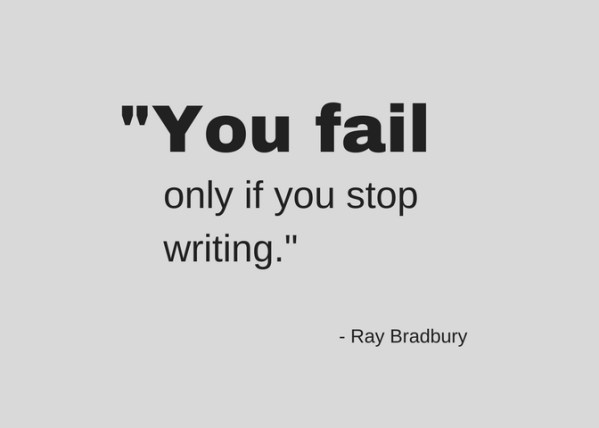
It’s all complicated, isn’t it? Better to just write than to consider it all. Hold your breath and jump in, and see how far it goes.

The coffee shop is open. I have my coffee. Time to write like crazy, at least one more time.

Merry Christmas.

Ho, ho, ho.


A Soul-sucking Dream

I thought I’d made it through the dark tunnel once again. I endure the dark tunnel every month, a cycle of conspiracy between hormones, energy, genetics, and whatever else is in my frothy concoction of life. Last night’s dreams proved some tunnel remained to be traversed.

Bottom-lining one of the dreams without dwelling on details, I dreamed a younger self was being given an opportunity by a man named Rob. Just as he was celebrating that, another person came up with a better opportunity. That involved three positions (unspecified in the dream) but the potential was so exciting. I was pleased to be offered such an opportunity. The man offering it told me he had to make some calls, but that was just a formality. He’d get back to me, he said, and went off.

Meanwhile, I was working a job and doing a damn fine job of it – cleaning and detailing cars, a job I didn’t hate, but I was ready to move on. Off on the sidelines of my dream-life, I coped with a validation process. All males were required to be validated. We were given one inch cubes. They were different colors. A raised number signified the top. My number was four. My cube was green.

I stepped into line behind a few young boys. Another young boy was there. He didn’t know what to do. I told him I’d help him.

The process began. As we moved forward, a longer line formed behind us. The process involved us taking our cube up to a man in a lab coat. He put the cube on a reader, then he peered at something, made some annotations, and handed the cube back. He never said a word.

My turn arrived. Another man stepped out from the line’s middle, walked up to the lab man, and gave him his cube. “No,” I said. Marching up, I removed his cube and handed it to him. I pointed to the front of the line, and said, “That’s the order. We’ve all been waiting. It was my turn. You have to wait like the rest of us.”

I was seething, partly because the lab idiot running it hadn’t noticed or done anything about it.

Afterward, validated by lab-coat idiot, I took the boy out with me after he’d been validated, too. I told him, “We’re validated.” He didn’t understand what that meant, so I explained the word’s definition while admitting that I didn’t understand what it meant in this context. Then I found where he was to go and sent him on his way.

Afterward, I returned to another job I had. This was in a chaotic place. I decided to organize the processes. Part of this involved men pissing. They were pissing everywhere. I determined that if we pissed in one place, that piss could be collected and dumped, and everything would be a lot better. To that end, I found a small, square metal receptacle to be a pee-holder. Setting it up in a specific spot, I spread the word, piss here. As I caught others pissing elsewhere, I’d re-direct them to piss at the place I’d established.

When it was time for the piss receptor to be emptied, I discovered it’d been leaking. Piss was all over the dark carpet. This upset me, but I thought, I need to find a better location and receptacle. I was about to do so when the man who’d offered me the great position arrived.

“Walk with me,” he told me. “This way. Let’s get something to eat.” I told him that I’d just eaten but I agreed to walk with him.

We passed under an arch and arrived at an avenue. There he said, “I have some news for you.” I was optimistic and expecting to hear that I was due to start the new position, but hearing his tone and reading his face, I knew otherwise.

“It’s not happening, is it?” I said.

“No,” he said.

“Well, I guess I’ll go with the job Rob offered.”

The man gave me a silent look.

“What?” I said, but I knew the look.

“That dried up, too,” he said.

Heavy disappointment beset me. “I can’t believe this,” I said. “I don’t mind what I’m doing, but I was looking forward to doing more, to being more.”

“I know,” he said. “Sorry.”

He departed. I returned to polishing a car. I realized it was my father’s red 1969 Thunderbird. I’m not going anywhere, I thought.

The dream ended.

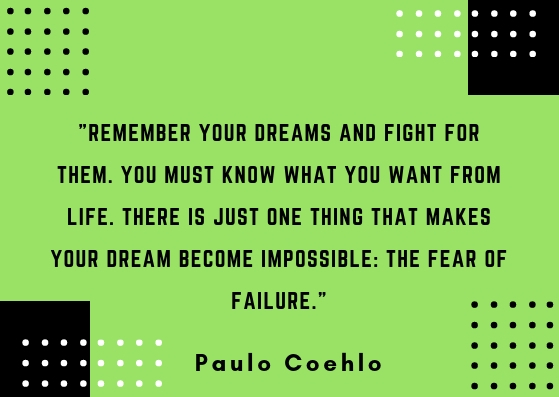
The dream depressed me (as all of last night’s dreams did). I woke up thinking, for whom does the bell tolls? It tolls for me, followed by a rant about facing facts about not having writing talent, being a miserable writer, etc., to the point that I encouraged myself to give up.

I know though, that I’m not the best judge of myself. I know that I can’t predict the fickle future. This is just some feeling sorry for myself bottom of the trash can crap. I can indulge in it, but I can’t let it guide me.

Richard Said

Easy to forget, hard to remind myself – don’t let others shape me. Intellectually, I often remember this. Emotionally…well, that’s more difficult.

A Failure

I failed yesterday.

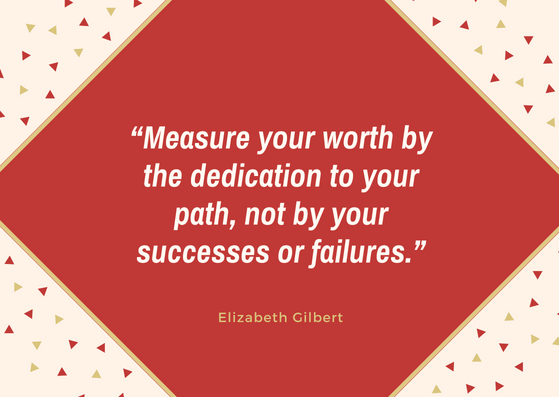
I’m one of those optimists who believe they can do anything, if they think, work, and try hard enough. I believe this despite my multiple failures at doing everything that I’ve tried, or coming up short. I’m just a freaking optimist.

Yesterday’s failure involved my wife’s Macbook, specifically her Retina A1398 15″ Retina edition. Her touchpad started malfunctioning. Her cursor would freeze and become unresponsive, or act like a crazy trapped bee. It’s been going on for a month.

I’ve fixed computers before. In my mind, fixing a computer is like replacing the points and plugs in a car. (Remember when cars had points and plugs?) Hell, I said, it might just be a new touchpad is required. Let me buy a new one and try to replace it. It’s only a few dollars.

Sure. Why not?

I ordered and received the part, opened up the Mac, disconnected the power, and attacked the battery. 

I should say, the damn battery.

I’d read stories, but scoffed at those others who tried and failed. I AM MICHAEL, right?

Well, I couldn’t remove that battery, either. Nobody was exaggerating when they noted as Apple glued that sucker in there. It’s a fascinating solution, essentially six packets of different sizes glued into place along the leading edge and behind the touchpad. However, it’s also disturbing because it’s not easy to replace that battery, which means those Macs probably get trashed because their batteries failed and can’t be easily replaced. That means more toxic trash will be put into our environment, even though the computer still works. More depressing is that other manufacturers will probably follow this course because they can design smaller and lighter machines.

So, I failed. I don’t mind. As with every failure, I learned quite a bit. I just can’t worry about failing, or I wouldn’t try anything, right?

The kicker is, after I put the computer back together, her cursor worked fine, and has since that time. We rationalize that it must have been undue pressure on the touchpad, and that I’d relieved and shifted that pressure when I disassembled the computer.

I’m sure this story isn’t over yet.

Three Degrees

Three degrees can be a lot, and not much. It can be a shrug or a killer, self-actualization achieved, or another day of determined trying, the perfect puffed pastry crust and advancement to the next round with a handshake from Paul, or dead last, saying good-bye.

Three degrees further north, and you’ve entered another world. That can be huge. North Korea and South Korea. Not the countries’ real names, but their nicknames. You probably recognized them. Three degrees off the tip of southern Florida, and you better be airborne, on a boat or a platform, or you’re in a watery situation.

At 42 degrees north, you can be on the California – Oregon border. Three degrees south and your taxes are much greater, along with the costs of real estate, the average income, and the likelihood that you’re a college graduate and are more liberal. At 120 west, you’re on the California – Nevada border, if you’re north of 39 degrees latitude but still south of 42 degrees, and the differences those two states embody. South of those coordinates, and you’re still in California at 120 degrees west, all the way down to Santa Barbara, where you enter the ocean.

Three degrees of effort, luck and success is sometimes the difference between being average, good, and great – between winning a gold medal and being back in the pack – or average, fair and poor. Same could be in the degree of decorating taste. One person’s stripped zebra rug and red walls is another person’s horror. It’s a matter of degrees.

Three degrees was the difference in the high between Tuesday and Wednesday at my house. Tuesday reached 96. Wednesday, cooler, at 93. What a difference it felt. 93, with a light breeze, offered comfort in the shade. 96’s shade was a brick oven’s shade. Today is forecast to mock them both, at 103 F. We’ll see if that three degrees over 100 is realized, or felt.

Three Degrees is a good but not fabulous Oregon Pinot Noir. Supposed to have won some awards but would not win them from me. Different tastes, and all that.


Three Degrees is also a Portland restaurant. They don’t explain where the three degrees come in, but they mention food, drink and people. Or is it because they’re now between six degrees of separation, right in the middle of a chain, between a friend of a friend of a friend?

Three degrees is half of the six degrees of freedom, which is about movement, and not personal freedoms. But if you think about it, we can apply the six degrees of freedom to personal and political freedoms and develop an analogy to six degrees of freedom in mechanical motion.

Or anything else. I’m writing about degrees here, and what differences they do and do not make, and how arbitrary they sometimes seem, and yet what an impact they can have. Your thoughts on it may depend upon your degree of interest.

Expectations for the Brain

This week, I enjoyed discovering and re-discovering reading regarding the brain and how it works, how we can change its workings, memory, and meditation’s effects on the brain. This all seems to be about practice, expectation, and changing expectations.

DelanceyPlace.com is a website that publishes excerpts from fascinating non-fiction. Back in 2015, they published an excerpt from a 2014 book. By Matthieu Ricard, Antoine Lutz and Richard J. Davidson, the book, Mind of the Meditator, is about how mastering a task transforms the brain’s pathways.

“The discovery of meditation‘s benefits coincides with recent neuroscientific findings showing that the adult brain can still be deeply transformed through experience. These studies show that when we learn how to juggle or play a musical instrument, the brain undergoes changes through a process called neuroplasticity. A brain region that controls the movement of a violinist’s fingers becomes progressively larger with mastery of the instrument. A similar process appears to happen when we meditate. Nothing changes in the surrounding environment, but the meditator regulates mental states to achieve a form of inner enrichment, an experience that affects brain functioning and its physical structure. The evidence amassed from this research has begun to show that meditation can rewire brain circuits to produce salutary effects not just on the mind and the brain but on the entire body. …”

Addressing how ‘the adult brain be still be be transformed through experience’, HuffPost had a related story this week, To Increase Your Well-being, Train Your Brain. Mimi O’Connor wrote, “Dr. Richard Davidson, neuroscientist and founder of the Center for Healthy Minds at the University of Wisconsin, Madison, believes that practice is the key element in changing our brains for the better. He is well known for his pioneering study with Buddhist monks. In that study he hooked the monks up to fMRI machines and observed their brains as they meditated. The monks produced gamma waves, indicating intensely focused thought, which were 30 times as strong as the control groups.’ Additionally, large areas of the meditator’s brains were active, particularly in the left prefrontal cortex, the part of the brain responsible for positive emotions. This study showed that conscious effort can change the neural structure, activity and function of the brain.” Dr. Richard Davidson was one of the other book’s authors, of course.

“Similar to the inspiring theme of the film Field of Dreams, “Build it and they will come,” Davidson’s motto seems to be, “Exercise them (neural pathways) and they will strengthen.”

Offering another point of view that affirms the same was Sophie McBain in Head in the Cloud. Her article addressed human memory and studies regarding the impact of computers and digital systems on our ability to remember. What becomes clear from her intriguing article is that, part of what affects our ability to remember, is our expectation of a need to remember. Here, in essence, we’re seeing the opposite impact of the other articles, where people who have computers to help them remember, don’t practice remembering, thereby weakening their ability to remember.

They’re all ripple effects, aren’t they, a sort of Doom Loop on the one hand, of expecting less and trying less, and so spiraling into achieving less, or conversely, a Halo Loop, of expecting more and trying harder.

Of course, I need to tie this back to writing. Practice writing, pursue it, try to master it, and the pathways and areas of the brain used for writing can be strengthened and transformed. Instead of believing you can’t, believe you can, and try. Being human, it’s rarely that simple, and people like Judith Sherven, PhD, can inject insights and ideas for re-working the subconscious programming behind the Doom Loop.

I’d also like to tie all of this back to time, reality and the nature of existence, but that’s for another post. Instead, I need to go off and write like crazy, at least one more time.

Blog at WordPress.com.

Up ↑