Progress

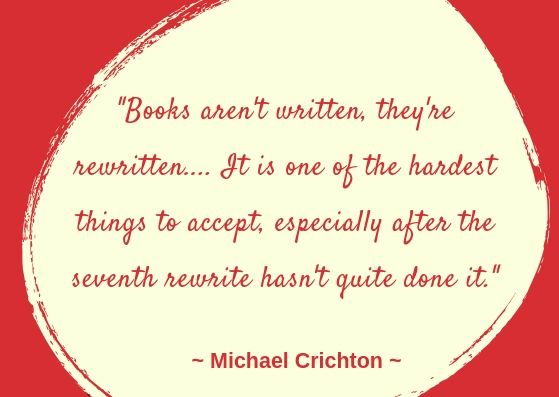
I finished editing and revising the beta version of Six (with Seven) today. That’s Book Three of the Incomplete States series. I began editing and revising it on September 24 of this year, so my editing and revising process has kept going at a decent pass.

The editing and revising process was draining, requiring most of my mental energy. Not surprising, as editing and revising your work forces you to confront weaknesses and doubts. I know that it’s made me more of pain in the ass to live with than usual. Although there are chapters that leave me a little wary, I feel good about the book and project. Part of that is the simple satisfaction of completing another step in the project, but there’s also the element that I’m satisfied as a reader that the writer wrote a decent tale. I was also pleased because some of my worries and fears were allayed. I kept thinking as I edited and revised the book that I needed to do more to clarify matters and tie together the disparate story lines. Then I discovered that hurrah, I did that when I wrote, edited and revised it back when it was the subject of my focus.

The chapters that leave me wary will confuse some readers. They’ll require close reading to follow them, patience, intelligence, and an open mind. So, do I dilute them to reduce those challenges, or leave them? I left them as is for now, as that feels right. This, of course, was the first go in editing and revising, so that can change in one of the next go-arounds.

Of course, the readers can skip these chapters and go on to the final two chapters, which strain the mud out.

I like how Six (with Seven) ends, moving the series’ stories forward, clarifying more, and setting up Book Four, An Undying Quest. I also have more appreciation for the title, Six (with Seven). It’s more whimsical and cleverer than I first realized. I’m not being immodest, but recognize that a lot of these decisions have subconscious insights going on that I don’t appreciate at first.

With three hundred twenty-two pages in Word and less than eighty thousand words, Six (with Seven) remains a slender book in my general pantheon of fiction writing.

Tomorrow, I begin editing and revising Book Four, An Undying Quest. Once it’s completed, I’ll have a first draft of all four. With some hope and luck, it’ll all make sense and flow together to a decent ending.

Now, the coffee is gone. Time to go for a walk, have lunch, do some yardwork, and maybe have a beer to celebrate.

Cheers

The Jewish Things and German Place Dream

I know as part of the dream’s setting that I’d bought a place in Germany. It seemed like a condo or apartment in an older building. The building was a mysterious maze of rooms and halls. Most were not well lit. Rain lashed the windows and could sometimes be heard drumming.

The place I’d purchased was filled with things, which were mine, now. I was exploring, mostly in darkness, to see what these were. Spotlights lit the objects when I came across them.

One object was a black box with raised, golden letters in another language. Someone with me,  a female who was never seen and whose role wasn’t defined to me, said with excitement, “That’s Jewish.” They went on about the language on the thing. The object looked to me like it could be a complicated metal camera or something that stamped other materials to form or shape objects.

Focusing on my guide’s explanation, I heard her say, “The Nazis took things from the Jews.”

I was trying to understand how they’d come to be in this building, which now reminded me of a Nazi building I’d toured when I’d been stationed in Germany. It had apartments inside where government officials lived, along with offices.

“It belongs to you,” my mysterious female guide said.

I was excited to own something like this but also disturbed, because it had been stolen from others. My guide was going on about being able to make money from it.

I left her to explore more on my own and ended up back in my living quarters, which was part of the same building. I discovered more objects. I also discovered my quarters and new building seemed to be poorly maintained. Down in the lowest level was a ill-kept garage area. I discovered squatters had been using it, accessing the area by raising the garage door. I learned this from seeing one squatter open the garage door, revealing pouring rain, slip out, and close the door. Making a note of that, I continued walking about. Most of the flooring was missing from several levels, and animals were coming in via tunnels in some rooms.

Yet, I was excited by what I found left behind by previous tenants. My guide reappeared. Showing me something, she said, “You can sell this and easily make fifty thousand dollars.”

That pleased me, but I told her, “I’m not selling anything that was stolen from anyone.”

She said, “We don’t know if anything is stolen.” She must have known I was recalling what she said before, because she said, “Many of these things were made before world war two, but we don’t know how they got here. They could have been stolen from the Jews, or the Jews may have lived here and left them behind. They belong to you, now. That’s what was agreed when you bought the building.”

I wasn’t mollified, but I became cautiously optimistic that I could sell some things and make some money. Returning to that first black piece with the golden writing, I stood and admired it, framed in white light and surrounded by darkness.

***

As I edit and revise the Incomplete States series, I’d begun to become optimistic. I thought, maybe instead of self-publishing this series, I can find representation and a publisher.

It’s part of my never surrender approach. My hope became stronger this weekend. My wife and I saw Worlds of Ursula K. Le Guin. Listening to UKLG recount how difficult it had been to become published, how nobody got her when she sought publication, but how much she believed in herself, reminded me of my writing efforts and suspended publishing efforts. My writing, as she said about her writing, is not easily categorized. Yet, I thought, too, it’s arrogant to compare myself to her, for I’m in no way her measure as a thinker and a writer.

This dream, I think, reflects my doubts and concerns. Every day, as I edit, I enjoy what I’ve written. It excites me. But doubts haunt me.

It reminds me, writing is a lonely business, especially as a struggling novelist. That, I believe accounts for the dream’s darkness and the building’s dilapidated state, and the never ending rain, putting a damper on my hopes.

Another Fun Session

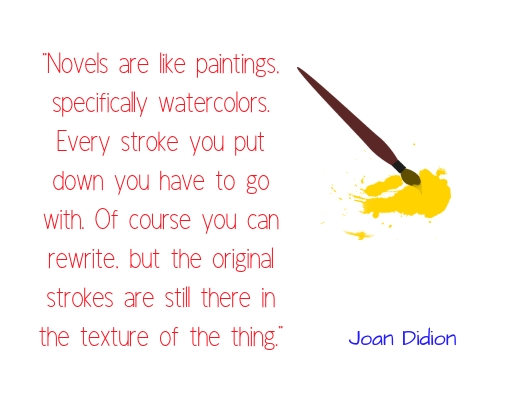
It was fun editing Six (with Seven) today. Written over a year ago, I’d forgotten the surreal aspects that the book took on at that time, dealing with a character’s memory, sex, and imagination as separate entities. I had fun with the arguments that they had among themselves and Philip K. Dick flavor infused in some of the dialogue and situations.

The character’s name is Madi (Madison) Handley. Because she’s a pirate, she modeled her memory after a pirate, Grutte Piers, and insists on having a parrot, J.R. As Handley’s existence streamed into my awareness, her name came from another blogger (J.R. Handley) and a barista (Madi), with the parrot named after J.R. Handley as well.

Her story is running in parallel to Pram’s terra-forming story, and I alternated between the two in the chapters in this section of the novel. I have a lot of affection for Pram and Handley, and love discovering their lives in space.

Coffee gone, and damn, I’m hungry. Time to stop writing editing like crazy, at least for today.

So, Progress.

My editing slowed down in book 2 (Entangled LEREs) of the Incomplete States series. I blame it on three things.

  1. Life distractions
  2. A poorly written chapter
  3. Mischievous muses
  4. Misophonia

Life distractions happen. Part of it this week was enduring my normal descent into the dark troughs of my being. It’s a regular thing. I scowl, swear, and endure it, hoping to emerge as a perkier and happier person on the other end (which I do) while trying to reduce the dark side’s impact (which I barely manage to do) and reduce the time I’m affected (which I don’t do). I shrug. It’s over until the next episode.

The poorly written chapter is another matter. The first time I read the chapter, “A Dark and Stormy Night”, I finished confused about what I’d read. I immediately suspected that it’s probably not good when the author doesn’t understand what they wrote. A second reading was required, and then a third to drill down into why I was confused and what I can do about it. Two days were then spent on fixing it before I continued.

During that period, I reckoned that the changes were not significant but that once I’m done editing the four books, I’ll have a complete set of the first draft. Then I’ll edit and revise it again.

I had resigned myself to no writing like crazy while I’m editing the series. The muses, though, have become restless and bored. That makes them mischievous. Out of this, they’ve begun tossing out novel suggestions. They often use, “Wouldn’t it be fun to write,” as their opening prelude.

Yes, I enjoy hearing their ideas. It’s stimulating and exciting, which makes it harder for me to rein the muses in and gently tell them, “I’ll keep that in mind.” See, the muses always want me to drop everything else and start pursuing their idea right now. I don’t want to discourage them, but I need to be disciplined and finish this series and publish it first. This is growth and maturity for me, because just two years ago, I would have let the muses ride me like a horse and answer their spurs.

Misophonia (in my terms, based on my limited knowledge) is a strong emotional reaction to sounds. I have such a reaction to people smacking their lips while eating, or walking around humming and singing to themselves in pubic places like coffee shops. I’ve always blamed Mom for this behavior in me because I thought I’d learned my reactions from her. Mom was always snapping at us about the way we ate or chewed our gum, or for humming, turning pages loud, or making clicking noises.

As I do with things that bother me, I sought information and stumbled across misophonia. That linked page states, “The latest research suggests it is sensory processing issue within the brain. Misophonia elicits immediate negative physiological responses to certain sounds that most people don’t seem to notice. This sensitivity can have an adverse effect on a person’s life causing problems with activities of daily living.”

Well, shucks, that’s exactly what I endured this week. Twice, a particular woman came in, sat down at the table next to me, and hummed and sang to herself. Except for when she spoke, she hummed, even when others spoke to her. She hummed whether she was sitting, standing, or walking.

It drove me nuts. I recognized that it’s not her being inconsiderate, and that murdering her or growling at her wouldn’t help anything. As I processed her sounds, I realized this could be a coping mechanism. It could be subconscious.

It still annoyed me. I struggled to cope. I looked for somewhere else to sit (but also resented that would need to move because of her). 

So, I didn’t cope well, and it affected my editing. She’s not here today. I’ll shrug it off while researching how to cope.

Now, I’m ravenous for lunch and I’m done writing like crazy editing like crazy, for at least one more day.

I Find

The first two parts of Entangled States, ten chapters, are like reaching a coast. The direction doesn’t matter. You hit the stretch where the land and sea meet. It’s turbulent, with crashing waves and hissing, seething waters. Taking it all must be done in pieces. There is the sea and the land, and there’s also the sky. Each exercises its own elements, colors, and behaviors. Once you pass this borderland, you’re released from the complications inherent to progressing from sea to land and freer to relax and take more in.

Now into part three of the book, it settles down again. I remember writing all of this, and recall thinking about the parts, and the placement of these chapters and scenes, and how they’ll interact. At that point, it was like being too close to a pointillism piece of art. Distance is needed for the colors to blend and become something more than blobs.

Wild, to think, while writing it, I saw these blobs and strokes, and applied them, and now I need to step back to comprehend the whole. I was realizing the whole on one level while I already saw and comprehended it on another level. Then, not so wild, as I write to help clarify and understand what I think.

Nerves

I’m nervous as I’m editing this second book in the Incomplete States series. The series’ first book, Four On Kyrios, was straightforward for the most part. This book, Entangled LEREs, is well-named, with entangled stories and characters. It reminds me of Slaughterhouse Five meets The Sound and the Fury, Cloud Atlas, and Lincoln in the Bardo. Editing becomes intense for me. I imagine readers asking themselves and the book, “What’s going on? I don’t understand.” Makes me want to revise it to make it clearer and more linear.

The muses push back against that impulse and insist that I don’t change anything. And there it goes, I’m cringing and sweating, thinking, what am I doing? “Trust us,” the muses urge. In response, I hold my head and rub my forehead and temples, and think, pitting desire to change things against the muses’ directives.

The muses remind me, “You’re in the middle of the series. Don’t make any major changes until you’ve gone through all four books.” Right, because the mud settles later, and it all becomes clearer. These are mysteries in mysteries, all part of the concept and story. Yes, I remember writing these chapters and battling the muses about it back then.

Man, it makes me nervous, though. My jaw hurts from gritting my teeth. Should a writer have such a love/hate relationship with their muses and the novel in progress? I remind myself that I was going all in, that, yes, I knew when I was writing it that it would be way out there. I remember those battles with myself from back then. I hope readers can get through it and find the effort rewarding. Even as I nurture that hope, I remind myself, I write for myself. I’m my only guaranteed audience.

I think it’s time to call it a day.

Blog at WordPress.com.

Up ↑