Saturday’s Theme Music

My wife and I were driving home when John Mellencamp’s “Authority Song” played on the radio. We knew the song and sang along. It’s from his Uh-huh album. It came out in 1983, when he was John Cougar. We saw him perform a few years later, in Germany.

As the song wound toward its end, my wife said, “This song doesn’t have many words to it, does it?” No, but that’s how a lot of pop songs are, to me. I was thinking more about these lines:

“I said, “Growing up leads to growing old and then to dying
“And dying to me don’t sound like all that much fun.”

The idea that death is bad — or not fun — has been weaponized, something to use keep us in check. “You might get hurt if you do that. You might even die.” Yes, as if we’re all living forever on this world, in these bodies.

I thought, Heaven as a concept must have been invented to comfort people who are dying or has lost someone. I always liked that idea of Heaven, that another place is beyond death where we live on. Maybe it’s like living in this sense in that mythical next existence, but suppose it’s not? Yet, we’re coached and socialized to fear death because this is life.

Come on, we’re all going to die. Life might be a spectrum, and this slice of life is just another frequency band. Thank of how wonderful it could be in the next band.

New Boy

The words weren’t what he wanted to hear. “Your son was in a terrible accident,” the doctor said. “Steven has suffered extensive injuries.”

He stared at the woman, Indian and young, attempting to assess her abilities. Beside him, his wife was hiccuping with sobs. New tears ran down her face. He didn’t know where they came from. He was certain she was cried dry, but no, here were more.

“I’m afraid we’re declaring him medically challenged,” the doctor said next.

That drew his attention.

The doctor said, “I have no choice, Mister Ryan. Your insurance dictates it.”

“What’s that mean?” he said, as his wife echoed, “Medically challenged?”

“Well, to be crude, Mister Ryan, Missus Ryan,” the doctor said, “and use a coarse analogy, if your son was a car, he’d be declared totaled, because it’s cheaper to write him off and give you a check to have him remade.”

Words exploded. He was talking. His wife was talking. The doctor was backtracking and attempting to explain and placate.

It didn’t seem like he heard anything, not even himself. He was saying, “My son is not a fucking car, my son is not a fucking car.” He didn’t know what was coming out.

Then he and his wife were holding one another, shaking and crying, a scene in the hospital. He held her warmth and tried pouring strength into her, but his strength was evaporating.

The doctor said, “It’s not as you think.”

He couldn’t believe she said that. He said, “What?”

Reacting with a speed she’d never exhibited before, his wife lunged for the doctor. Catching her, he held onto her. Her body felt like steel. She dragged him forward. She was saying something, but tear-filled and high-pitched, he couldn’t understand her.

“Heather, Heather,” he said. “Calm down, calm down.”

A foot shorter than him and fifty pounds lighter, Heather dragged him forward. He was forced to lift her until her feet were off the ground. That was the only way to stop her.

“Let me go,” Heather said, “let me go.”

Security showed up.

“It’s okay, it’s okay,” Ryan said.

The doctor waved security away. A young nurse beside the doctor held a folder out. The nurse looked Indian, too. Were there no white people in medicine any more?

The doctor said, “This package explains everything. You can contest your insurance company and keep your son alive, but unfortunately, not in this hospital. He will need to be moved to another facility. In the meantime, if we harvest his organs, you can make more than enough money to pay off the expected costs, and your policy permits you to keep all the profits.”

“You are sick,” he said. He put his wife down, but held onto her. “You’re all sick.”

“And if you start right away, your son can be done here in five days.”

His wife fell still. “Five days?” Heather said.

He let go of her. “What’s that mean, exactly?”

“You will be able to take your son home in five days,” the doctor said.

“That doesn’t explain anything,” he said. “What’s it mean?”

“It’s explained in these package we’ve prepared for you,” the doctor said.

“I’m asking you,” Ryan said. “What’s it mean?”

The doctor sighed. “It means we’ll grow you a fresh boy, Mister Ryan. He will look and act exactly like your son, Steve. He will be a new boy, for all purposes, but he will be Steve’s age.”

“Like a clone?” Heather said.

“Yes, basically,” the doctor said. “He will have Steve’s knowledge and memories, of course, and the skill levels, talents, and abilities that he exhibited before, but he will have a new body.”

“How?” Ryan said.

“He’s been monitored his entire life, and we have his DNA map,” the doctor said. “So we will grow it. Steven’s teachers have faithfully filled out all required quarterly reports, with videos, and all his test results. You’re lucky that your son is in such a good school system. We also have all his social media records. So we can fully analyze all aspects of his personality and life.”

As he was thinking about what the doctor was saying, and what it meant, his wife said, “Can you…change things?”

“Changes are possible,” the doctor said. “They’re extra, of course, and it depends on what you have in mind.”

“Well, he was always a little slow,” Heather said, with a glance at her husband.

“And can we make him taller?” he said. “Steve’s always been one of the shortest kids in his class. It’d be nice if he was a few inches taller.”

“Of course.” The doctor made a gesture. The nurse made a call. A man in a suit appeared. He was white.

“This is Gary,” the doctor said.

“Hi, Mister Ryan,” Gary boomed, putting his hand out. As Ryan and Gary vigorously shook, Gary said, “I’m sorry about your loss,” and the doctor said, “Gary is a medical sales technician. He’ll walk you through your options and costs.”

As Gary shook hands with Heather, Ryan said, “Thank you, doctor.”

Smiling, the doctor said, “You’re welcome.” She walked away as Gary said, “Let’s go to somewhere quiet. There’s a Starbucks in the hospital. Would you like some coffee or tea?”

“I’d love some coffee,” Ryan said. “It’s been a long night.” His eyes were bright.

A new son. A new boy.

Science was fucking amazing.

Friday’s Theme Music

Closing out 2017, I figure it’s a good time to listen to some old music.

Funny to think of this song, “Reeling in the Years,” as old music. This song was released in 1972, when I was just sixteen. It remains fresh sounding to me. Yet, I know how different it sounds, and I know that Steely Dan broke up long ago, then got back together, and then Walter Becker died. The band’s symmetry is a perfect illustration of how life passes for most of us, with triumphs and struggles, but ultimately, somehow becoming finalized with our deaths. That’s life, in all its glory, cruelty, and normalcy.

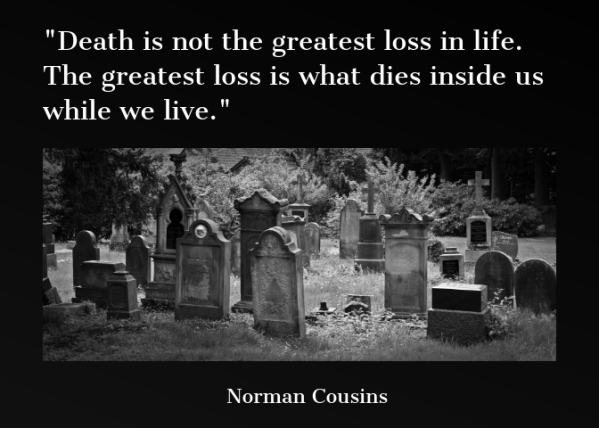
Ironic to listen to “Reeling in the Years,” though, knowing one of them no longer reels in the years. I always wonder, is death really that much worse than living? Maybe something else goes on with the energy that is us as the body moulders and fades.

Yes, those left behind find it painful. It’s a hard path to follow, because when others die, we’re forced onto new paths. Some of the paths have only a sight variation, depending on how close we were to the deceased. But sometimes, it’s like we’ve fallen off a cliff and have to pick ourselves up and learn to walk again.

Sorry, off-topic. Let’s get more upbeat. Here’s “Reeling in the Years.”


Knowing

Knowing someone was about to die, and not knowing, but having someone die unexpectedly, made little difference to him, he discovered. The death was a loss he felt, regardless of how much the other’s death was anticipated.

Nor did the quantity of tears shed reflect the pain he felt.

What Else?

He was surprised. She had never spoken of her ex in kind terms. “Why?” he said.

She considered her words. “What else could I do? He was dying. He’d had cancer. I loved him once. We had two children together.”

It had been the third marriage for both, he knew. Each had children from a previous marriage. Lasting ten years, personal sturm and drang struck every day.

Her tired face softened. “He’d asked his children for help. They turned him down. He came to me. He said, “I don’t want to die in a little room alone.” So I took him in, put a bed in the living room, and cared for him until he died.

“What else could I do?”

The Keys

Head wobbling, he looked left and right as much as he could without tipping himself out of his chair. Near immobility was one indignity. It was the least.

“Matthew, do you want a drink?” the man asked him.

He was a pleasant enough man, white and ginger-haired. but otherwise anonymous in Matthew’s world view. He’d been introduced. Matthew hadn’t cared to hear, remember and store his name.

The man was offering a straw and glass. Matthew despised straws. Children drank from straws; he was an adult. He was a man. “No, thank you,” he said. His once sonorous voice chirped, slouched and broke through the three words. He wished he could close his ears and not hear himself any longer. “Where are my keys?” That voice sickened him.

“What do you need your keys for, Matthew?”

What fucking business is that of yours, Matthew thought. “Where are they?”

“Don’t worry, they’re right here.” The man brought him his keys, holding them so they dangled in front of Matthew, like he was a cat or a baby, and the man wanted was playing with him. “Do you plan on taking a ride?”

Fuck you. Forcing his will into movement, Matthew reached for his keys. The limb and hand trembled. His shoulder, elbow and wrist issued warning pains. Reaching for the keys took long seconds, something once done easily and without stress. When his fingers closed on them, Matthew wanted to close his eyes and rest. Tears welled up. Others would think it was pain or sadness. Only he knew it was anger.

Chatting, the man wiped Matthew’s eyes. Matthew didn’t care. He closed his fist on his keys and then closed his eyes. He had his keys. Time to die.

His journey could now begin.

Big Data Spoke

A far future science-fiction exercise.

Collecting, collating and compiling data from Human databases and streams – government, social, medical, financial, historic, personal, personnel, death, birth and health records – revealed startling evidence.

Humans were dying less. Even those who could be resurrected, cloned, recovered, re-invigorated or re-born, were dying far less often. Fewer still were dying and remaining dead. Suicides were recorded with four zeroes after a decimal point. The population median age, already well over one hundred, was rising sharply, with less people deciding to even be reborn as a younger age with their adult memories intact. It seemed like that fad had fast faded.

Okay. But birth rates had also plummeted, falling like the temperatures on Castle Frozen when an Arctic front roared over the mountains and down across the plains. Less than two children were being born for every hundred people. Most of those children were not being permitted to age into maturity and adulthood but were kept as children for their parents’ entertainment.

The Council for Peace and Prosperity met on Castle Prime’s equatorial climate-controlled island to discuss general trends and concerns. The big data study on birth and death was a minor agenda item on the third day.

Most weren’t worried, arguing this was a burp, a blip. Yes, all were part of longer, greater trends, but the sharp drop-off was new. Those in the business of helping the dead return to life weren’t concerned; their business reviews were based on subscriptions and not a per use basis. Subscription rates were remaining steady. No losses were being recognized but the resurrection was a mature technology and had developed into a commodity. Profit margins were smaller. That was a concern.

Analysts also had deep dive data to present. Wars, warfare and violence remained at high levels but more people were avoiding killing one another. That unnerved attendees. It pointed to a training issue to many. Soldiers and officers needed encouragement to kill more quickly and readily. Perhaps studies were needed to understand what kept them from killing others when engaging them.

Such suggestions were quickly shot down. Studies like that were for the weak-willed or when appearances were needed that something was being done to mollify investors and voters until their attention wandered or other matters distracted them. No, studies weren’t needed in this situation; investors and voters didn’t know about these big data reveals. They would remain corporate secrets.

Second: population growth was required. Cloning was the natural solution. Adult clones were a ready market. Children had smaller and well-defined needs that were already being fulfilled. Adults were big children who eagerly embraced new toys and trends. Adults were willing to spend more on their toys, too, especially if said toys could be positioned as status symbols about wealth, power or influence. Most adults were sufficiently weak-willed and insecure or had such low self-esteem that they would be swayed by such bland and routine practices.

However…archaic laws remained in place against cloning a person to live more than one life at a time. Right now, cloning was permitted for only very small population segments and narrowly defined pre-existing conditions. Even that cloning was done well outside of the public eye.

Those laws needed to be changed. Immediate potential campaigns inspired the Council attendees. Contract pop and sports stars to headline campaigns. Say, they could be doing different activities on different planets, like skiing, surfing, fucking, dancing, performing, interviewing, whatever, marketing could work out those details. The point would be that doing these things simultaneously enriched the individual experiences and compounded their impact. The key behind the campaigns – there would naturally need to be several because to cover all the pop-culture segments – was to encourage envy about living a fuller life by living multiple simultaneous lives and fertilizing your life base. Having it done illegally by someone(s) popular and successful was the natural launching point. People loved lawbreakers.

Likewise, clone the best of the service members. Offer small bonuses for permitting the cloning. Simultaneously, initiate campaigns to overturn the cloning laws. Analysis would reveal which planets and societies could be open to such change and which would be the greatest influencers. New interpretations of founding documents and religious works could be published that seemed to encourage cloning as a religious right and even an expectation by whatever deities people worshiped these days.

Third, begin a whisper campaign. Stir up the rabble: birth rates were down because governments were encouraging certain races, ages, classes, corporations and planets to give birth less as part of a greater conspiracy to reduce those populations, thereby undermining their impact and participation. People always hated and distrusted governments and were easily inspired to rise up against them. Blame regulations, too. That always fired up the fringes, and then the flames would spread.

Beautiful. It was all coming together. Off the record, they agreed that more wars could be initiated. Step up the activity against pirates, rebels, independent planets, and smaller corporations and systems. That would increase the death rate and probably the birth rate.

Sure, this wasn’t a problem; it was an opportunity. Open the floodgates and rake in the wealth.


What Do You Want To Do?

Dying and suffering are two ingredients of the standard life. How you approach it may vary. It’s something I ask my characters as I interact with others in real existence and think of their situations.

One is George. The second is Tucker. The third is Walt.

Walt is dead. The other two are alive.

Tucker is a cat. He showed up on my front porch a few years ago as a one hundred degree heat squeezed the air dry and forest fires shrouded the valley with smoke. He was injured, sick and scared. Although we were dealing with two sick cats, we took him in. I searched for his people but didn’t find them. He stayed.

Tucker suffers from an auto-immune disease, gingivitis stomatitis. After being owned by cats since I was twenty, he’s the third cat I’ve seen experiencing this. It disturbs me that I hadn’t seen any suffer this until the last ten years. Tucker is the third.

His symptoms are that his body is itself, with the primary front in his mouth. Plaque rapidly builds on his teeth. His gums become inflamed, infected, swollen, and at the worst times, bloody. They cause him huge pain. The infections can spread to other body parts. They don’t know what causes this so they address symptoms. Anti-biotics treat the infections. Teeth are cleaned. Steroids are injected to counter the inflammation. They’re temporary measures. They want to remove his teeth. That may help some. It usually does, but it doesn’t always help the cat. They can’t give odds.

The steroids, though, have side effects. Those side effects killed two of the other cats. It was a long process.

Walt suffered from pancreatic cancer. It was acting fast. His appetite faded, and then his weight and energy. He never treated his cancer but he smoked some marijuana to ease his pain and encourage his appetite.

We live in Oregon. He went the right-to-die route. After following the law’s requirements, he acquired the necessary morphine pill. I was one of the two people he asked to witness his choice. The other was his daughter.

He made his choice and talked to his family about it. A date was selected. He said his good-byes. His family joined him on the selected day. It was over in less than an hour on one summer morning.

George suffers from brain cancer. Brain cancer is the latest problem that began a few years ago. In his sixties, he discovered he was suffering non-Hodgkins lymphoma. He beat that. Then cancer was found in one place. Then another. They were beat. Then it was found in his brain.

He began the fight. Stem cell replacement treatment was endured. You know the tale: drugs, side-effects, detached retinas, financial drain, many doctor visits, hospital stays and ambulance rides. He’s a shell of what he was, with little hair and a lopsided, melon-shaped head. He fights on. He has sworn to beat it. His wife doesn’t believe he can. She’s waiting for his death as he is not.

This last weekend, he went to the hospital because his nose was constantly dripping and was worsening. Turned out to be brain fluid. All that treatment has made his bones and tissues porous.

This comes up in because of my wife’s statement regarding Tucker.

My wife has RA. She’s on treatment. It deals with her symptoms and relieves them with their pain, stiffness, sleeping, eating and thinking issues.

I’ve been resisting having Tucker given treatments. I’ve learned keeping him on a grain-free diet helps. L-lysine helps. But the steroid and AB do the best job, giving him a few days of relief.

My wife said, “Speaking as one who suffers pain, I want anything that gives any relief.” She, like George, has vowed to fight on forever. She fears side-effects.

But I thought, yes, you don’t want pain, but you’re still going to continue to endure pain as you fight on, planning to fight on until everything is gone and the disease claims you, and you die. The rest of us will also die from something, fight or no fight.

Her mother, too, approaching ninety, lives in an assisted living home. She can barely feed herself. Everything else requires assistance. Ambulance rides and hospital visits for new issues is a recurring quarterly event.

It’s a curiosity to me. I have no diseases and suffer no pain.I’m lucky as hell. That probably colors my insights. I think, why endure more pain to fight? Are you being selfish, living in denial, or living in hope that some treatment, or a new treatment will come along and save you?

I’ve been injured and sick. I do know pain. Flu, pneumonia, mono. I’ve had a broken neck, cut off part of a toe with a lawn mower, had injuries requiring stitches on my head (three times, three places) besides requiring stitches in my chin and ear lobe, and had a dislocated wrist that needed to be broken and reset, requiring me to wear a cast and have pins through my hand and arm.

I’ve seen what George’s fight does to his wife. He endures the treatments and symptoms; she experiences huge collateral damages, drinking more and more to cope, emptying bank accounts, selling their house, her life on hold.

I stand with Walt, myself. That’s probably why he asked me to be a witness.

That’s the theory for myself. But like many things, how we believe we’ll act and how we’ll actually act often have a gap between the vision and the execution.

Dream Meanings

I don’t know what dreams mean but I visited with a dead friend last night.

Randy died this year in May, colon cancer, fifty-nine years old.

He was in the last part of my dream. In the first part, I was in a wilderness area not far from a two lane road. It was a pleasant day, sunshine and clouds mixing to keep it from being too warm or bright. Rugged topography dominated, with mountains in the background. This was difficult land, mostly granite, with a few stands of tall fir trees and meager dry, brown brush.

I was with other men. I think there were eight of us but I’m not certain. We were out ‘visiting with nature’, which is all I can guess from my memory of the dream. We’d deliberately separated, fanning out to do different things. I came across an older friend, Frank. He was part of the group. Frank is alive and I see him every other week or more.

A cougar was stalking Frank. He didn’t know. I saw it and warned him, and the cougar left without incident. Frank and I talked briefly in general terms. He drifted in one direction. I headed back toward the road, where a small pavilion on a stony hillock was erected.

An enormous brown bear appeared. Its size shocked me. As it ambled in my direction, cutting me off from the pavilion, I realized it was far bigger than the pavilion. Round and broad, the bear dwarfed some of the granite boulders strewn about.

I worried about him getting me so I was staying as still as I can, and moving carefully when needed so the bear couldn’t get too close, trying to keep the pavilion between us. When that failed, and the bear might come my way, I went invisible for a bit.

The bear entered the pavilion. He could barely fit and it was somewhat comical. Frank appeared then and I re-appeared to warn him about the bear. As we watched together, the bear left the pavilion and walked away, sniffing the air as he traversed the rocky landscape.

The others came and I told my story, trying to convey the bear’s incredible size. Then we were off, headed for home, separating at different points along the way. I was soon traveling with another group.

Here’s the weird part. They were traveling in a vehicle that wasn’t a vehicle. Five abreast, they were lying in something that conveyed them but had no color or form. It made no sound and was open to the world. It was like they were just lying in the road, five abreast, reclined at a steep angle, like in an airline seat, but they traveled on a unlined black asphalt road faded gray with age.

A guide was with them, talking about what was coming up. She stopped to introduce me to the group as I stood off to one side, calling me by my name, Michael, and mentioning I was one of their leaders. Then, proceeding to tell what was to happen next, she mentioned that they were coming up on Randy’s house on the right. Then she faltered, unsure what to say about Randy.

Realizing she was at a loss, I said, “Randy isn’t there any more. He’s a great guy, but he had to check out early.” After I spoke, the people drove on. I turned, and there was Randy. I put my arm around his shoulder and told him I was sorry what had happened to him. He, in his typical manner, told me not to worry, it’s not bad, that he was alright.

We separated, with him walking away in a green shirt and blue jeans, just like we’d run into each other while shopping. I continued on.

Reaching the end without incident by following the road and then cutting across a field, I came to a large, well-lit white warehouse. I knew this was where I was heading. The doors were open. People were busy inside. Dusk was gathering. I was just beginning to enter when I awoke.

I’ve been researching dreams for a novel in progress and discover that progress about them has been made but we understand little. While Freud and Jung had their ideas, others later bashed those ideas. Studies estimate that 70% of people dream, and the average person has five to seven dreams per night. Dreams seem to take place during R.E.M. sleep. Dreams last longer when they happen later in the sleep cycle, which is usually later at night. It was once theorized that dreams originate in the brain stem and was related to more primitive processing, but a neurologist discovered that people with brain stem injuries continue dreaming while those with parietal lobe damage (in the forebrain) did not dream. We don’t know why we dream or what they mean.

Studies continue.


Never

Never is a big word, easily used. “I’m never going to Texas,” she said. “It’s full of racists and rednecks.”

I have family in Texas. They are somewhere on the spectrum of both of those things. Reliable Republicans, they think whites are getting a raw deal and distrust the M&Ms of Mexicans and Muslims. They’ve never actually experienced deprivation, never went hungry or without a roof, but still, they hear stories.

“I’m never riding on trains. They’re so dangerous.”

This was brought on by a train wreck in Spain that killed four. Wrecks happen. They’re never riding on trains because of an accident. What does that leave? Cars, bikes and planes? Because no one has ever been killed using those. People walking are killed, as are people in bed, suffering from nature’s attacks (quakes, tornadoes, hurricanes) to human events (gas line explosion). What are you going to do, hole up so you don’t die, with a plan to live forever?

I’ve jumped on the Never train many times (oooh, like that as a title for something, “The Never Train”), irked by Microsoft, Google, Lenovo, IBM, Comcast, HP, United, Delta, AT&T, Geico, McDonalds, Hillary, Trump, Republicans, Democrats, the NFL, the Senate, the House, the SCOTUS, Obama, Bush, Cheney, Clinton, Monsanto, police shootings, mass shootings, terrorist bombs, drone attacks…. Never comes easily but it’s rarely forever.

“I’m never going to stop drinking coffee,” I say, but with the rust disease, who knows? Yesterday, I bought a quad shot mocha for over five dollars, a bottle of wine for six dollars, and a pint of beer for six dollars. The QSM was purchased on the road in another town. “Too much,” I said, with a grimace, but held back from loosing the N word. “Six dollars for a bottle of Pinot Noir?” I asked. Seems too good to be true but I refrained from saying, “You can never get a good wine for six dollars.” It was hard to not say. Six dollars for a pint of Ninkasi Sinister Black Ale? That seemed steep, too. What is my Never point, I wondered.

My wife illuminated the never point in later conversations. While the prices of coffee, wine, beer (and gas) were striking, we have money that provide us a large comfort zone. The prices are noted and shrugged off. Sure, the comfort zone experienced a little nibble on the edge, but it’s a broad space, and that makes strides of difference.

We remembered when a car repair would mean a budget analysis to see what we would do without or reduce to save enough money to fix the car. Pennies were hoarded to purchase a treat, like ice cream at DQ. We didn’t drink wine, rarely drank beer, and our coffee was bought for fifty cents a cuppa. We never thought any of that would change.

But life is full of nevers. We never imagined video games being such a massive business, with their primary demographics being adults. We never thought Ashland would have the country’s record high, 108 degrees F. We never thought we’d track and study wildfires and El Nino and La Nina, never thought we’d quit subscribing to cable television, never thought a friend would do the things she had, never thought violence would come to our neighborhood. But it all happened.

So, I think, as I write like crazy and work, saying never rarely holds. I don’t think I’ll never say never again, but I will be more mindful about it.

At least, I’ll try, because always is a lot like never.

Blog at WordPress.com.

Up ↑