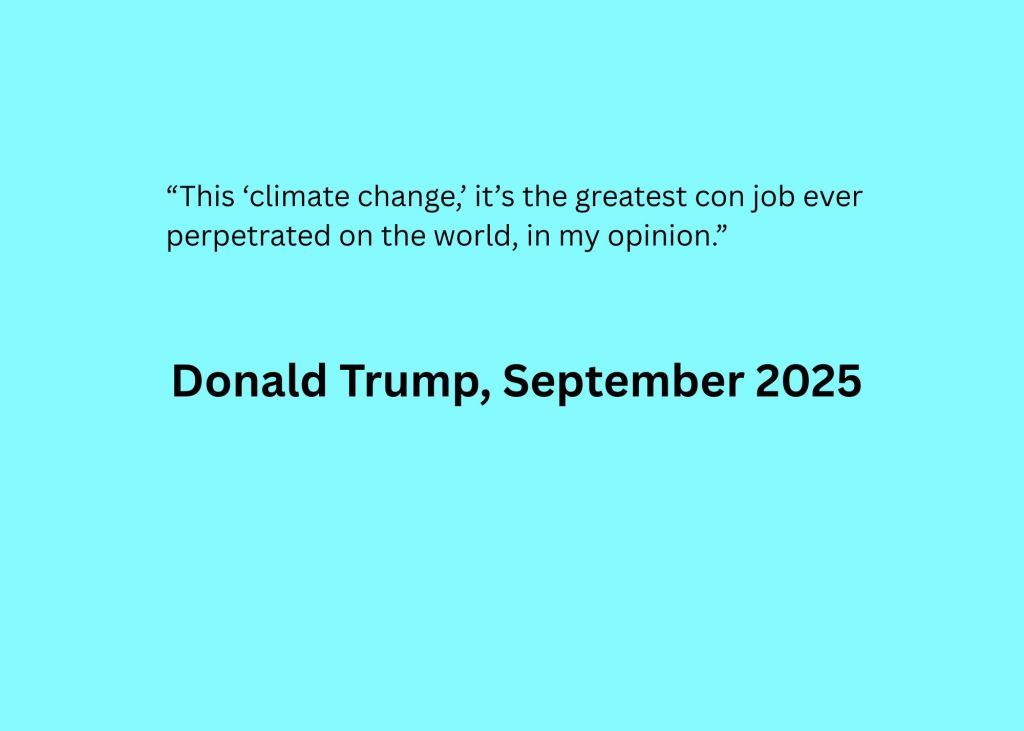
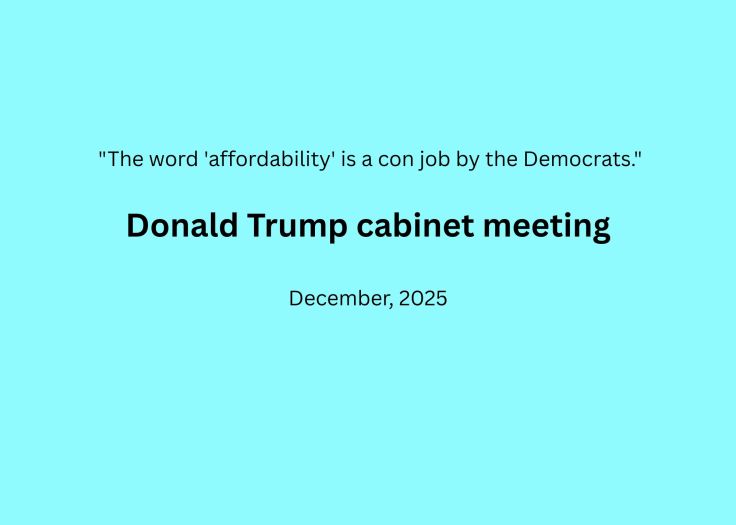
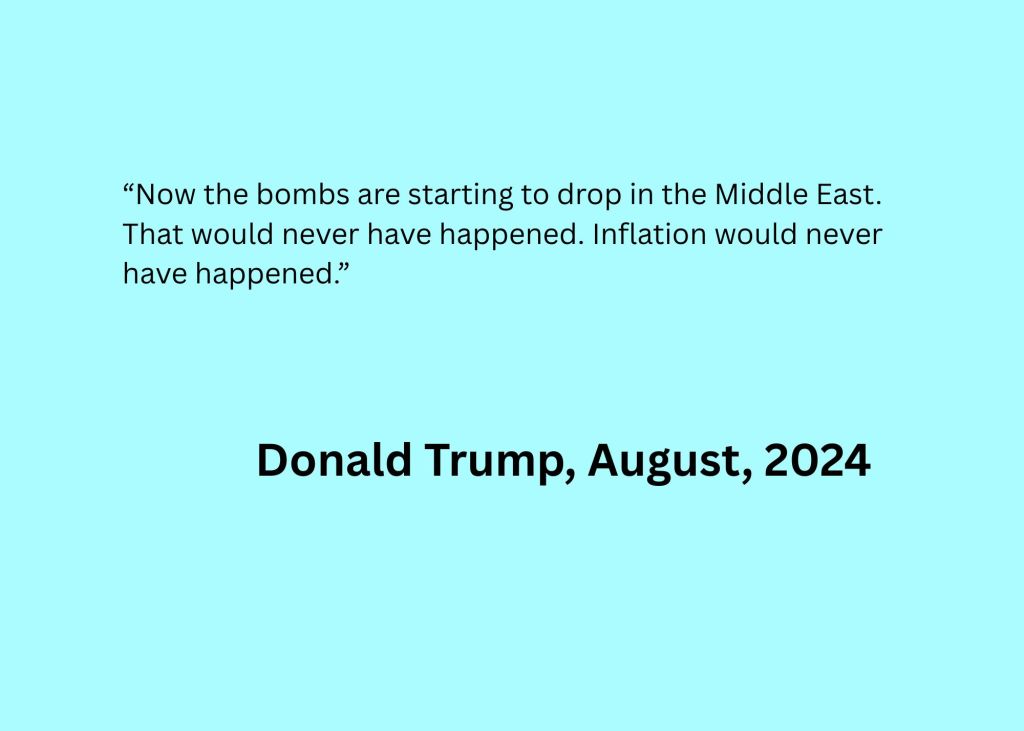
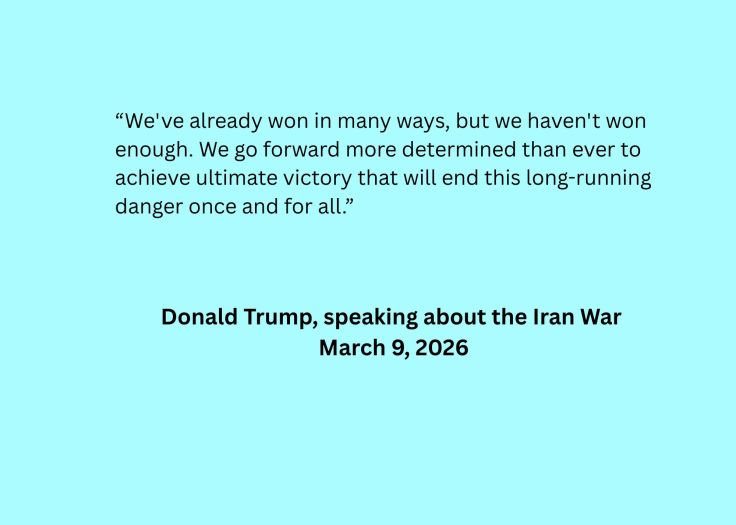
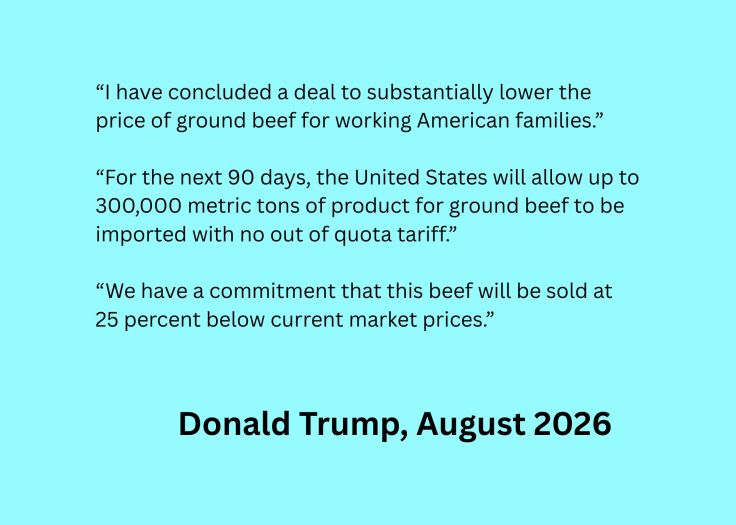
These declarations sum up the state of the union and Trump right now:
While US towns, citizens, and states are more and more frequently challenging the need for AI centers, Trump is gung-ho to get them built. Many variables are being rolled out against building them:
- Are they actually needed and will they be profitable?
- Impact on the dwindling water supply
- The heat data and AI centers are shown to displace
- Energy use and costs
Many Trump supporters think Trump is a ‘smart businessman’. The rest of us count Trump’s many bankruptcies, the continual grifting, and his mismanagement of war with Iran, the economy, trade deals, tariffs, the Lincoln Memorial Reflecting Pool, and respond, not so fast.
Harry Enten explains why Trump’s signature issue just turned into a polling nightmare
Donald Trump is currently plummeting in the polls on his signature issue of immigration, noted CNN’s chief data analyst Harry Enten on Tuesday.
It was “one of the pillars of Donald Trump’s first campaign back in 2016, winning that Republican primary,” noted Enten, who also pointed to Trump’s anti-immigration agenda enjoying 53% backing when he won his second term in 2024.
But now there’s been “a massive change in the court of public opinion,” he said.
“Now, 58% of Americans say no, they do not, in fact, trust Trump on immigration. Just 41% say yes. So what we’re seeing with ICE is finding its way to the Trump administration at large, to Trump at large.”
ICE keeps killing people, using under claims for public safety or ‘fear for their own lives’. But the video evidence and witnesses’ recounting completely contradicts those narratives. Meanwhile, more FAFO stories show up about Trump’s ICE forces grabbing people trying to complete their citizenship requirements and wholly, totally legally here.
More of We the People are saying, “Enough.”
No amount of media sanewashing can convince Americans that Donald Trump is rationally prosecuting the Iran war or accurately relating the terms of a (sort of) deal. No matter how many times Trump repeats his outlandish lies on matters big or small — e.g., vandals at the reflecting pool! She begged me for a photo! — or tosses out bacchanalian distractions, or seeks refuge in hapless propaganda (none creepier than Vice President JD Vance’s pro-Nixon spin), he cannot arrest a growing national consensus: whatever Trump is doing is a failure and whatever he says is a bald-faced lie.
Trump’s inability to snow over the public with his blizzard of deceit bodes well for Democrats’ chances to trounce Republicans in the midterms. Candid after his primary defeat, Republican Texas Sen. John Cornyn let on: “The jury’s still out whether this MAGA populist movement can survive the midterms.” But widespread agreement that Trump is an inveterate liar offers the opportunity for something beyond a midterm victory, which would be nothing less than a reality reset.
In the late stages of any authoritarian crack, the degenerating despot’s spin, lies, and excuses eventually reach a point of diminishing returns. Each additional fabrication only reinforces exasperation with his galling mendacity. That, in turn, may whet the public’s appetite for some unvarnished truth-telling and public accountability.
Jen Rubin wrote this, and she is absolutely right.
Trump keeps rolling out new distractions. He’s doing everything he can to turn We the People’s attention away from his increasing lists of lies, failures, and broken promises.
His latest Operation Epic LOOK — SQUIRREL! effort is for money to fight communism in the United States. But all of it is secret. Trump runs an opaque administration. Whenever documentation and proof is demanded, he blusters and folds.
The ‘war on communism’ is his latest desperate attempt to stoke fear, sow divisions, and stay in power.
As he pushed for Congress to approve $350 billion in new spending requested by the Pentagon, House Speaker Mike Johnson suggested Tuesday that some of the funds were needed for “fighting communism on our own shores,” an ominous notion in light of President Donald Trump’s threats to deploy the US military against his domestic enemies.
In addition to the already record-breaking $1.1 trillion military spending bill that was approved last month by the House Appropriations Committee, the Pentagon has requested a separate $350 billion package to be passed through a separate GOP-led spending bill known as “Reconciliation 3.0,” which can pass without Democratic support.
Sure. They’re fighting ‘communism’. Some of We the People will hear the word and shrivel up in fear. But most of us know this dance and will not be fooled again. As Jen Rubin wrote, we know Trump is lying. So is Johnson.
Next, we have this piece by Paul Krugman.
Donald Trump’s stunning failure in Iran has weakened America on many fronts. The world now perceives us as neither a reliable ally nor an invincible enemy, with an extortionately expensive military that is losing its best and brightest to Pete Hegseth’s prejudice and incompetence. We are now four months into a war that was supposed to last a couple of weeks.There is no end in sight as strikes and counter-strikes continue despite Trump’s farcical proclamations of American victory and Iranian surrender. Sixteen months into his presidency, Trump has squandered all of America’s credibility with the rest of the world.
So let me add one more item to the tally of destruction: The supremacy of the dollar, the pre-eminent tool in America’s toolbox of global financial power, has been seriously damaged by the rise of alternative payment systems – a rise that was greatly hastened by the Iran war.
Paul Krugman summarizes how the United States and the USD are losing ground in international affairs. Instead of increasing respect for the United States, Trump has managed to reveal that, with him in charge, the US is now an unreliable ally and trade partner. Trump thumbs his nose at international law, sneers at history, and makes boasts and claims that he can’t back up.
Like We the People, the world is reaching the point that they’ve had enough.
Here is the capstone of the current trend:
Trump’s approval rating is more than a single bad headline. At 37%, the president is sitting in territory that usually signals a broad coalition of dissatisfaction, not just predictable opposition from the other party.
Yes, it’s more than bad headlines, distractions, an unneeded war, and constant lies. Those are all symptoms.
The truth is that a person who should not be in charge of this nation won an election. Since his election, he’s done grave damage to our nation’s system of government and has grown as a threat to not just We the People, but to democracy itself.
Trump knows this. As much as he tries to spin matters, as much as his staff hides the truth, the cracks are showing.
Trump is failing. He and his policies need to be reined in before it’s too late.