Nicholas Said
Science fiction, fantasy, mystery and what-not
Once again, none of my novels were shortlisted for the Man Booker Prize. Naturally, I was distraught. It almost put me off of my coffee. Almost, but not really. It’s their loss.
Despite that oversight, my spirits are rising. Nothing to do with anything tangible; it’s just that time of my cycle. It’s beautiful weather, and seems like a wonderful to day write and edit.
As part of my lazing about this AM, I read a 2011 Paris Review article, “Catch-18”, by Erica Heller about her father, Joseph Heller, author of Catch-22. Several passages interested me, but I want to highlight two.
At one point when Dad was writing Catch-22 (he wrote it for nine years, which turned out to be something of an average gestation period for his books), only once and quite late in the game do I remember him becoming discouraged, fed up with the writing process and how long it was taking to finish. This brief, uncharacteristic bit of self-doubt caused him to actually set the book aside and try to find distractions. I recall seeing him watching television in the evenings, but his boredom and exasperation was immediate. Within a week, he’d become so sullen that soon he was scurrying exultantly back into the waiting arms of Catch, telling my mother that he honestly couldn’t imagine how anyone survived who didn’t have a novel to write.
It is hard to imagine not having a novel to write. That’s my primary survival/coping mechanism. Computer games help, along with coffee, wine, and beer.
When Catch was finally taking off, about a year after publication, my parents, who had now moved us to a much larger, far grander apartment, would often jump into a cab late at night and ride around to the city’s leading bookstores in order to see the jaunty riot of red, white, and blue and the crooked little man—the covers of “the book,” piled up in towers and pyramids, stacked in so many store windows. Was anything ever again as much fun, I wonder, for either of them? They would come home giddy and very late and go to sleep with their heads still full of the potent magic of a dream poised right on the cusp of becoming true.
That sounds fun and real, and is the kind of thing that I dream of doing, cruising places looking for copies of my books and evidence that my dream is becoming true.
Time to write edit like crazy, at least one more time.
Yes, I’m reading my baby, but I’m enjoy what I wrote almost two years ago. My baby in this matter is the second novel, Entangled LEREs, in the four book Incomplete States series. I’m often surprised as I’m reading it, thinking, “I wrote that?” I impress myself, but I was writing to me, and I’m easily impressed, so I wouldn’t be impressed that I’m impressed, if I were you.
This isn’t the first time that I’ve posted something like that. *shrug*. My observation about my writing pleasing me also belies how my writing process works. I usually stream scenes through me. “Release the muses!” I shout, and then write like crazy. Writing scenes are often like encountering a tsunami and being swept away. I know what I wrote and can give you the details, but I don’t recall thinking about it much. I think about it before I start writing and after I stop, but I rarely think about it during the process.
The point is, those words are a first shot at writing the scenes. Editing follows, and polishing, and more editing for continuity and pacing, and polishing and editing. I’m an organic writer, so that scene is often edited to help fit a later narrative that emerges. I learn the characters as I go, so their thoughts and interactions in these scenes are revisited and modified to suit their personalities, motives, and agendas. It’s a long way from the first stream of writing to even the beta draft that I’m editing into a first draft.
It’s also a little scary. As I read through these scenes, I wonder, do these things get sufficiently resolved? I won’t know until the entire series is edited.
I’m not worried about being scared. I suspect that I missed some thins when writing the beta draft of the series. That’s why I edit and revise. If I find that my fear is correct, I’ll edit and revise again, continuing that process until I’m satisfied that I’ve answered the questions in a manner and to a degree that will satisfy the reader, moi.
In an aside, as I’m reading and revising, it’s fun to re-discover how I’ve integrated friends and family’s names and segments of their lives into my fiction. For example, a comet that breaks up and destroys a planet is named Santella-Klements. The first is another part of the extended family and includes cousins close to me growing up while Klements is a friend’s last name.
Okay, time to write edit like crazy, at least one more time.

Be open and self-aware, find your process, and persist. My writing process involves walking.
BTW, that’s not Tommy Orange running in the photograph.

I used a foggy background for this quote because I think the quote illuminates the fog of writing. It’s applying your experiences, and things others describe to you, to imagine another’s experience to tell a story.
Today was a wonderful editing and revising day, mostly because there was little of either required. It’s a good day, I thought.
Having a good day feels like a reward. The bad days must be endured, and they often end up being productive. I mean, by a bad day, a day where I feel tired, depressed, and flirt with thoughts about not writing ever, ever again.
I know, though, that the writing on good, bad, indifferent, and mediocre days isn’t likely to be any different. Bad days mostly refer to my attitude before I start writing, editing, or revising. Once I start and my focus is on my writing, my attitude doesn’t matter.
For all that I know, what I read, edited,and revised today could have been written on a bad day. There’s a good chance of that being true, because I covered almost seventy pages today. I generally write one to two thousand words a day, which typically amount to less than ten pages, depending on dialogue and density. I probably covered a week to two weeks of writing, so there were probably some bad days in there.
Now I’m done writing like crazy editing like crazy. Time to go do other things, like eat.
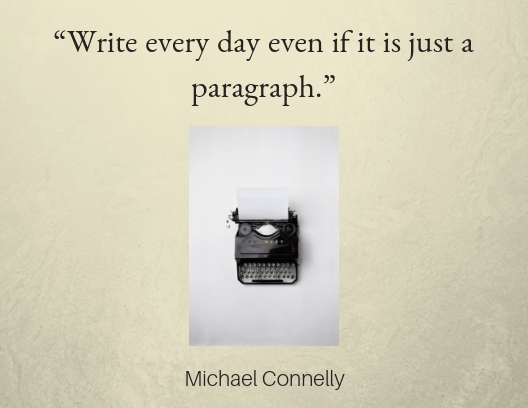
To paraphrase this for my current phase, edit every day, even it it’s just a paragraph.
Here we go, more self-indulgence. What’s new? This is a vanity blog with a primary purpose of understanding myself and my thinking through writing and coping with my writing efforts, with secondary purposes of entertaining myself and sharing ideas with others.
I struggled with how much to share today. I’m telling what the series, Incomplete States, is about. I decided that I typically don’t have many visitors, so I have little to worry about. I expect this post to get eight views and five likes, and perhaps two comments.
I was thinking about all of this in connection with where I stand with editing and revising the second novel, and by extension, the series. I felt a need to ground myself about where I’m at in the series, where it is, and where it goes.
To begin, consider three questions.
If you feel that you’ve experienced these things, it’s possible that you have an entangled LERE. A LERE is a Life-Experience-Reality-Existence. Entangled LEREs are caused by Chi-particle issues. Chi-particles are imaginary quantum particles that are lack mass and energy and travel faster than light. As they slow, they acquire mass and energy, becoming a fundamental quantum particle before devolving into some aspect of classic physics. Chi-particles exist as isotopes and variants just as elements often exist as isotopes and variants, which affect their behavior.
This is the situation that my characters experience in the four book series, Incomplete States.
I was exploring and thinking about the series as I walked this morning. Specifically, I thought, oh my God, what have I done?
No, that’s not true. That was inserted for comedic effect. It’s sometimes true that I think this, but that wasn’t the case today.
Today brought a more rational review of the books and the story arc. I’d conceptualized, what if there is only now, no past, no future, and no cause and effect? What if the arrows of time are a convenient commodity we use to explain our existence (including our Universe) because it fits with our organic biology and creates a simple framework for being?
When I think about this, I’m forced to think about multi-verses, but also to challenge the ideas that our Universe is expanding. We believe we observe its expansion through light shifts because that cause and effect is the prevalent belief of our existence, along with the arrows of time that go from the past to the future, shooting through now. In my reality, E = mc2 is a fallacy that we cling to because it fortifies our foundations of being.
We hang onto the concepts of a greater being in the same way.
None of these things are easy to lose. Grappling with not accepting them and actively rejecting them is hard to keep in mind when you’re writing. I kept wanting to return to cause and effect and our universe’s foundations.
As I played with those concepts, I introduced characters who were undergoing the symptoms expressed in the opening questions. Unlike you, they often also remember what else happened. They remember other worlds and other lives that they lived and then come to a grudging grasp that they’re still living in these other worlds and lives.
All of this is told through their stories. Throughout, the things that happen to them cause gaps in logic, cause and effect, and expectations. They endure twisted memories and confused understanding, resulting in a knowledge vacuum.
Humans dislike vacuums. We always want to explain what’s going on via some mechanism. That mechanism can be via magic, religion, science, and technology. Those are the broad categories. People also suspect they live dream existences, but struggle to understand which part of their LERE is the dream existence, and which is the reality, coping with the possibilities that maybe both are dreams, or maybe both are realities. They struggle with plots to explain what’s happening to them, plots that involve governments, conspiracies, virtual realities, and other intelligent life forms.
The existences, experiences, and coping become a huge matrix, but the matrix is different for each of the six main characters. The delta between their matrices fluctuates.
That’s where the tension resides, evolving into wonder about which theory filling the vacuum is correct, and how the stories will resolve.
I had several writing rules I employed while writing these four books. Chapters were addressed as episodes. Cause and effect can be perceived, but readers can’t depend on it. Consistently inconsistent logic would be employed. Life — or reality — is a vacuum, and our search for understanding and explaining it all is a farce. What we interpret as life through our experiences forms a reality that’s a slice of existence that doesn’t linger.
I don’t treat my science as junk science. I treat it seriously in the novels. I don’t expect it to hold up to scientific reviews or validate string theory, loop quantum gravity, or the theory of everything. I offer no math to support my science, although I’ll point out that in my concept, anything anyone offers to support or tear down my science is wrong because of the inherent observer’s bias held by being in and part of this universe.
Yeah, it’s fun. It makes me laugh. That’s what writing’s all about, innit? Entertaining ourselves.
Hopefully, after reading the series, the typical reader will think, “I see.” And then they’ll wonder, “But what is it that I see?”