Routine Changes

I like patterns. I dislike calling them routines.

They probably are routines, or habits. For writing, I go to the same place at roughly the same time every day, and order the same drink. It might also be a habit. As parcel to this pattern, I walk.

Variations exist. I prefer writing in mid- to late-morning, so I tend to arrive between ten and eleven. A musician friend of mine is usually leaving as I arrive, so we have a private comedy routine we engage in about changing shifts, ha, ha. Sometimes, I don’t arrive until early- to mid-afternoon, driven back by other commitments.

I sit in about the same area, but at different tables. Yes, I do have a favorite and try for it.

This was all deliberate. When I began writing in earnest, I needed a structure to encourage discipline. Now the structure is just comfortable, and convenient. By engaging in this process, I free myself to write without letting small details interfere.

None of this is new. What is new is that potential change is crowding the horizon.

This writing location isn’t my first choice. It’s a decent coffee shop, with decent writing vibrations. Service is wonderful and the owners are pleasant, polite people. Prices remain shocking, but that’s the modern world’s nature, what with supply and demand, wages and energy costs. Overall, it works.

I came to this place when my previous writing location abruptly ceased doing business. That forced me into a hunt. I tried every coffee shop in town to begin in search of my new haunt. After narrowing the list down from seventeen to three, I frequented each several times.

I have a set of requirements for my writing place.

  1. Space to write
  2. Good writing energy
  3.  Wi-fi
  4. Good mocha drink – something chocolately, with three or four shots of espresso
  5. Reasonable prices
  6. Decent service
  7. Convenient location
  8. Clean enough not to be offending

All of this has come up because a new place is to be opened. After three years of inactivity, a new coffee establishment is opening where my previous preference was in business.

Friends familiar with my routines want to know, “Will you start going to the new place?” Well, if it meets my eight needs listed, probably. Right now, this location falls short on good writing energy and convenient location. A little over two miles from home, I often hop in the car, drive closer, and then walk.

This is a compromise. I’m not fond of it. But I have other things to do and can’t always plan to consume that time to walk down there and back.

That’s excuse number one. Excuse number two is weather. We have many days over one hundred degrees in the summer. Winter walking meant enduring rain, snow, ice and wind. It just wasn’t pleasant, and was countering my desire for a walk to shift into the writing mood.

Mind you, my coffee drink’s flavor is important. I’ve tried multiple drinks before deciding that mochas work best for writing. I think that the coffee, sugar and chocolate combo stimulates my creativity and focus.

The new place is much closer. At just under a mile, it’s a fast walk. Variations can be followed to extend the walking time. I found that walk down was perfect for setting the mood to write. Then I could trudge and tramp around afterward to decompress, think and shift back into the real world.

I will try the new business and see if it works. I’ll do back to back comparisons between the two.

Space to write and writing energy are the most critical components. Everything else pales. So we’ll see.

I’m going to do what works for me.

The Net Results

The phone voice has always fascinated me. It’s like we have a different personality when we’re answering the phone. The ability to switch was impressive.

Are you familiar with this? I first noticed it when I was a child. We shrieking, arguing, playing, fighting children would be running amok around the house, and Mom would lose it. A stream of orders, admonitions and angers would be launched, stopping us dead. In the midst of her tirade, the phone would ring, and she would answer it with such a sweet, polite voice, it was amazing.

That’s back when we didn’t know who was calling. She was also answering a phone hard-wired into a system and affixed to a wall. Cherry red, this wall phone featured a thirty-foot coiled cord. At first, that phone had a rotary dial. Push buttons — they were always gray — eventually replaced the dial, and then the Princess replaced that big, clunky phone, and the Princess succumbed to the smaller, neater Trimline.

But the coiled cords stayed long for many years. That long cord enabled wandering around while on the phone. If you could also master the neck hold, you could practice hands-free calling. The neck hold meant the phone was wedged between a shoulder and ear with the mouthpiece angled toward the mouth. Mom was able to do this so frequently and consistently, I was amazed that her shoulder returned to its normal position after she hung up.

These things have changed. Hands-free means you’re not using your shoulder. Speakers and headsets are available. The phone voice isn’t gone, but tailored specifically to who is calling. Caller identification and ring tones dictates the phone voice tone. One young friend says that when her Mom calls, she always answers with a flat, weary, “What is it, Mom?” This is because Mom is calling with worries, complaints and concerns, and never just to chat. On the flipside, a Mom I know answers the same way with her son, because he’s always calling to ask for money or help.

We did have a caller ID system, and did tailor the phone voice to the situation. When I was younger, we children were excited and honored to enjoy the privilege of answering the phone. Of course, it also meant we didn’t want to give it up, telling our parents, “No, I’m talking,” when we were toddlers just getting the hang of it. As we aged, we became the caller ID system. “Dad,” (or Mom), “it’s work.” Or Aunt Sally or Uncle Doug, or Grandma Barb. “The person taking the call would usually mutter something about, “What do they want?” Accepting the phone, they would turn on the phone voice for that specific caller.

That sweet, ultra polite and professional phone voice still exists at work where customers and clients are calling. In the military, we were required to answer according to which lines were ringing. I was in the Command Post, where phones abounded. Crash lines and hotlines to headquarters were not answered; you just picked them up and listened while scrambling to copy information. For outside calls, we identified the location and function, along with our rank. If it was a non-secure line, that was mentioned, and then we asked them, “May I help you?” For the direct lines to the various directors and commanders and their homes and offices, we only answered with our name and rank.

My, how we’ve trained ourselves. Of course, I use this growth and phone specialization in my writing and try to extrapolate how and what might come about. In the novel of the distant future now in editing, people don’t use phones. They’re on nets, basically a voiceover wireless protocol. Most people have a team net, ship net, corporate net, social net, private net, personal net, system net, family net, and friend net. Many have additional nets. While some of those seem redundant, they’re sliced and diced according to individuals’ preferences.

Various systems of bioware direct the calls, with your personal assistant – who is on their own net – informing you of who’s calling on what net. Virtual presence, virtual intelligence, and virtual personalities provide greater options. Calls can be answered, ignored, or shunted into various automated systems. Virtual personal assistance then often digest the calls’ contents, feeding into memory what needs to be known, remembered, or accomplished.

This is done effortlessly. It’s not unusual for a person to be on multiple nets simultaneously.

All of this thinking about phone voices was triggered by Twitter. The current White House occupant loves his tweets and Twitter. This has inculcated a shadow Twitter nation that responds to his tweets with their tweets. Then the media analyzes the tweets and responses even while reporting their takes and tangles. Even though it’s all in so many characters, there’s a distinct voice to everything written.

Often, though, it really seems like a toddler has gotten hold of the phone, and is yelling at the others, “No, I’m tweeting!” Yet, oddly, my future folks don’t text, or Twitter, because that requires using hands. It makes me wonder, though, what’ll it be like in another twenty-five to fifty years?

Writers, what do you see in the future?

Editing Fatigue

I don’t have the statistics on this, so I don’t know what the hell I’m writing about. What’s new? many ask. Yeah, thanks.

I believe I have a case of editing fatigue. I’m experiencing these symptoms:

  • General malaise
  • Boredom with my novel
  • A lack of will to keep editing
  • The urge to write something else

My first anxiety upon experiencing that today was that I’d written a boring book. The book could be boring, no doubt. But I believe I suffer more from almost continuous exposure for almost a year. Such exposure can cause malaise and boredom. Even people seeing naked people for a year can become bored with them, if they’re the same naked people.*

I believe that two hundred pages into the editing and revising process has inured me to the novel’s charms. When I began editing, I was excited about it. First, hurrah, a first draft was finished! Second, I saw editing as a chance to shape raw material. Still true, these points, but the chapters I’m editing and revising have been subjected to editing, revising and polishing for several months. That’s part of my process. Naturally, those sections that are older have gone through the process more often.

What do I do about it?

Which is more important, to know and acknowledge a problem, or to do something about it? I assign equality to them. Being blind to the problem, I can’t fix it. If I don’t fix it, the problem will continue.

Of course, in this sense, I don’t see it as a problem to be ‘fixed’ as it is more something that must be endured. Putting it into the context of my life, I have a demonstrated tendency to go through these periods. It helps to know myself.

Knowing myself helps me understand that this is temporary and that I’m not as doomed as the Titanic. It helps me regain balance and momentum, and address the issue from emotional, intellectual and physical aspects.

So the first thing to do….

  • Have some coffee
  • Sit
  • Think
  • Read
  • Write

Being who I am and old enough to understand with some degree of reliability in this matter, I had a cup of coffee, sat down, and thought about what I was thinking. Knowing that I can be trapped in my own thoughts and victimize myself by making it seem worse than it is, I researched the subject, looking for confirmation that I’m not alone, and that I’m not the first to endure this. I also read about what others did to cope with it, looking for anything new and different that might help me.

I don’t specifically find articles on editing fatigue, but on writing fatigue. To broaden thoughts about all this, I read about medical fatigue and material fatigue. It’s striking to me that it’s actually more like material fatigue that I experience. Expanding my thinking, I hunt for articles on burn out.

And then, because I am me, I write about it to help me explore and understand what I think about it.

Others’ Suggestions

Others experiencing this commonly suggest, “Take a break.” Yes, that seems like a logical and natural reaction. That’s what I want to do. But again, being me, I have that whole absurd guilt about taking breaks. Taking a break seems like a violation of the Writing Code — Thou shall write, edit, revise and work continuously until the blooding thing is done, or the Writing Gods shall curse your book — so I struggle with it.

I’m afflicted by this in everything I do. Once I start a project, I want to go until a ceasefire is declared, and I’m given permission to stop. But again, logically and emotionally, through experience, I know that taking a break is beneficial. The benefits include renewed energy and dedication, and often even new insights into what’s going on with myself and the process I’m engaging.

Reading about occupational burn-out provides me more powerful understanding of what I’m enduring. I’d suspected that some of the problems with the editing and revising process versus the creative writing process is that I’m addicted to creative writing. Creative writing engages me in multiple ways, and is rewarding. I can create and enjoy the results.

Editing and revising is more about improving existing material. While I can enjoy the results, there are often pages with few or no changes. No changes, no work engagement, no satisfaction with a job well done.

Is that your final answer?

My final answer is that I will take one or two days off from editing and revising, and instead address other areas of the novel to be, and also take the time to address other languishing areas in my writing career.

I’m not worried about setting a specific amount of time. I know that I’ll return to it. Just giving myself permission to take a break, I feel relief, and can feel my internal stores begin to replenish. I’ll go read for pleasure; as a writer, reading stimulates my writing inclination. I just need to ensure I channel my energy into editing and revising the current N.I.P. and not allow myself to wander into a new project.

So what about you?

Hey writers, do you feel any of these symptoms? How do you cope?

I really want to know.


*Regarding looking at naked people. I’m sure there are some who can gaze upon naked others without break and remain eager for it every minute, hour and day, ad nauseam. I also suspect that the subject of such watching might affect results, along with the age of the naked watcher.

So, your results may vary.

Dream Conference

I dreamed I was at a conference and on a panel with John Scalzi and one other writer. The discussion was about the future. The panel ended as the dream began.

Next, with my wife beside me, I was playing a giant video game. There were three huge screens, the size of something in a stadium, but they were the old “green screens.” People wanted to see me play this game because I was reputed to be very good at it. I wanted to play because I could win prizes. But, it quickly became apparent that the controller was malfunctioning. As I realized that, I laughed at the situation, surrendering to the inevitable, and the disappointed spectators drifted away.

It was time to go home, and we were at an enormous airport. I suspect it may have been LAX.  I was talking with the third writer on the panel when Scalzi came by. We engaged in a conversation about what to eat. Scalzi wanted ham with raisin sauce. Then he had to catch his flight and said his good-byes. Next, my wife had to catch her flight, so we said good-byes, and she headed for her flight. The other writer and I began walking to our terminal. He made some excuse about going off and doing something. I responded that I’d wait for him.

He told me that he’d rather I didn’t. “No offense,” he said, “but the visions you and Scalzi are just too dark for me. I want to believe in something more hopeful and positive.” Then he waved and walked away, leaving me stunned, and reflecting on what he said.


As I Edit

As I read, I edit.

As I edit, I check on the pauses and look at notes to confirm continuity.

As I read and edit, I’m surprised and delighted by how well the novel comes together.

As I’m delighted and surprised, I’m nervous and anxious. Will the enjoyment I find be sustained, and will others enjoy it as well?

Then, as I read, I forget.

Until there’s another pause and I edit again.

The Next Step

The next step arrived as an epiphany during a cataclysmic night of grief. He arose to think it through, but not much time was spent on that. More instinctively than intellectually, he knew what he was going to do.

Some second thoughts came when he checked the nets to see how much the next step would cost, and compare that to his assets. It would almost wipe him out. But the decision felt right.

He closed his heart around that and embraced it with his mind. Stepping into the hygiene, he cleaned his body and compiled fresh clothes while devising his action steps. His home systems weren’t sufficient for something as complete as he contemplated. He’d need to go to a clinic. Cleaned up, he ordered a fresh bulb of sugar coffee and sucked on it as he chased decisions on the webs. Dozens of clinics could do the work. Prices were comparable – of course – on the standard net, used by the vast majority of middle-classers like him. The gold net and platinum net served the wealthier classes. They would be much more expensive but they would probably provide the best service. He could have it done on the stone net that served the poor, but quality suffered.

There was the dark net.

The dark net scared him. However, he liked its optics for covering his actions. The scheme called for continuous duplicity, and living dual existences, really.

But he wanted to do this. Ceran was killed, murdered, damn it. No one knew who did it. It seemed painfully random. But he wanted to find her killers. Not for justice, but vengeance. So, he would become her, having his body and face modeled to look like her. Then he would live as both of them on the nets, to keep everyone off-balance, and find her killer.

Yes, it seemed like the correct and perfect next step.

He should have realized that was apparent to others, as well.

The Writer

Thinking, drinking, reading, writing,

Head down, butt asleep,

Busy, intent, intense,

He goes on until he picks up the cup and finds it empty, except for dredges.

This signals the end.

With some sighs and clear reluctance, he packs up and moves back into the normal world.

Happy One Hundred Fifty-three!

We’ve reached day one hundred fifty-three. Hump day’s pregnant belly is becoming visible over the horizon, that day on which half of this glorious year commonly called twenty seventeen will be completed.

Completed. Done. In the rear-view mirror. Under the bridge. In the books. Finished.

Which will mean, writers, you will have half a year remaining to accomplish those tasks, goals, objectives, and plans you established for yourself somewhere back in the neighborhood of day one.

Think about what you’ve done.

Consider what you want to do for this year, and then put this year in the context of the other years of your life.

How does it look?

Raw

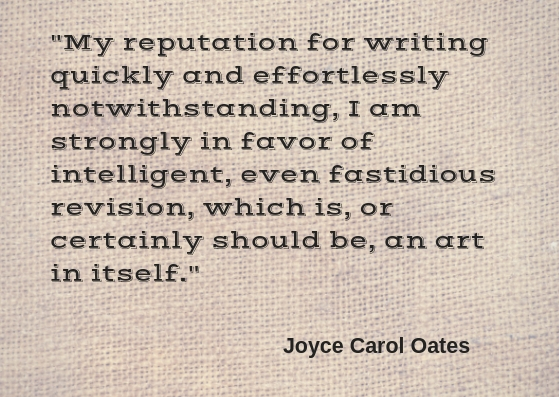
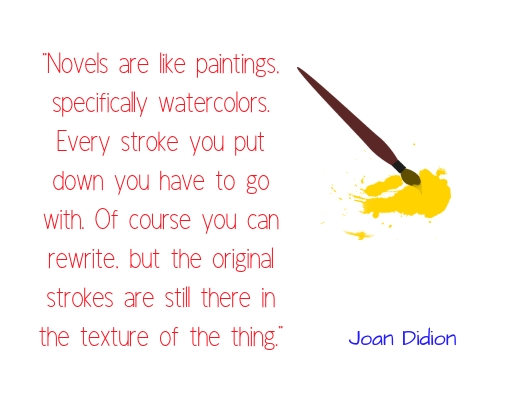
That first phase of writing fiction for me is collecting the raw materials. I have a concept and an idea of the story, characters and settings. All the elements enlarge, becoming illuminated, as I write the tale and finish the first draft. The first draft is always so raw. I’m not one of those who thinks the first draft is almost the final draft. It’s just raw material. Now it’s ready for shaping and carving. Sometimes I’ll add stuff, but mostly I add by removing material.

The work pace shifts into a smoother, more contemplative, and relaxing process. It’s like your dream house is being built. “It’s finally happening,” you keep telling yourself. “I almost stopped believing it would ever happen.” But tangible progress is visible. The foundation has been laid, the walls have been erected. Doors and a roof are in place. It’s less a collection of material and more like the place you dreamed. I feel the same with this novel in progress.

Time to write, edit and revise like crazy, at least one more time. Looking ahead, it appears there will be many more of these subjects to come. I embrace the pleasure of the work.

The Light At the End of the Tunnel

“How’s it going?” a friend asked. “Is there a light at the end of the tunnel?”

He was asking about my novel in progress. Like many people, he was speaking cliche-ese. I’m not in a tunnel, and I’m not looking for a light when I’m writing a novel. I once may have thought that way, but I’ve changed. The light would mean there’s hope ahead.

I’m enjoying the writing journey, so there’s no need for a light. The process can sometimes rival a clogged toilet’s mess, but it’s well damn lit.

“What will you do after you’re done?” Bill asked. “Will you write another?”

It’s a question from outside the circle of writers, and again, is common in cliche-land. Bizarre, to me. In sports, the assumption is that you’re going to keep going as long as body, will and team allows. Likewise, that’s how it seems to go in performing arts like acting and singing. Why, then, assume that a writer will be one and done?

After our pleasantries, I walked on but stayed with the topic in thought. I have a novel in progress and two in the wings. Five more, perhaps more than that, have a first draft completed, and require editing, revising and publishing. I don’t know when I’ll give them the attention they deserve. I’ve begun to think that I’ll work on them if I don’t have anything to write.

It’s peculiar to think that there can be a time when I don’t have anything to write. Reading others always stimulates my writing desires, as does watching television and movies, traveling, conversations with friends, and the news. On any given day, I think, “Oh, I can write a novel about that,” or, “That can be the start to a good novel.”

The only permanent elements of life are change and uncertainty, though. Maybe death, too; it depends on your philosophy. I can’t predict that I’ll write until my death or that I’ll always have story ideas. I don’t know what’ll happen to my brain and my body, or our society. But, basically, I’m not in a tunnel, looking for a light. I’m on a plain of light, following the words.

Time to write like crazy – or edit and revise (like crazy?) – at least one more time.

Blog at WordPress.com.

Up ↑