The Character and Me

I often develop relationships with my characters when I’m writing a novel. It’s not surprising for them to be with me at a movie. Sometimes, as I respond to something, I always think about how they would respond, as an exercise to better understand them.

This arrangement leads the characters to be vocal about what’s going on. When I struggle through a scene, it’s not surprising to discover that the character is doing something that they believe is contrary to what the would do. It’s an odd, true north alignment. I created, or discovered them; I believe I know them best. Yet, they will reject a path that they feel is wrong for them. Their rejection is displayed through a work slowdown.

That’s not what transpired this week. I was writing, and going along fine. Yet, several things that the character did or said bothered me. The writing didn’t suffer. It flowed with no problem or stoppages.

I considered this today while I was walking. Although I was surprised, and I shouldn’t be, the character explained why he wasn’t bothered by what was happening. His explanation opened an entire rue of thinking about the situation. I’d been thinking about that situation in terms of plot, story arc, and activity. The character has been reacting to how it affected him. 

I was pretty astonished and pleased. His explanation to me opened a new paragraph and facets of him and the situation that I’d overlooked. It’s exciting and stimulating.

Here we go. Time to write like crazy, at least one more time.
How Writing Isn’t Like Yardwork

I was raking and hoeing yesterday, preparing the back yard to seed it for the winter. My wife had already put one garden to bed. As freezes are striking, she’ll probably put the other to bed this week. Meanwhile, we have before us the question, should she plant garlic and, or, onions for winter? Probably so, but we veered away from the subject into collateral discussions before a decision was found.

Back in the yard, thinking about trimming back trees and bushes, I wrote in my head, as I often do when doing something that doesn’t require focus and will let me think about other things. Often, I think, writing is a lot like yard work. You’re always pruning and weeding, considering what’s been done and what else must be done.

But in yesterday’s internal dialogue, I realized how flawed that was. Yard work is continuous; it changes with the season, but you’re always out there, forever doing things. Plants grow, not only in the yard, but in the yards around you. Volunteers arrive, and trees grow taller and fuller, changing the exposure to the sun. Weather changes, like the super-hot summer of twenty thirteen, and the super-frigid winter of the same year, damages and kills plants. These need addressed, as much for fire safety as aesthetics.

Which is why novel writing’s comparisons with yard work should end. Eventually, I finish a novel. It becomes published and goes out into others’ hands and minds. The yard is always being attended; it’s only completed for a brief cycle. Although a novel may feel like it’s taking forever – this one of mine is now in its fifteen month of writing – I know it’ll be done someday. Then I’ll begin another, and it’ll feel like yard work again.

But it’s not.

The Beginning

“A writer never forgets the first time he accepted a few coins or a word of praise in exchange for a story. He will never forget the sweet poison of vanity in his blood and the belief that, if he succeeds in not letting anyone discover his lack of talent, the dream of literature will provide him with a roof over his head, a hot meal at the end of the day, and what he covets the most: his name printed on a miserable piece of paper that will surely outlive him. A writer is condemned to remember that moment, because from then on he is doomed and his soul has a price.”

~ Carlos Ruiz Zafón, “The Angel’s Game”

An interesting perspective, but I would have more periods and commas in this paragraph.

How It Goes

I’m standing down from my writing session.

I was writing an intense scene. I had to build up to it. Kanrin and some of his team are down on Kyrios. He has one hundred team members. They’re divided into five platoons, which is the corporate standard. He doesn’t take them all down at the same time. No, he was taking three platoons, so he can rotate platoons in and out. They’re coping with not having their nanosystems and standard technology, which forces them to live in a primitive manner.

Getting to the point that I was ready to write this scene took a lot of set-up. I had to determine which three platoons were down there. Some members were sick; which? They’ve built a small fort with one main tower, and four perimeter towers. (They were built on the starship, Epitome, and then ferried down in sections and put together.) Each tower is manned with two people; I wanted to know who was in each one. Then came the details of what was happening, what happened to whom, and who said what.

Besides that, their resupply vessel, with the replacement platoon, is overdue. A storm strikes; some are killed. Who? What do they do with the bodies? It’s emotional for them, too. They’re accustomed to people dying and then being resurrected/resuscitated/regenerated, and back among them in less than a day. It’s a black scene that’s the beginning of a dark period. So much of it is visible to me, but I have to endure the tedious business of writing it, word by word, comma by comma, period by — well, you get it. Then, whatever happens to each character must be documented in the bible, so I can easily reference these facts and keep true and logical.

Twenty-five hundred words were written, a decent session, but I’m spent. My typing posture working on the coffee shop’s table was poor; I was hunkered over in concentration, and I feel it in my neck muscles.

Time to stop writing like crazy, at least for now, although the writer knows, I’m going to continue writing in my head. That’s just how it goes.


A Pivotal Moment

Chapters finished, scenes drained out of me, I come to the next piece, the what happens next part of our show. This, for me, involves sipping coffee, reviewing notes, and staring fixedly at inanimate objects as I draw down the world, shut it out, and tune myself to the writers inside, waiting for one of them to clear their throat and begin telling me what happens next.

After review, I know where I stand, and where the novel stands, and where I’m next heading. I’m now pivoting to essentially part two of this section. This section begins with the genesis of this entire aspect of this volume. I’d created it August 4. I’d last modified it on August 8. It was a piece that came out of the darkness and rolled over me. As these things do, the piece created multiple questions about the setting, characters, plot, and situation.

To answer those questions, I began writing, and finished writing twenty-four chapters, one hundred eighty pages. Now, a little over two months later, I’m ready to pivot back to that first scene, and continue writing the story.

Of interest probably only to me, that first scene that I wrote has been deleted. It’s saved in another document. It was deleted because, within four days, I realized I was writing from the wrong character’s point of view. Another character had been created after that one, and they took over, demoting the original character to a minor role in the background. The original character didn’t put up a fight, but accepted the reduced role without a problem.

This is how I often work, not just in writing, but in almost every activity. My organization is strangely chaotic. Solutions and ideas leap at me, and I embrace them. But they usually reflect the end result desired, or some epiphany about what needs to happen within the project to enable the rest. Fortunately, generally, my mind works amazingly fast, especially when dealing with abstract matters. Yes, I’m being immodest, but it’s one of my favorite, and most dependable, traits. On the other end, it’s not unusual for people to write me off as a little crazy. I accept that, because I work with what I have, and what’s proven successful for me.

This is a pivotal moment. Action is moving the ship, the Epitome, and everything set up, down to the planet, Kyrios. The Kyrios action is grittier and darker. It’s complex. I’m intimidated with what’s planned for this section. As far as I know, it’s the second third of this volume. Parts of the end have already been written, serving as a light at the tunnel’s end.

Deep breath, and another gulp of coffee, and it’s time to write like crazy, at least one more time.

The Writing Day

Yesterday was one of those ass-kicking writing sessions that probably released a liter of dopamine in me, reinforcing my addiction to my writing practices.

I began by writing summaries of my dark writing episode’s reveals. I then wove them into the two documents I keep to track of the novel. For this novel, the two documents are “Incomplete States Thinking” and “Epiphanies.”

The first is basically a compendium that includes the characters’ names and sexes, and other materials that I add to the novel. It’s the bible I refer back to for reminders about locations and relationships. It summarizes the concept and various arcs, and includes reminders about what I’ve decided at certain plot points. This novel is science-fiction, so a dictionary of terms, species, ships, and planets is also included.

“Epiphanies” is a much briefer summary of realizations that come to me. As an organic writer, I’ll often have no fucking idea where I’m going. I’m following paths through dark woods, at night, with a candle, during a storm, asking, “Okay, why did that happen? What happens next? Where the hell am I?”

I’ll go off to do other things that divert energy and attention from writing. Without warning, ideas answering those queries will sledgehammer me. They’re generally broader and more ‘strategic’ than where I’m at in the novel’s writing process. So, to capture them, I add them into a document. I later address them in the thinking document at a ‘tactical’ level, and then develop them into events, scenes, and chapters. Many times, I’ll write these, and determine where they go in the novel, and then add a bridge to get from where I am to where I’ve gone and where I’m going.

To give more insight into the two documents and their relationships, the thinking document is thirty-four pages, and just under twelve thousand words. Nothing is ever deleted from it; I’ll line through something that changes, and then add an elaborating note.

The other document, “Epiphanies,” is three pages and six hundred words. It has twelve bullets in it, with sub-bullets. I add to it to capture the gist. More detail is added to these ideas in the thinking document.

It probably all seems over-organized and tedious to others. It’s not a process that I planned, but a method that I learned to keep me on track and moving forward. I accept the process, with all its encumbrances, because it does let me finish novels. In theory, instead of creating an outline and writing the novel, I begin writing the novel, and create the outline as I go.

Additionally, when I write those events, scenes, and chapters, I generally create them in their own document. At the beginning of the document, I include a prelude to explain the document’s genesis, and how it’s fit with everything else. Once I complete its first draft, it’s put into the document. The prelude is not put into the novel, and its not deleted, but highlighted and marked so I know, at a glance, that it’s not meant as part of the novel. I write to capture the critical elements initially, so the original document is typically fifteen hundred to twenty-five hundred words. Once it’s added into the novel-in-progress, further editing, refinement, and expansion is conducted to improve its coherency, logic, details, pacing, language, and style. I generally have several main characters, with one prime main character. While the novel has an over-arching tone, each character has their own tone, which is conveyed by ‘their’ style.

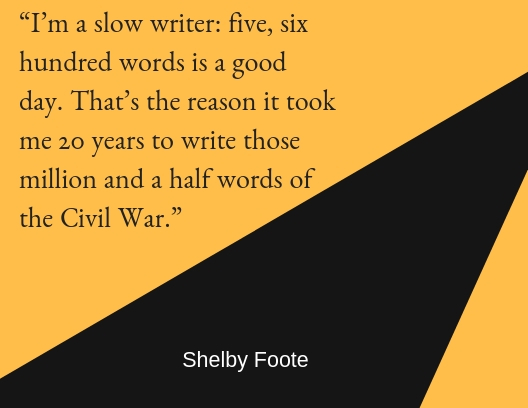
Yesterday’s session ended with twenty-five hundred new words added to the novel. Most of these were in one chapter, of three scenes. It was a two hour session, and included summarizing the thinking and epiphany documents. I’m pleased when I reach over two thousand words in a session; I’m not a fast writer.

I don’t pursue word counts. I did when I first began the effort to establish a disciplined approach to writing. Since then, I don’t need word counts, but tend to stop after a certain number. Part of this, I think, is conditioning from the early days, but some of it can be attributed to how writing fits into my life. I like writing in the late morning to early afternoon, but then I need to do things outside of writing.

I could have continued writing yesterday. More material was available from the dark writing session. Time wasn’t on my side. I had other obligations. That’s life. I wasn’t worried, though, because I knew I would come back today, pick it up again, and continue. My writing output and processes tend to follow their own cycles of waves and troughs. Understanding that helps me cope with the rise and fall inherent in my process.

Time to write like crazy, at least one more time.
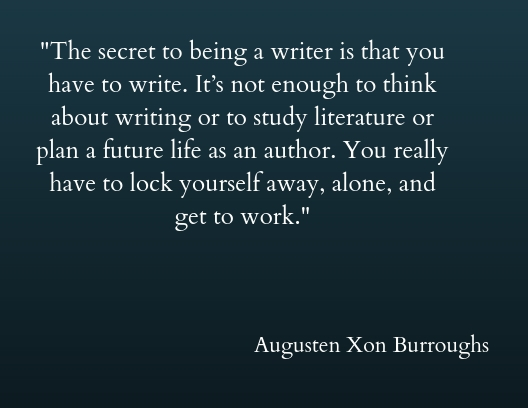
 

Dark Writing

I read, somewhere, sometime, that every book conceived comes into existence somewhere else. Our struggle, as writers, is to bring it into the conscious life that we’re leading.

That’s certainly how it feels when dark writing commencing.

Dark writing happens to me at night, in the dark. Something triggers me awake, and all the writing neurons become energetic kittens, wanting to romp and play.

And they do. They toy with strings of thought, batting and chasing ideas around like they’re balls and toy mice. Then, as they settle, the writer starts reading to me.

Again, that’s how it feels.

It feels like the writer within takes up the book I’m writing in that other existence, and reads it to me. Scenes are read. Dialogue. Reveals. Page after page is turned. I can’t put the book down.

Two hours later, the book is finally closed. The dark writing subsides. I’ve been enriched with writing material. The challenge now goes back to that ongoing struggle, to remember all these words that were read to me, and bring this book into the conscious life that I’m leading.

There is coherency to this writing process, but there’s also chaos. The reveals and scenes thrill me. But then I ask, where does this go? The question prompts the dark writer to transport me a bunch of chapters ahead. Landing there leads to more bewildered questions about all those chapters he jumped over, all the material already written and ordered, and how these reveals fit into the greater cosmos of this novel.

I wish I could more easily capture this dark writing. I suspect each writer has their own version of dark writing, the process of finding the book in their minds, hunting the details, and getting it a form where it can be read. It’s an exciting, but also frustrating, and yet, hopeful, process. I see where I’m at in the novel, and I see what can be. I just need to bridge those two visions. Easy, right?

It’ll be an interesting day of writing like crazy.

Slow Progress

I’m having fun with this novel. It’s grown into an epic. I’m trying to divide it into tasty volumes.

“Incomplete States” is science fiction. It features time travel, galactic alliances, others sentient life forms, and advanced Human cultures and technology. There’s lots of space travel on ships that sometimes carry several million people. New planets have been terra-formed. (It’s terraformed in the future; they’ve dropped the hyphen.)

Many diseases have been mastered. They’re not a threat. Aging isn’t a threat. Choose your age. Keep it as long as desired. Change it when you desire.

Death is not much of a threat. Resuscitation, regeneration, and resurrection (depending on the marketing and technology involved) have made it a side topic. One side-effect is that Humanity is dropping toward zero population growth. Children who are born are often incubated in artificial wombs. Nanosystems help the mother and child stay connected and develop that special bond.

Communication nets are introduced into their bodies at young ages. Phones are internal bio-devices; they’re constantly in touch with others, listening, filtering information, and contributing.

As noted, I have fun writing this, but I’m easily side-tracked, and my progress is slow. I barely write one thousand words a day. Editing and reviews for accuracy are extensive — and intensive. A large quantity of moving parts must be synchronized. For example, against this showcase of technology, Humans are faced with going to a planet where their technology not only fails, but is actively attacked. They don’t know why, but are going to live there without technology. Their mission is to track down four people who are believed to be on this planet.

That’s required a lot of brainstorming. What do you do, and how do you live, without technology, when technology is deeply embedded in all aspects of society? Aside from a few small fundamentalist sects, nobody knows what they’re doing or how to do it. They’re researching how to cook on stoves, burn wood, grow food, and process it. Their energy weapons won’t work; what about gunpowder? They’re learning to ride horses, exist without their augmented memories, and fight with swords, bows and arrows, and other more primitive weapons and methods.

This is where I become side-tracked: I research and write about much of their process of coping with these changes and their new needs. I put it all in the novel. I enjoy writing and reading about these things, but I suspect I’ll lose a lot of readers who don’t enjoy these sort of details. I’ve been thinking about it, though, debating whether it’s too much in that vein before concluding, screw those readers. I rationalize the easy way out: I’m writing for me, and for those who enjoy books like these.

Had to write this out, to think it out. Time to write like crazy, at least one more time.
Friday’s Theme Music

“Across the Universe,” written by John Lennon, and performed by the Beatles.

When I hear the song lyrics, I often think of the writing process. For example:

Images of broken light which dance before me like a million eyes
They call me on and on across the universe
Thoughts meander like a restless wind
Inside a letter box they
Tumble blindly as they make their way
Across the universe

h/t to AZLyrics.com

Things flow and bounce into us, and we write to create order from that nonsense. Sometimes, we succeed.

Get It Done

It’s just like, suddenly, a volcano erupts. Words flow into my mind, demanding to be put down. All is seen and heard, and the path ahead is clear. Focus and concentration swell like a romantic song, and the urge to write is a fire. An internal little engine begins chugging, I must do it, I must do it, I must write, I must get it done. And, yeah, the mixed metaphors are appropriate to convey the complexities.

Time to write like crazy, at least one more time.

Blog at WordPress.com.

Up ↑