Ben Said

Science fiction, fantasy, mystery and what-not
First, some acknowledgements were required. Then decisions, followed by introspection, and finally, action. Yes, it was a typical writing day.
I’d finished writing the first draft of April Showers 1921 and found it a hot mess. Part of that were unreasonable expectations (who, me?) about how the first draft should read, along with unreasonable comparisons to published novels being read. I know that one author comparing their work to another author’s work has never been happened before, but I couldn’t help myself. It probably had to do with a bad moon rising, a hormonal surge, or general malaise.
I’d also begun hearing editors, publishers, critics, and readers in my head. It was a crowded damn place, and they were a damning crowd. Foolish, I know, to consider anyone else while you’re writing the first draft. It’s one of my problems with being human.
Third, I was over-thinking every aspect of everything that I was writing. I know, writers never do that, and yet, I was, for some reason.
Fortunately, I was able to intervene with myself.
I have a habit of hunting for quotes about writing, writers, and the process and curses. I’ll often hunt for interviews with authors to find these quotes. It shouldn’t surprise many that I focus on quotes dealing with whatever issues are vexing me.
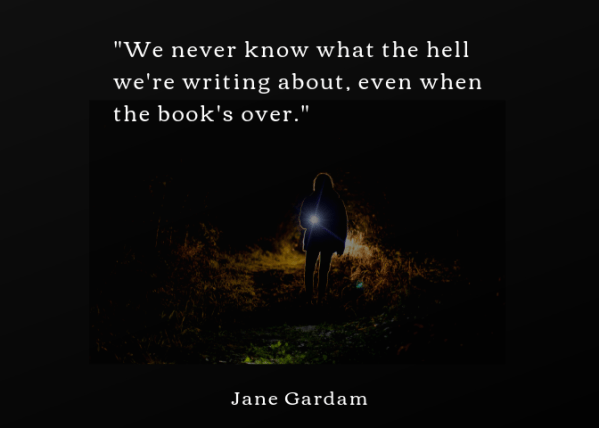
This week, I found quotes from Jane Bardam and Anna Burns that helped me get over myself. Jane’s quote, “We never know what we’re writing about, even when the book’s over,” first struck me. Becoming overwhelmed with my concept, I felt like I’d become trapped in blackberry bushes and couldn’t escape. I’d become paralyzed trying to analyze and understand what I was writing about. That was just shutting down my brain.
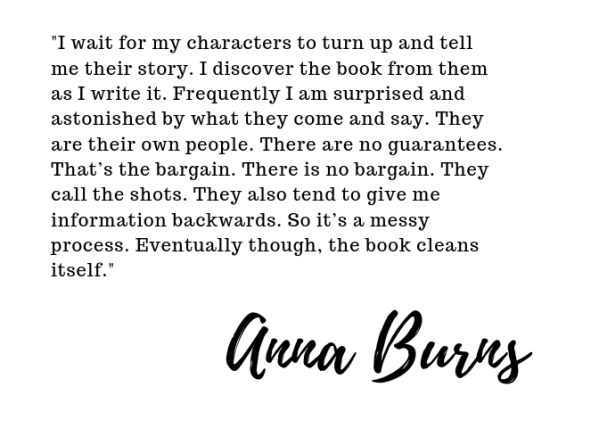
Likewise, over-thinking what was going on undermined my writing process. I then came across Anna Burns’ comments. She was all about how the characters turning up and telling their stories. That’s exactly what I normally do, when it’s all going well. Anna continued about it being a messy process, and that it’s sometimes told backwards.
Yes, and yes. Those were true for me.
But the last part was what saved me. Anna said, “Eventually, though, the book cleans itself.”
That reverberated through me. I’d gone from trusting my muses, the convenient label I apply to the thinking that comes out of my subconscious spigot, to trying to think my way through everything. In other words, I’d suddenly begun approaching this creative process backwards.
Those interviews and their insights helped me re-balance myself. “Relax,” I said. “Trust yourself. Trust your instincts. Trust the process.” Those calming words pulled me out of my funk and put me back on track.
None of this is like splitting the atom. It’s basic writing process. Of course, your experience will probably vary. For me, it’s always about finding and losing myself, trusting and questioning, struggling, and then succeeding. It’s about being willing to fail, recognizing that failing isn’t permanent, and that there must be a way to go forward; it just must be found. That can be daunting.
Been a good day of writing like crazy. Time to quit and pursue other crazy. Cheers
Dreams wrecked my sleep like booming thunderstorms. While the dreams went all over the place, often with multiple storylines and settings, and frequently anxiety fraught, one theme stayed true: the leads were missing or broken. I kept hunting them or trying to repair them. In one example, others brought in a large and heavy broken motor. “Know what we found in this?” one man that helped deliver the heavy electric motor said. He was affable and burly, curly-haired and sunburned, a little dirty and greasy in his blue uniform with its red and white name tag with “Mike” in script, and a gap in his teeth.
I grinned. “Broken leads, right?”
Mike grinned back. “Yep. You got it. The leads weren’t working.”
Stepping back, I’d finished the first draft of April Showers 1921 a few days ago. I found it a hot mess. Good writing, yes, but shitty storytelling. The concept had over-excited me, and I’d peed all over the place. It’s my big friggin’ writin’ weakness. The first draft had become six hundred Word pages and one hundred fifty thousand words. The last quarter and ending were weak. The beginning and middle were confusing.
When something goes wrong, I try to figure out what to do. That’s been try for me for as long as I can remember. Sometimes, the process requires me to walk away from the project. Grant my mind some space and let it work. This isn’t one of those projects, though. I felt an urgency to keep working on it.
The writing hadn’t been a waste of time, of course. One, it entertained me. Second, I learned more about the concept, and then the story. As I’ve quoted Terry Pratchett before, “The first draft is just you telling yourself the story.”
Now I knew the whole story, and it needed to be re-worked. Many hours of thinking and walking were conducted in search of what to do. Well, I roughly knew what to do: revise and edit. Sure, but I thought, more structure was needed than to proclaim revise and edit and go forth. I needed a better, more solid plan. I just wasn’t satisfied enough with this draft to begin considering revise and edit. I was thinking, write again.
I didn’t wanna write it again, I whined. I know, I answered. That’s writing.
Decisions were made. Each decision took me down a tangible plan. I began seeing how and why I’d concluded the ending and last quarter were weak. Glimpses of what to do began emerging.
Wasn’t easy to get there. The journey from proclaiming hot mess to saying, okay, this is what I’m going to do, took hours of thinking and plotting. It was intense. I was not a good person to be around. Fortunately, I was mostly on my own.
Then came the dreams.
The dreams were beneficial. They didn’t dictate, “DO THIS,” in a deep voice that might’ve been Jehovah or James Earl Jones. No, the dreams were more like a thundering rain storm with strong winds, blowing out the mess.
Now, it’s been accepted. The first hot mess was done; work is required. The path has been defined. Jaw is set. Coffee is at hand. I’m in position.
Time to write like crazy, at least one more time.