Dark Writing

I read, somewhere, sometime, that every book conceived comes into existence somewhere else. Our struggle, as writers, is to bring it into the conscious life that we’re leading.

That’s certainly how it feels when dark writing commencing.

Dark writing happens to me at night, in the dark. Something triggers me awake, and all the writing neurons become energetic kittens, wanting to romp and play.

And they do. They toy with strings of thought, batting and chasing ideas around like they’re balls and toy mice. Then, as they settle, the writer starts reading to me.

Again, that’s how it feels.

It feels like the writer within takes up the book I’m writing in that other existence, and reads it to me. Scenes are read. Dialogue. Reveals. Page after page is turned. I can’t put the book down.

Two hours later, the book is finally closed. The dark writing subsides. I’ve been enriched with writing material. The challenge now goes back to that ongoing struggle, to remember all these words that were read to me, and bring this book into the conscious life that I’m leading.

There is coherency to this writing process, but there’s also chaos. The reveals and scenes thrill me. But then I ask, where does this go? The question prompts the dark writer to transport me a bunch of chapters ahead. Landing there leads to more bewildered questions about all those chapters he jumped over, all the material already written and ordered, and how these reveals fit into the greater cosmos of this novel.

I wish I could more easily capture this dark writing. I suspect each writer has their own version of dark writing, the process of finding the book in their minds, hunting the details, and getting it a form where it can be read. It’s an exciting, but also frustrating, and yet, hopeful, process. I see where I’m at in the novel, and I see what can be. I just need to bridge those two visions. Easy, right?

It’ll be an interesting day of writing like crazy.

Little Free Libraries

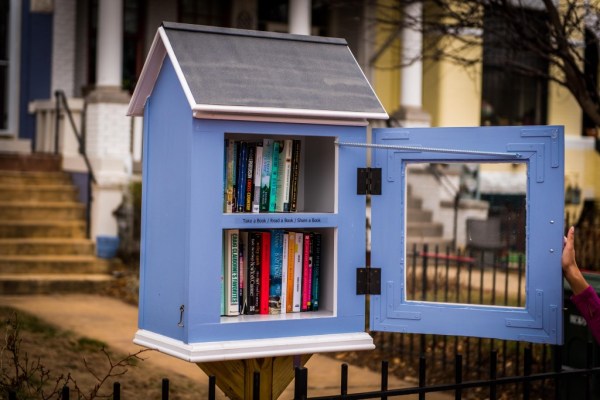
Little Free Libraries are a wonderful idea. They started in two thousand nine, in Hudson, Wisconsin, when Todd Bol built the first one.

I’ve found seven in Ashland. I enjoy finding them. They’re all beautifully done little buildings on a post, and usually brightly colored, with a glass door on the front. In conjunction with Bol’s original vision, they resemble little school houses. Once found, they must be explored. Sometimes notes are attached.

Transitioning to another idea I like, September 18 was Hideabook day. It’s a thing Goodreads came up with to celebrate ten years of being Goodreads. Coupling my writing and publishing with marketing, Hideabook day, and Little Free Libraries, I bought seven copies of the paperback book version of “Life Lessons with Savanna,” signed them, and put them in the Little Free Libraries around town. I checked two today, and those copies were gone.

I hope people find and enjoy them all.


The Clean Out

It was the final clean out; they would no longer live there.

They’d been three generations of readers. He, the grandfather, no longer there, had led them into that society. He was always buying, reading, borrowing, and lending books, but his apex moments came when he talked about them with others. By talking, he enjoyed a significant amount of listening, to hear what others thought about the books, to calibrate, validate, and counter his personal findings. These predilections for books led to a ginormous collection. Shelves of books filled several family room walls. More cases of books were in the hallways and living room. Other collections guarded the bedrooms. Stacks of books decorated tables. Other books had to sit on the floor.

With him gone, and the house being cleaned, they went through the books and kept a few they considered the crown jewels. The rest had, lamentably, to go. Friends were told, “Come and get books. Take whatever you want.” Her concern was not to get rid of the books, but to find others who loved them as much as he had.

Silently Working

I’ve been on pause from editing the novel in progress, “Incomplete States.” I’d become troubled that it was missing an overall aspect that could tie it together.

It wasn’t something I immediately jumped on. I let it flow through me for a while and considered what I’d written, the novel’s totality. I didn’t want to be rash. I convinced myself it was necessary to add a greater arc.

I didn’t have any idea what that arc would be.

I began addressing the problem by thinking and writing about it. Exactly what was it that I was looking for in the greater arc? The novels and series that are most in mind with this novel came back to me:

  • Roger Zelazny’s “Chronicles of Amber”
  • George R.R. Martin’s “A Song of Fire and Ice”
  • Frank Herbert – “Dune”
  • Isaac Asimov’s Foundation series
  • J.K. Rowling’s Harry Potter series
  • J.R.R. Tolkien’s “Lord of the Rings” trilogy

To a lessor extent, I also thought of Elena Ferrante’s Neapolitan novels. All that reading helps.

This wasn’t a quest novel, though; I wanted to ensure I didn’t accept an easy route and create another quest.

Several aspects attracted me. One, the epic sweep. Two, was how these novels and series embraced multiple levels of acceptance about the past, legends and myths, and prophecies. As the past receded in them, the past blended with myth and legend. More people in the novels grew enamored with lessor concerns that gathered importance in their lives, like fortunes, empires, and revenge. These smaller concerns were magnified into important concerns that eventually dwarfed the true, greater threats. In a way, I saw mirrors with our own planet and human civilizations, and how often we put profits, nation, and empire ahead of civilization and the planet.

But —

These novels and series also attracted me because of the greater and lessor acceptance. Uniform agreement about what was to happen, what had happened, and why, didn’t exist. Elements told their own stories. The differences in these stories provided the foundations for tension and conflict.

I wrote a one paragraph summary of each of these novels and series, defining their greater arcs against the dominant sub-stories that often propelled most of the action. That helped me clarify what I though my novel lacked.

Then I turned my attention to my novel and the situation.

I began by organizing information. Hundreds of thousands of words had been written. Deciding I needed visual assistance, I created character cards for the six major characters. Keeping faithful to the novel’s concept induced me to create character cards for each of their major iterations. As this novel is about cosmic and other entanglements, several of the characters are sometimes male, and sometimes female, with and without children, and sometimes married to one another. Sometimes one is the other’s parent, and sometimes, they’re enemies. Cards were created for each of them.

Having the cards allowed me to tack them up and move them around, hoping to prompt new thinking and insights. That approach produced; I brainstormed potential ideas, and then walked, thinking through what attracted me to each, and discarding some. After doing this, I thought I’d come up with the structure for the greater arc.

About four days had passed.

I sat down to write this morning. While I’d been thinking through all of these angles, the muse, or the muses, were at work in me. Sitting down with the slimmest idea of what was now to happen, I began typing. Within a few lines, I was on a world I’d not conceived before this. Memory of Jack Chalker’s “The Four Lords of the Diamond” series flashed into me along with Brian Aldiss’ Helliconia trilogy. New characters jumped into action, along with the agenda they pursued, in accordance with the greater arc.

Finishing with thirty-five hundred words about an hour later, I felt excellent about where I was. There’s still a tremendous amount to be done, but I had the semblance of the direction, the outlines of a plan, and vague ideas about events.

It was a good day of writing like crazy.

The Plan du Jour

Plans must be made every day. They’re compartmented by activity. They’re all based on what’s been done, and the overall goals, objectives, mission, and visions.

This is a product of my military years. Make lists, prioritize, structure and plan, hup – two – threp – four. About the only thing in my life exempt from planning is this blog. The blog is just a lark, a creative outlet, a place to vent and rant, and a channel for improving my knowledge, sparking my thinking, and making connections. Everything else is serious.

Writing is especially serious, even as it’s fun. A plan is required or an organic writer like me. The most critical part to remember about having a plan is that it’s a tool to help organize and progress. Trying to make the perfect plan is counter-productive, unless you’re murdering someone or robbing someplace. In just about everything else, it’s sufficient to have a sketchy plan.

When I’m writing the story, the story writes the plan. My novels typically begin with a concept or a setting. Ideas volunteer and find roots.

But writing is like vehicular traffic for me; everything causes a reaction. Implications, issues, conflicts, and outcomes arise. Plans are needed. Some of that planning is researching aspects to provide more depth and realism. Other planning is simply developing concepts and character background. Characters often leap into action on a page. I accept that, but to carry the story forward and keep it honest, I need to know that character. So, off I go, into a character snapshot. Some of that ends up in the novel as exposition. It depends upon the material and story. Even if I include it at that point, it can be removed later. It depends upon the arc, relevance, and pacing.

Writing and walking work well together. My mind can pick up where I left off writing the story on the last session and resume that thread preparatory to beginning a new day of writing like crazy. Reading and writing works well for me, too. Reading fuels my creativity, invigorates my desires, and reinforces my will, all good things while on a novel-writing journey.

All of this is less so with editing and revising.

In editing and revising, I already have the raw material that writing provided. The characters are established; so is the plot. The research has been completed, for the most part, and the results are embedded in the story.

I can say that research is completed for the most part. Sometimes while writing, I’ll put in some shorthand about something require greater detail, clarification, or verification that I’m not completely wrong about what I think and have based my novel decision upon. I use the shorthand because I’m in the writing rhythm and don’t want to divert myself from that path. I mark these places with <TK> and some explanation about what I wanted for there, and why. These might need research at that point. Sometimes, though, I find the research has been completed and used elsewhere. Sometimes I find that what I thought was needed there is no longer required. I go with the flow as I see it.

An editing and revising plan then evolves more into finishing the novel as a coherent and entertaining story that others can read and enjoy. I sit down to edit and revise with a goal of completing thirty pages each day. It’s just like running miles for me, or walking; having a specific objective keeps me focused on the overall course. That objective, though, isn’t the goal, and I don’t confuse the two. Editing and revising the book remains the goal for this phase of the vision. The vision is a completed, published novel.

Thirty pages is a somewhat arbitrary distinction. I often exceed that. Once in a while, I’ll fall short.

Reaching thirty pages a day is neither easy, nor difficult. It depends upon the work presented. Some of it’s already been significantly revised, edited and polished, because part of my process as an organic writer is to edit and revise as I write the novel. These sort of passages are a pleasure to edit and revise because they’re so easy. The biggest problems I encounter are writing butt and becoming complacent. Writing butt is, of course, when you’ve been sitting for so long, your ass has gone numb. Since I often have my head up my ass, this can have serious health ramifications for breathing and thinking. Complacency is when I stop thinking critically about what I’m reading.

Beyond this basic plan and structure for editing, sometimes, in the course of reading what’s been written, I’ll draw up short. Something does not align with what was previously read, or what I recall writing later in the novel. At that point, I have options.

My options depend on how big I view this mis-alignment, i.e., how disturbing or surprising I find it, and it’s influence on the rest of the plot and novel. Sometimes, it appears to me to be so large that it becomes a plan to resolve this difference. Other times, it’s smaller and I simply make a note to review and resolve. A few times, the flawed connection has arrived because I just read that part. Then, I’ll flip back to it quickly, confirm my facts, and continue. A few times, it’ll be something like a planet, ship, or secondary character’s name. When that happens, I’ll verify, and then completed a global search and replace.

With all plans, as learned in the military, it’s about mission accomplishment. What is my vision, and how does completing my mission support it? In writing a novel, it’s pretty damn simple and clear.

Now, excuse me. I have a plan to go edit and revise, at least one more time.

What about you? Do you have a plan du jour?
 

Sudoku Puzzles & Writing

I love doing sudoku puzzles, completing at least two a day. Naturally, I like more challenging ones, because solving them is more satisfying.

After years of doing them on specific websites and in the newspaper, I’ve recently discovered a new site for doing them. Their logic seems different than what I’ve previously encountered, which makes them more difficult, which translates to more challenging and fun.

It also reinforced the need to not take shortcuts or jump ahead. I’ve found the best way to solve these is to maintain discipline and process the different logical devises employed in a step-by-step process.

I’ve also learned that sometimes the complexity will overwhelm me, and I become frustrated. When that happens, I stop the clock, save the work, close the page, and walk away. Returning to it in a short while with fresh eyes and mind then lets me see obvious clues that were missed earlier.

This reinforces my writing processes and approach. I’m often a sucker for clickbait about how-to articles regarding writing and publishing. I’m not necessarily seeking easier, but that elusive realm known as better. I often find that they’re packaging the same writing advice I’ve seen everywhere else, but with new words and more interesting headlines. There’s very little that offers sage advice about writing better.

That makes sense.

Guidelines are well-established for proper structures or how to describe characters and settings, write action scenes and pacing. But each of our works, hopefully, are unique and fresh to us as writers. Nothing is as clearly delineated as it is in hindsight of published works. We’re making multiple decisions about pacing and info-dumps, trying to decide how much of what we know becomes too much for the reader, or spoils the story.

In the end, I learned again lessons found in solving sudoku puzzles. Stay true to the my course. Don’t take shortcuts, remain patient, and use anxiety to feed determination to finish.

And, if it’s necessary, take a damn break and return to it with fresh eyes and mind.

The Bookstores

We’d read about another book store to check out in Eugene. “Better than Smith Family Bookstore,” they claimed.

Photo: Smith Family Bookstore, Eugene, Oregon

What? Better than Smith?

We love Smith. A re-purposed fire station, it reeks with books. Attempts to organize the books are ongoing. Well, they are organized, but they spill out everywhere.

We checked out J. Michaels Books, on Broadway. It’s a good book store, and well worth an hour of browsing, but it would not supplant Smith for us.

We drove on to Barnes and Nobles on our book quest – the last resort in our efforts to find several books. I know I’m a writer. I’m supposed to make money from selling books. But my wife likes finding used books, reading them, and then selling them to another book store for credit.

I’m ambivalent about that. She and I enjoy reading. We’re spreading the wealth by keeping used books in circulation. And, we’re sparing the environment (some) by keeping the need to publish more books down. But, we know we could do more to reduce books’ impacts on the environment by going digital, but…sigh…we’re in love with the feel, smell and practice of reading physical books. It goes beyond logic.

All that book store visiting prompted thinking about which book store is my favorite. First, what makes a good book store? Books, of course – selection, prices, condition. But there’s often more. A spirit of reading and writing is embedded in the best book stores.

Powell’s Books in Portland remain marginally in first place on my list. One, talking with the folks working there, you can tell that they enjoy books. Two, it’s so damn big and impressively organized. Used and new books co-exist for sale. Both are reasonably priced.

Second place is more difficult. I like, on equal levels, Bloomsbury Books and Bookwagon New and Used Books in Ashland, but I also like Smith Family Bookstore in Eugene. I guess I mark the three establishments as tied for second. All have knowledgeable, book-friendly personnel working there. Bookwagon is the smallest, but we enjoy the owner, Karl.

In third place, then, is another Ashland book store, the Book Exchange. Dark and crowded with tall shelves of books, the Book Exchange feels like an old book store, and offers excellent prices and selections.

In ranking my book stores, I dismissed things like coffee shops, pastries, parking and locations. They’re just nice accouterments to a proper book store, but it’s really about the books.

What about you, readers and writers? Are there any book stores that draw your love and loyalty?


Sporadic Update

An organized compilation of random subjects plaguing me that I may have posted about, but which I think I should update readers about.

  • The Trial. A plea bargain was accepted so I don’t need to testify about the break-in. The saddest aspect (besides tangible evidence that strange, sick people are out there) is that our beloved neighbor, Barb, has moved out. She’s just too frightened in her house any longer. That’s troubling. Barb and Walt were two of the best things about our location. Walt’s passed away and Barb has moved away, moving me to sigh about change and life.
  • The close call. I survived one close call in April, when I endured one of the worst haircuts I’ve ever received. This young ‘stylist’ was clearly a novice and took to my head with the same sense of style that military barbers employed when I entered basic training. Fortunately, my hair has grown out into something that looks reasonable again.
  • Tucker. Tucker suffers from conjunctive gingivitis. We submitted him to some oral surgery in April. It went terrific. Several teeth were removed, including one of his big lower front fangs, if you will, but he’s not having any swelling, bad breath, pain or drooling, so hooray! On the coin’s flip side, he’s feeling so much better that he’s very energetic and wants to assert his position as the alpha beast.
  • Other cats. Peace has been brokered between Meep (a.k.a. Popi) and Boo Radley. Boo’s PTSD also seems to be diminishing. The big bedroom bagheera without a tail has become more trusting of us. Quinn, of course, remains Quinn, a sweet, charming cat who prefers to avoid conflict.
  • Neighbor cats. Pepper, Princess and Buddy continue their visits and begging. Pepper remains the worse. That’s a little surprising. We always believed Wade’s corgi, Bella, annoyed Pepper, driving her toward us. Sadly, Bella passed away from cancer last month. She’ll be missed but with her absence, we thought that Pepper’s daily visits would taper off. They still could, with time. It could be that what was once refuge is now habit, though. Buddy is a sweet little black character. He’s clearly well-fed, but enjoys being petted and presented kibble, which, being a sucker for cats, I do.
  • The cats’ activities interfere with yard work. Here they come when I make an appearance, pop, pop, pop, Pepper, Buddy and Princess, pop, pop, pop, Boo, Meep and Quinn. (I keep Tucker away for the safety of the rest.) Boo likes to settle right beside me, instructing me about what I’m doing wrong as I weed and mulch while the rest visit each other and observe me. All flee to safe distances when the edger and mower come out.
  • Fitbit. I took some Fitbit hits with the travel last month. Daily mileage on average dropped to five and a quarter miles per day while the average of steps per day dipped to about twelve thousand for the year to date. But summer is here, so I have hope I can raise those averages.
  • Reading. Just read four books in April: ‘Ordinary Grace’ (which I loved), ‘I Am Pilgrim’ (a quick, fast read that had some flaws but remained compelling), ‘The Passenger’ (although interesting, a disappointment), and ‘The Devil’s Star’ (a Jo Nesbo Harry Hole novel). Just started ‘The Shadow of the Wind’ at my other’s insistence.
  • Writing. Really hope to finish ‘Long Summer’ soon and get it out there. Its complications absorb a lot of limited brain power keeping it all straight and then trying to present it in a manner that won’t cause insanity among readers. Still *ahem* haven’t leaped back into publishing like I wanted/planned/expected but I remain determined to do so. ‘Peerless’, ‘Everything in Black and White’, the Spider City’ trilogy, and ‘Fix Everything’ all need to undergo the editing and publishing process. Meanwhile, I’m really eager to write the third book in the Lessons with Savanna mystery series.

There are other things to write about, of course, particularly on the family fronts, but I shield them and their activities, so I post very little about that. Politics, technology and economics remain passions that deserve posts but I end up diverting too much energy to write much about them. Dreams are experienced every night, so I could write about those, too, like last night, when I didn’t like how the dream was going, and changed it in the middle, astonishing everyone in the dream. We’re also undergoing the annual raccoon invasion, and dealing with yard work. My wife’s health continues to be a concern while I remain stupidly healthy. Trips and adventures are planned, and we’re hopeful we can pull some of them off this year and not get sucked back into the black hole of family issues.

Overall, I’m excited, optimistic and hopeful, a great way to live. The writer is pestering me to get on to it with Brett, Philea, Handley and the rest, so it’s time to write like crazy, at least one more time.

The Writing Bucket

I’ve been receiving a number of queries about when the next novel is coming out. So – updates.

  1. Alas, I’m not working on the next mystery in the Lessons with Savanna series. That would be the third novel in the set, ‘Personal Lessons with Savanna’. Continuing the story begun in ‘Life Lessons with Savanna’ and extended in ‘Road Lessons with Savanna’, Studs is being framed for murder in Texas. I promise to update the Facebook page this week. Thanks for being fans.
  2. I’m looking forward to working on ‘Personal Lessons with Savanna’. Between recovering memories, coping with creeping insanity and being framed for murder, so much is going on with Studs. It’s the sort of developing character and story that excites writers. A third of the novel was completed before the great computer breakdown of 2016 forced me to send the Envy back to HP for repairs, living without my machine for three weeks.
  3. Work continues on ‘Long Summer’. I’ve been  writing the first draft for eight months. I’m not certain when it will be done. I’m hopeful it’ll be soon but, I’m a writer. As a writer, I’m always hopeful, optimistic, pessimistic, doubtful, depressed and exuberant. It’s a fun soup to dwell in.
  4. ‘Long Summer’  is very challenging to think through and write. While involving time shifting via a modified Alcubierre Drive (which involves, as well, exotic new materials and a whole other set of theories), it’s about the concept of now. Keeping that in mind as the parallel story lines twine together via the major characters and their alt existences causes me to pause and probe, asking myself, “Wait, which of the alts is this?” It’s imperative that each alt’s story is kept true and coherent. As I’m not a very coherent writer, you can imagine the babble in my head.
  5. All of that time shifting involves just the Humans, the ones known as Earth Humans, with the ones known only as Humans (from Aition) far less directly involved. Besides them, though, are the other intelligent life forms and their customs and civilizations. The story centers around a few of the Sabard and Travail, but the Monad’s plots and intentions drive much of the surface tension and action – or so it appears….
  6. ‘Long Summer’ has become so big as a Word manuscript that Word turned off several functions, like spell check and auto-correct. To counter that, I broke the novel up into its parts as manuscripts. It reduces my ability to move back and forth through scenes, parts and chapters, and demands that more documents be opened simultaneously, but I’ve recovered those Word functions. Overall, I consider that a win.
  7. I want to finish ‘Long Summer’ not only so that I can move on with writing ‘Personal Lessons with Savanna’, but because I need ‘Everything In Black And White’  copy-edited and published, along with ‘Spider City’, ‘Fix Everything’, and ‘Peerless’.  Besides them, new ideas have filled the writing bucket. There’s still that coffee shop musical percolating in my mind. I still want to do more with the Stellar Queen and the Magellan.
  8. Besides all this writing, my personal reading keeps falling behind. A friend dropped me an email yesterday. He finished reading the third novel in the Ferrante’s Neapolitan series and raved about it. Having read the first two, I want to read the third. Dozens of books besides it reside on my bookcases, night stand and other places, waiting for my attention.
  9. Meanwhile, I’m moving forward with paperback publication of the four published novels, so those of you bugging and encouraging me to do this, you win. I will do it. Soon. Really. I promise. I’m not crossing my fingers, either.
  10. But, I decided as well to have the covers for the Lessons with Savanna series redone. Time, energy and focus is necessary for that to happen, so bear with me.

Okay, with that out of the way, time to write like crazy, at least one more time. Back to the Wrinkle, Brett and Philea.

Blog at WordPress.com.

Up ↑